
Coldwater Inland Lakes
Contributors
Michigan Department of Natural Resources
Michigan Natural Features Inventory
Recommended Citation: Joseph K. Nohner, Kevin E. Wehrly, Arthur R. Cooper, Heather L. Hettinger, Katelyn B. King, Emily Martin, Douglas W. Schultz, Jack E. Taylor, Benjamin A. Turschak, and Brennen L. Wright. 2026. Michigan’s Wildlife Action Plan: 2025-2035, Coldwater Lakes. Michigan Department of Natural Resources, Lansing, MI.
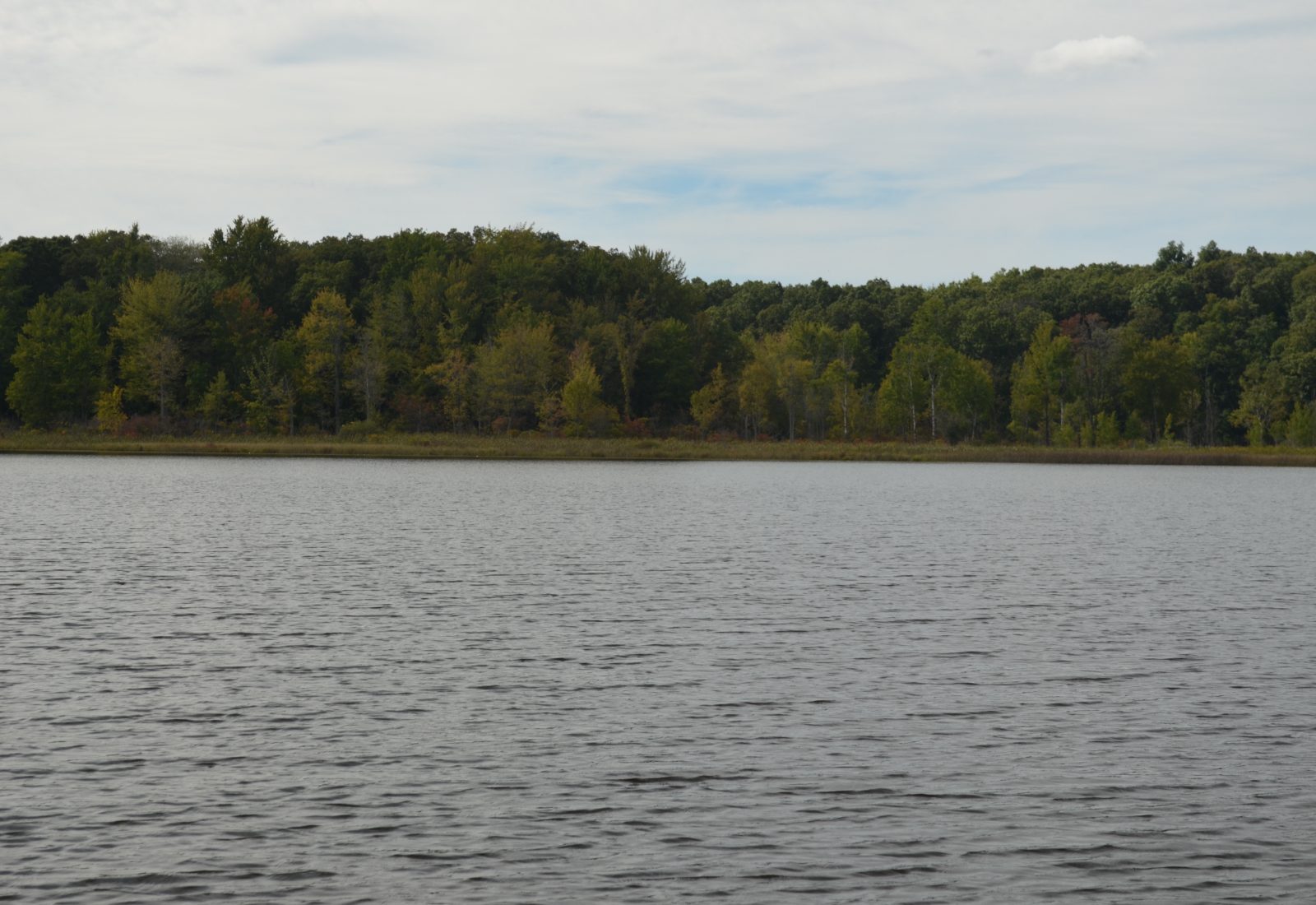
What are coldwater lakes?
Coldwater inland lakes are unique, high quality and relatively fragile resources that are characterized as cold and deep with exceptional water quality, allowing them to support species that other lakes cannot support. Among the many obligate coldwater species in Michigan’s inland lakes, there is one Threatened fish species: cisco. Of the over 11,000 inland lakes in Michigan, fewer than 200 support populations of this rare gamefish. Cisco are a species in the whitefish family and require clean, cold, well-oxygenated waters. Their narrow habitat requirements make cisco sentinels of lake quality and indicators of habitat degradation. In this plan, coldwater inland lakes include those that support cisco, have predicted or measured suitable coldwater habitat (Hansen et al. 2022), support lake whitefish, or are managed for trout species. Coldwater inland lakes are distributed statewide. There are high concentrations of these lakes in the counties adjacent to the Great Lakes and in southern Michigan’s interlobate regions, which are places where the edges of two glacial moraines came near one another and deposited large amounts of glacial debris. Coldwater inland lakes vary in size, with most between 10 – 600 acres and some over 18,000 acres.
Why are coldwater inland lakes important?
Deep, clear, cold, these lakes are unique in their value to Michiganders as well as the habitats and animals they support. Coldwater inland lakes are some of the most iconic lakes in the state, attracting visitors from across the nation. With only about 6% of lakes statewide falling into this category, the fish in these systems depend on high quality, intact watersheds for their continued survival. Yet, these uncommon lakes can be found near many of our largest cities where they are enjoyed by lakeshore residents and visitors alike coming for a day trip of fishing, picnicking, birdwatching, sunning, or kayaking. Coldwater inland lakes can support not just cisco, but also trophy muskellunge, walleye and northern pike, and brook trout as well as common loons. Additionally, coldwater inland lakes support clean water for swimming, boating, fishing and drinking.
Call out box: Did you know? Cisco are a relatively fatty fish, providing a rich diet for predators. Because they provide an energy-rich food resource and are indicators of high quality habitats, cisco have been shown to support trophy fisheries (VanderBloemen et al. 2020; Kennedy and Rennie 2024). In Michigan, lakes with cisco average three times more Master Angler records for muskellunge, northern pike and walleye than lakes without cisco, even after correcting for lake size (Nohner, unpublished). Cisco aren’t just important prey for fishes; common loons rely upon cisco as a food resource, especially prior to migrating South for the winter (Kenow et al. 2023).
What is the health of coldwater inland lakes?
As Michigan’s climate continues to warm, coldwater habitats are declining. As with the canary in the coal mine, the health of cisco in our inland lakes acts as an early warning system for the fish, wildlife and people dependent on Michigan’s coldwater inland lakes. For example, research suggests that approximately 60% of Michigan’s coldwater inland lakes suitable for cisco will decline to marginal status by 2050 (Hansen et al. 2022). Watershed development, fertilizer runoff, leaking septic tanks and other factors can dramatically alter water quality in these lakes. These declines in water quality can limit coldwater fishes’ ability to behaviorally adapt to warming water temperatures and force coldwater fishes to occupy habitats with overly warm temperatures and/or low dissolved oxygen levels in a situation referred to as oxythermal squeeze. Furthermore, the quality of shoreline and nearshore littoral zone habitats in coldwater inland lakes is declining (Wehrly et al. 2015) and may affect natural reproduction of fish.
A DNR review of cisco populations in 1995 (Latta 1995) reported that ciscoes were in decline or had been extirpated in 22 Michigan lakes. By contrast, a more recent review identified 47 Michigan lakes where cisco were either extirpated or likely extirpated and an additional 73 Michigan lakes with unknown status (Nohner, unpublished). These declines are expected to continue occurring into the future. In addition, introduced species such as Rainbow Smelt and Zebra Mussels are known or suspected to prey upon, compete with and degrade the habitats of cisco, but information on these effects statewide is incomplete.
Goals
- Improve understanding of the threats to coldwater inland lake habitats.
- Conserve coldwater habitats that are likely to persist into the future through lakeshed conservation and nutrient pollution best management practices.
Callout box: Cisco stamp. Michigan once had a short, noncommercial gillnet fishery for cisco on select inland lakes that lasted less than a month. Anglers were required to purchase a license similar to the stamp shown here. At the end of each season, anglers were required to deliver their nets to local Conservation Officers for keeping until the following season. Because gillnets are non-selective and their use was not consistent with modern sport fishing ethics, the season was ended in 1983.
Focal species
Cisco
Coregonus artedi
State threatened
Formerly known as Lake Herring, Cisco are a slender, silvery fish that range in size from 8 - 25 inches in length. Cisco exhibit highly variable body morphology among populations and were previously described as several subspecies (Koelz 1931). Cisco require cold, deep lakes with well-oxygenated waters below the thermocline. Cisco are a state threatened species that has been extirpated from multiple inland lakes as a result of habitat degradation, nutrient inputs, climate change and introduction of nonnative species.
Goals
- Improve understanding of Cisco in coldwater inland lakes including population size, diet, morphology, growth and genetics.
- Improve understanding of current and expected future habitats and their effects on cisco.
- Determine the effects of introduced predators, competitors and other species on cisco populations.
- Protect and maintain known populations of inland Cisco and their habitats where possible.
- Improve Cisco status from threatened to special concern.
- Identify lakes that could support Cisco reintroduction.
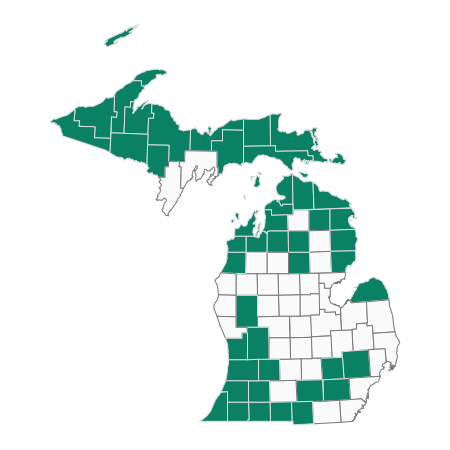
Ives Lake cisco
Coregonus hubbsi
State threatened
The Ives Lake cisco also is similar in body form and coloration to C. artedi but with smaller overall length, longer pectoral fins, deeper body, fewer lateral line scales and more gill rakers (Koelz 1931). Koelz (1931) suggested that Ives Lake cisco may spawn in the Spring as opposed to cisco’s late Fall spawning period. This coldwater species is known only from Ives Lake in Marquette County. As with the Siskiwit Lake cisco, the taxonomic status of Ives Lake cisco is not fully accepted and genetic research is needed to determine if this species is distinct from C. artedi.
Goals
- Determine if Ives Lake cisco is genetically distinct from Cisco (C. artedi).
- If species status is confirmed, determine status and viability of population.
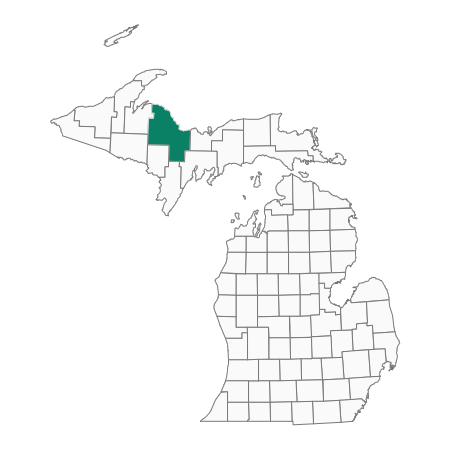
Siskiwit Lake cisco
Coregonus zenithicus bartletti
State threatened
The Siskiwit Lake cisco is similar in body form to C. artedi. Koelz (1931) describes them as small, with long fins, a rather deep body and a protruding lower jaw. Unlike other cisco species that spawn in late fall, the Siskiwit Lake cisco spawns in May. This fish has been found only in the deep, cold waters of Siskiwit Lake in Isle Royale National Park, a lake which is managed by the National Park Service. Latest records indicate this species has not been reported since the 1990s (Kallemeyn 2000). The taxonomic status of Siskiwit Lake cisco is not fully accepted and genetic research is needed to determine if this species is distinct from Shortjaw cisco (C. zenithicus; Hubbs et al. 2004).
Goals
- Determine if Siskiwit Lake cisco is genetically distinct from the Shortjaw cisco (C. zenithicus).
- If species status is confirmed, determine status and viability of population.
Call Out Box: How vulnerable are focal species to a changing environment? Cooper et al. (in preparation) and Jacobson et al. (2010) determined climate vulnerabilities for focal species. See threats section for more specifics about how climate change may affect species and habitats.
Climate vulnerability rankings are based on the likelihood and amount of change in species abundance or range by 2050 – extreme = extremely likely to substantially decrease or disappear; moderate = a modest decrease is likely.
Climate vulnerability | |
|---|---|
Cisco | Extreme |
Ives Lake cisco | Moderate |
Siskiwit Lake cisco | Moderate |
Threats and conservation actions for habitat
Threats
Invasive & problematic species, pathogens & genes
- Invasive species such as zebra mussels degrade and alter habitats (O’Neal and Soulliere 2006).
- Unknown genetic and phenotypic variability make reintroductions and intentional movement of individuals among waterbodies problematic.
Pollution
- Deforestation and development of the watershed, either as urbanization or agricultural, can reduce water quality through leaching and runoff of nutrients and sediments, causing loss of well-oxygenated deep-water habitat (Jacobson et al. 2016; Hansen et al. 2022).
- Intensive shoreline development and habitat modifications below the ordinary high water mark can degrade nearshore spawning habitats (O’Neal and Soulliere 2006).
- Shoreline development can contribute to nutrient loading through overland runoff (e.g., fertilizers) and nutrient leaching (e.g., septic systems) that reduce water quality (O’Neal and Soulliere 2006). Natural system management & modifications.
Natural system management & modifications
- Aquatic plant herbicide treatments can alter food web dynamics during critical periods, such as when larval ciscoes are feeding in nearshore areas and may reduce the amount of oxygenated, coldwater habitat.
- Large quantity ground or surface water withdrawals can lead to low water levels, which can result in changes to lake stratification and oxygenated, coldwater habitat.
Changing Weather Patterns
- Warming temperatures will result in a loss of coldwater habitat by increasing the duration of stratification and water temperatures (Jacobson et al. 2010; Woolway et al. 2021; Hansen et al. 2022), leading to oxythermal squeeze.
- Increased frequencies of storm events are likely to occur (Wilson et al. 2023), resulting in greater overland runoff that causes nutrient and sediment pollution in inland lakes.
- Coldwater inland lakes may potentially become more suitable for invasive species that could harm coldwater species.
Conservation Actions
Land & water management
- Implement Michigan’s Aquatic Invasive Species State Management Plan. [AIS]
- Implement nutrient reduction strategies such as easement, acquisition, buffer restoration, runoff management, reduce septic impacts and other BMPs to reduce nutrient inputs to lakes. [MILP]
Raising awareness
- Educate lake associations and watershed councils about ciscoes and other coldwater fishes, what their presence means for water quality and how to conserve important habitats. [MILP]
- Promote voluntary best management practices for stopping the introduction and spread of invasive species for recreational users, researchers and industry. [TIS]
- Promote and encourage voluntary best management practices for shoreline development and best land use practices within the watershed, including conservation strategies focused on maintaining or improving watershed integrity for the benefit of water quality in addition to terrestrial species which benefit from a conserved landscape.
- Collaborate on ongoing irrigation outreach programs to raise awareness on maintenance and improvement of irrigation systems to improve water use efficiency. [WUAC]
Law & policy
- Work with conservation funding programs such as Natural Resources Conservation Service Farm Bill programs; Department of Environment, Great Lakes and Energy Nonpoint Source Protection Program; Department of Natural Resources forestry programs and others to prioritize and implement conserving land cover that promotes water quality in coldwater inland lakes’ watersheds.
- Revise and update the Department of Natural Resources’ list of coldwater inland lakes referenced in Michigan’s Natural Resources and Environmental Protections Act from the 1976 list that is currently referenced.
- Take appropriate enforcement actions for violations of the Invasive Species Order and maintain the Prohibited and Restricted Species list pursuant to the Natural Resources and Environmental Protection Act, 451 of 1994, as amended. [AIS]
Research & Monitoring
- Develop a list of high-priority lakes for water quality monitoring to inform environmental management decisions.
- Collect and monitor water quality data such as temperature and dissolved oxygen in coldwater inland lakes with a focus on high-priority lakes.
- Develop and implement targeted habitat surveys.
- Improve understanding of the contributors to current and future oxythermal squeeze and strategies for efficient, effective habitat management.
- Refine species maps, habitat suitability models and priority maps based on field data, updated GIS layers and updated downscaled climate projections.
- Assess changes in hydrology due to actions that affect lake water levels such as lake level management and large quantity water withdrawals. [WUAC]
Threats and conservation actions for all focal species
Threats
Lack of knowledge
- Lack of information on genotypic and phenotypic variability among populations, status of individual populations and their long-term viability.
Conservation Actions
Conservation designation & planning
- Using cisco habitat suitability models (Hansen et al. 2022), water quality data and historical records of presence as surrogates for coldwater habitats and the fish and wildlife species they support, prioritize targeted surveys for ciscoes to identify where these habitats remain on the landscape. [GRA; KRA]
- Develop and implement an Inland Lake cisco management plan for Michigan. [FD]
- Identify important lakes with cisco to focus conservation and management. [MILP]
- Evaluate feasibility for cisco reintroduction including identification of lakes with suitable current and future habitat as well as sources for reintroduced fish.
Law & policy
- Protect known inland lake cisco habitats through the environmental permit review process.
- Update methodology for determining impairment as relates to coldwater habitat.
Research & monitoring
- Develop a list of high-priority lakes for cisco sampling to inform fisheries and environmental management decisions.
- Determine genetic and phenotypic variability of inland and Great Lakes cisco populations.
- Determine the feasibility of developing a habitat suitability model based on relative abundance.
- Leverage vertical gill net protocols in Michigan in tandem with other approaches to develop and implement a sampling strategy to understand population structure and enable regional analyses.
- Continue to build upon collaborative research with other partners in the Upper Midwest. [MILP]
- Evaluate whether connectivity is an issue for inland cisco persistence and at what scale.
- Improve understanding of the origin, genetic makeup and potential unique populations of cisco statewide.
- Develop information on cisco diet, habitat use, morphology and growth.
- Develop clear criteria by which population status in each lake system will be determined.
- Implement those criteria to update the population status of all inland lake cisco populations statewide.
- Conduct research to determine the effects of stocked competitors or predators on cisco populations.
- Improve understanding of inland lake cisco spawning habitats and threats to natural reproduction
- Sample Siskiwit Lake to determine whether Siskiwit Lake cisco are still present and if they are genetically distinct from the Shortjaw cisco (C. zenithicus).
- Further analyze existing and potential additional Ives Lake cisco samples with modern genomic methods to determine whether Ives Lake cisco are genetically distinct from the cisco (C. artedi).
How will we monitor?
Habitat
- Use Michigan Department of Natural Resources Status and Trends surveys and conduct targeted surveys in lakes with cisco to assess habitat status.
- Continue Michigan Department of Environment, Great Lakes and Energy Quality aquatic habitat and water quality monitoring.
- Collaborate with Michigan’s Cooperative Lake Monitoring Program to leverage citizen scientists to collect water quality data to inform cisco habitat status and trends monitoring.
Ciscoes
- Conduct targeted surveys of known and historical lakes with cisco to determine presence and relative abundance; current lake fish surveys do not sufficiently sample ciscoes.
Places for partnership
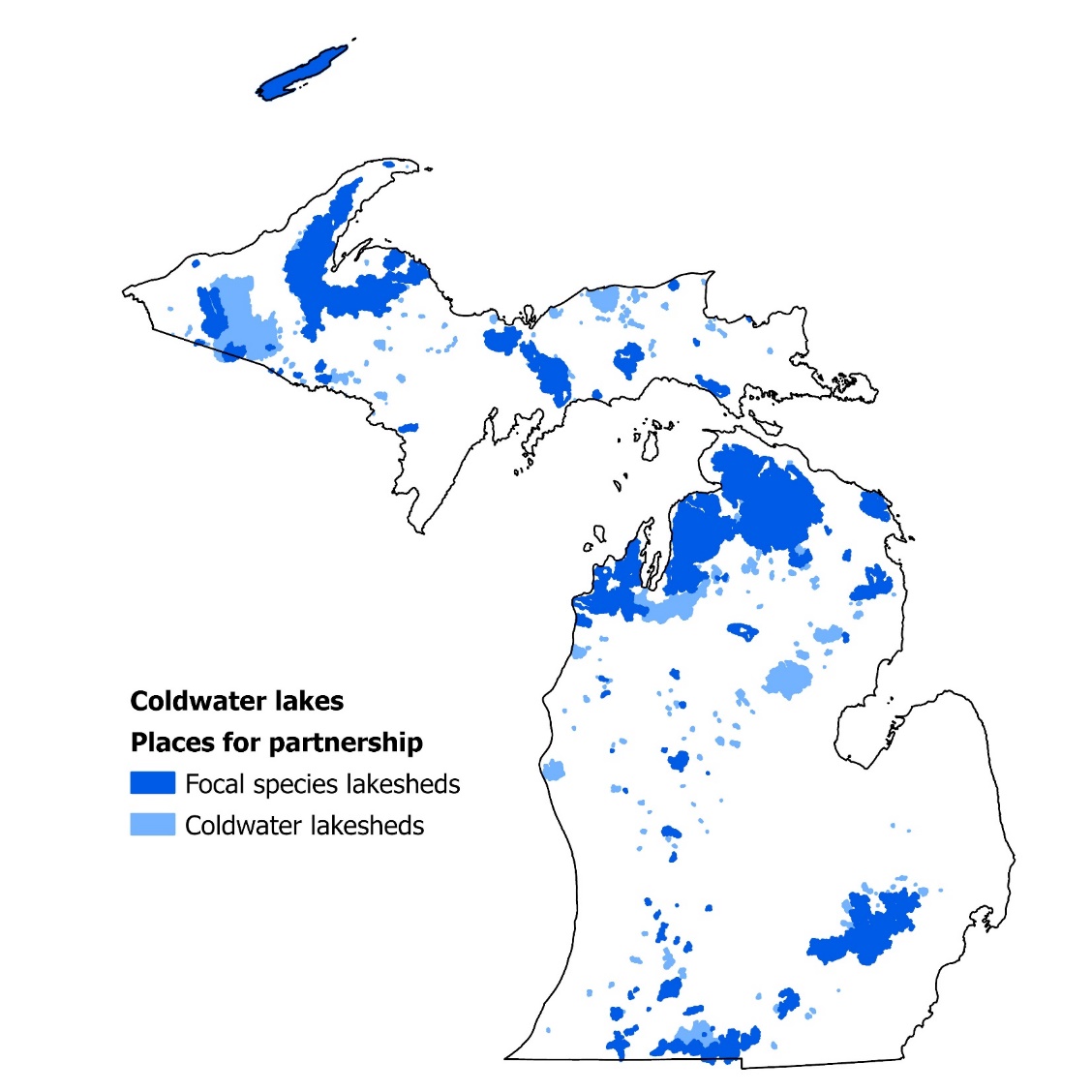
This map was designed by partners to help them connect around important places for focal species. Working together on conservation actions on a voluntary basis provides great benefits to wildlife and people.
Links to other conservation plans
There has been a multitude of relevant planning efforts across the state and country over the past ten years. Bracketed superscripts throughout the Wildlife Action Plan indicate where the conservation action, goal, or monitoring strategy aligns with those from another plan. For conservation plans with distinct objectives, the objective or strategy number is also included. This linking of plans is meant to assist the expansion of partnerships.
[SFMP] Michigan State Forest Management Plan
[ILCMP] Inland lake cisco management plan – in prep.
[AIS] Michigan’s aquatic invasive species state management plan 2025 update. (QOL-AIS et al. in prep.)
[CC] Advancing the National Fish, Wildlife and Plants Climate Adaptation Strategy into a New Decade (National Fish, Wildlife and Plants Climate Adaptation Network 2021).
[FD] Charting the Course: Michigan Department of Natural Resources Fisheries Division’s framework for managing aquatic resources. 2023-2029 Fisheries Division Strategic Plan. (Michigan Department of Natural Resources 2023).
[MILP] Michigan inland lakes partnership strategic plan (Michigan Inland Lakes Partnership 2021).
[GRA] Grand River assessment (Hanshue and Harrington 2015)
[KRA] Kalamazoo River assessment (Wesley 2005).
[WUAC] 2022 Water Use Advisory Council Report (Water Use Advisory Council 2022)
Literature Cited
Show all references
Derosier, A.L. 2007. Special animal abstract for Coregonus artedi (cisco, lake herring). Michigan Natural Features Inventory. Lansing, Michigan. 3 pp.
Hansen, G. J. A., Wehrly, K. E., Vitense, K., Walsh, J. R., and Jacobson, P. C. 2022. Quantifying the resilience of coldwater lake habitat to climate and land use change to prioritize watershed conservation. Ecosphere, 13: e4172.
Hanshue, S.K. and A.H. Harrington. 2015. Grand River assessment. Michigan Department of Natural Resources Fisheries Report, Lansing, Michigan.
Hubbs, C. L., K. F. Lagler and G. R. Smith. 2004. Fishes of the Great Lakes Region, revised edition. University of Michigan Press, Ann Arbor, Michigan.
Jacobson, P. C., H. G. Heinz and D. L. Pereira. 2010. Coldwater fish oxythermal habitat in Minnesota lakes: influence of total phosphorus, July air temperature and relative depth. Canadian Journal of Fisheries and Aquatic Science 67: 2002-2013.
Jacobson, P. C., T. K. Cross, D. L. Dustin and M. Duval. 2016. A fish habitat conservation framework for Minnesota Lakes. Fisheries 41:302-317.
Kallemeyn, L. W. 2000. A comparison of fish communities from 32 inland lakes in Isle Royale National Park, 1929 and 1995-1997. U.S. Geological Survey, Biological Resources Division Biological Science Report. USGS/BRD/BSR2000-0004.
Kennedy, P. J., & Rennie, M. D. (2024). Variation in female-biased sexual size dimorphism of northern pike (Esox lucius) associated with environment and life history. Evolutionary Ecology, 38(3), 305–326. https://doi.org/10.1007/s10682-024-10295-3
Kenow, K. P., Lor, Y., Holbrook, B. v., Fara, L. J., Houdek, S. C., Tajjioui, T., Gray, B. R., & Jacobson, P. C. (2023). The relative importance of cisco (Coregonus artedi) in the diets of common loons (Gavia immer) among a set of cisco refuge lakes in Minnesota. Canadian Journal of Zoology, 101(11), 1004–1016. https://doi.org/10.1139/cjz-2022-0189
Koelz, W. 1931. The Coregonid fishes of North-Eastern America. Papers of the Michigan Academy of Science Arts and Letters 13:303-432.
Latta, W. C. 1995. Distribution and abundance of Lake Herring (Coregonus artedi) in Michigan. Michigan Department of Natural Resources, Fisheries Research Report 2014, Ann Arbor, Michigan.
Michigan Department of Natural Resources (DNR). 2023. Charting the Course: Michigan Department of Natural Resources Fisheries Division’s framework for managing aquatic resources. 2023-2029 Fisheries Division Strategic Plan. https://www.michigan.gov/dnr/-/media/Project/Websites/dnr/Documents/managing/fisheries/Strategic-Plan_2023.pdf?rev=c3969e99c8784345bd72dba4af257a16
Michigan Department of Natural Resources. 2026. State forest management plan. Michigan Department of Natural Resources, Forest Resources Division and Wildlife Division, Lansing.
Michigan Quality of Life Agencies Aquatic Invasive Species Team et al. (QOL-AIS et al.). In prep. Michigan’s aquatic invasive species state management plan 2025 update.
Michigan Inland Lakes Partnership. 2021. Michigan inland lakes partnership strategic plan. 10 pp. https://www.canr.msu.edu/michiganlakes/about/
National Fish, Wildlife and Plants Climate Adaptation Network. 2021. Advancing the national fish, wildlife and plants climate adaptation strategy into a new decade. Association of Fish and Wildlife Agencies, Washington, DC.
O’Neal, R.P. and G.J. Soulliere. 2006. Conservation guidelines for Michigan lakes and associated natural resources. Michigan Department of Natural Resources, Fisheries Special Report 38, Ann Arbor, Michigan.
VanderBloemen, S. N., Gorne, J. A., Sass, G. G., & Shaw, S. L. (2020). Influence of cisco (Coregonus artedi, Lesueur) on muskellunge (Esox masquinongy, Mitchill) mean length, population size structure and maximum size in northern Wisconsin lakes. Journal of Applied Ichthyology, 36(2), 159–167. https://doi.org/10.1111/jai.13997
Water Use Advisory Council. 2022. 2022 Water Use Advisory Council report. https://www.michigan.gov/egle/-media/Project/Websites/egle/Documents/Groups/WUAC/Reports/Report-2022-WUAC.pdf?rev=e5c3fba2de7f49f394388ecf060f8854
Wilson, A.B., J.M. Baker, E.A. Ainsworth, J. Andresen, J.A. Austin, J.S. Dukes, E. Gibbons, B.O. Hoppe, O.E. LeDee, J. Noel, H.A. Roop, S.A. Smith, D.P. Todey, R. Wolf and J.D. Wood, 2023: Ch. 24. Midwest. In: Fifth National Climate Assessment. Crimmins, A.R., C.W. Avery, D.R. Easterling, K.E. Kunkel, B.C. Stewart and T.K. Maycock, Eds. U.S. Global Change Research Program, Washington, DC, USA.
Woolway, R. I., Sharma, S., Weyhenmeyer and coauthors. 2021. Phenological shifts in lake stratification under climate change. Nature Communications, 12:2318.
Wehrly, K.E., D. Hayes and T.C. Wills. 2015. Status and trends of Michigan inland lake resources 2002-2007. Michigan Department of Natural Resources, Fisheries Report 08, Lansing, Michigan.
Wesley, J.K. 2005. Kalamazoo River assessment. Michigan Department of Natural Resources, Fisheries Division, Special Report 35, Ann Arbor, Michigan.