
Dynamic Forests
Contributors
Huron Pines
American Bird Conservancy
Michigan Natural Features Inventory
Michigan Nature Association
Michigan Department of Natural Resources
Sault St. Marie Tribe of Chippewa Indians
Little River Band of Ottawa Indians
Keweenaw Bay Indian Community
U.S. Forest Service
U.S. Fish and Wildlife Service
John Ball Zoo
U.S. Geological Survey, Michigan Fish and Wildlife Cooperative Research Unit
Old-Growth Forest Network
Recommended Citation: Anthony K. Henehan, Sherry MacKinnon, Erin Victory, Heather Shaw, Bryant Eddy, Steve Roels, Mark Shermak, Michael Paling, Dani Fegan, Patricia Butler-Leopold, Gib King, Ashley A. Cole-Wick, and Yu Man Lee. 2026. Michigan’s Wildlife Action Plan: 2025-2035, Dynamic Forests. Michigan Department of Natural Resources, Lansing, MI.
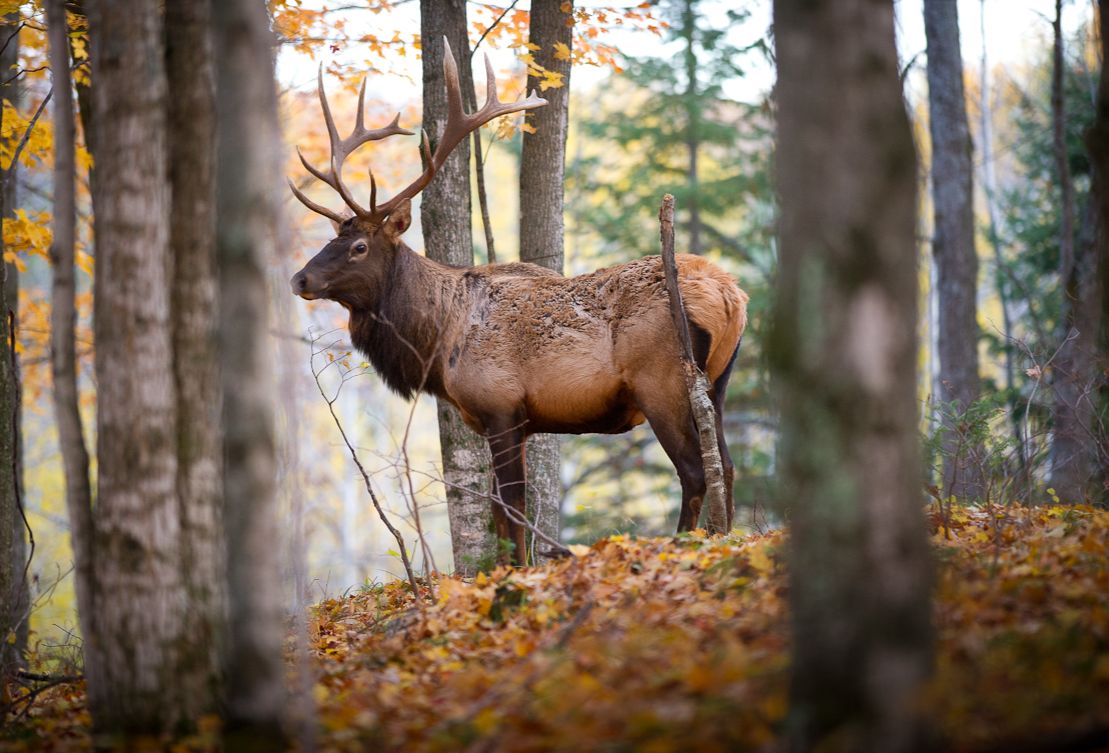
What are dynamic forests?
Dynamic Forests are the “working forests” of Michigan; those that are managed for a forest objective typically related to forest products, biodiversity, wildlife habitat, or recreation. Forestry practices employed to achieve these objectives include timber harvest, cultivation, tree planting and prescribed fire. When implemented under sustainable harvest guidelines and using best management practices, forest management can promote structural and species diversity, increase forest productivity, and improve forest health and resilience. Moreover, it can mitigate impacts of invasive species, disease, and environmental change. These actively managed forests represent a diverse range of forest types, structures, ages, and successional stages that are in flux at various scales across the landscape. They are integral to the state’s ecological framework, as well-managed forests provide a host of ecosystem services including nutrient cycling, water regulation and quality, soil quality, and carbon storage. They provide habitat for common and rare plants and wildlife species and contribute to the economy through sustainable timber production and recreation. Sound forest management balances these ecological, social and economic values, the three tenets of forest sustainability.
What is the health of dynamic forests?
Often, in actively managed forests, forest health is defined by harvest sustainability, where tree removals do not exceed growth rates, ensuring that timber resources persist indefinitely. It is clear that Michigan’s dynamic forests are productive forests. Growth rates continue to increase as they mature, exceeding removal and mortality rates, even as the land base remains essentially stable (USDA 2020).
Sustainable harvest is not the same as overall forest sustainability. Forest sustainability seeks to balance ecological, economic, and social values. Measuring it requires tracking biodiversity, forest productivity, soil and water conditions, forest products, recreation use, and carbon storage. Some of this information is already collected through routine forest and infrastructure inventories. Applying these data to forest sustainability, however, is new and requires different ways of interpreting them. Other information is still lacking, especially on species and genetic diversity, forest fragmentation, soil quality, and recreation use. This chapter focuses on the attributes of forest sustainability across Michigan’s Dynamic Forests, while recognizing the importance of sustainable harvest.
Dynamic forests are subject to several stressors which can affect forest health. These include high rates of herbivory in places that reduce the ability of the forest to regenerate and invasive species that can alter composition, structure and natural processes. Changes in temperature and precipitation can affect tree species distribution, growth rates, and their ability to withstand insects, disease, and extreme weather. Continued stewardship and collaborative partnerships are essential to ensure these forests remain resilient and capable of serving ecological, economic and social functions into the future.
Vernal pools in dynamic forests
Vernal pools are small, seasonal wetlands that form in forest depressions and play an outsized role in ecosystem health. Despite their temporary nature, they serve as biodiversity hotspots (Preisser et al. 2000), breeding grounds for important species (Calhoun et al. 2014) and key contributors to nutrient cycling (Capps et al. 2014, Lee 2016).
Filling with rain and snowmelt in early spring, these pools dry out later in the year which prevents permanent fish populations from establishing. This creates safe breeding conditions for amphibians and invertebrates, including species that rely exclusively on vernal pools, such as the wood frog, spotted salamander, blue-spotted salamander and fairy shrimp (Thomas et al. 2010, Calhoun et al. 2014).
More than 550 species have been documented using vernal pools (Colburn 2004), earning them the nickname “coral reefs of the temperate forest.” They support a range of wildlife, including frogs, snakes, birds and mammals. Several rare or protected Michigan species, such as the smallmouth salamander, copperbelly water snake, Blanding’s turtle and red-shouldered hawk, are also linked to these habitats.
Vernal pools influence forest food webs by supporting amphibians that serve as both predator and prey (Calhoun et al. 2014). They promote nutrient cycling through the decomposition of organic matter (Capps et al. 2014) and enhance habitat connectivity across ecosystems (Thomas et al. 2010). Given their ecological value and limited protection, conserving vernal pools is essential for maintaining resilient forest ecosystems.
Call Out Box: Fairy Shrimp
Fairy Shrimp are small freshwater crustaceans that only live in vernal pools where fish are absent. Their eggs, called cysts, are about the size of sesame seeds and can withstand freezing and drying, with some eggs actually requiring a period of dryness in order to hatch. Their eggs can last for years, possibly even centuries, in the soil at the bottom of vernal pools until conditions are right for hatching. Their life cycle is extremely rapid, with eggs hatching in early spring when the pools refill with water, juveniles and adults undergoing several stages of development, adults reproducing, females laying eggs and finally adults disappearing from the pools in as few as three weeks.
Accomplishments
With support from volunteers, Michigan’s Vernal Pool Patrol statewide participatory science program has visited 21% (1,498) of the current 7,051 potential vernal pools mapped within the Michigan Vernal Pool Database to assess their status (Ross pers. comm. 2025). This has resulted in verifying over 1,000 vernal pools across the state, which previously had not been documented and/or mapped. This program has enhanced our understanding of vernal pool status, distribution, and ecology and has increased awareness and conservation of vernal pools in Michigan.
Documented new American Goshawk nests and monitored the status of known nests at Hiawatha National Forest and Camp Grayling (Monfils et al. 2024, Rowe et al. 2025).
Conducted annual surveys for Golden-winged Warblers at Camp Grayling from 2021 – 2025 to document distribution and monitor population status (See Monfils et al. 2023, 2025).
Documented over 50 new occurrences of Yellow-banded Bumble Bee in the Hiawatha National Forest and across northern Michigan (Rowe et al. 2023, 2025).
Initiated a successful head-starting program for Eastern Box Turtles at John Ball Zoo (John Ball Zoo 2025).
Established the Michigan American Marten Working Group to foster collaboration and coordination among government agencies and universities for the conservation and management of American Marten within Michigan.
Focal Species
American Goshawk
Astur atricapillus
State Threatened
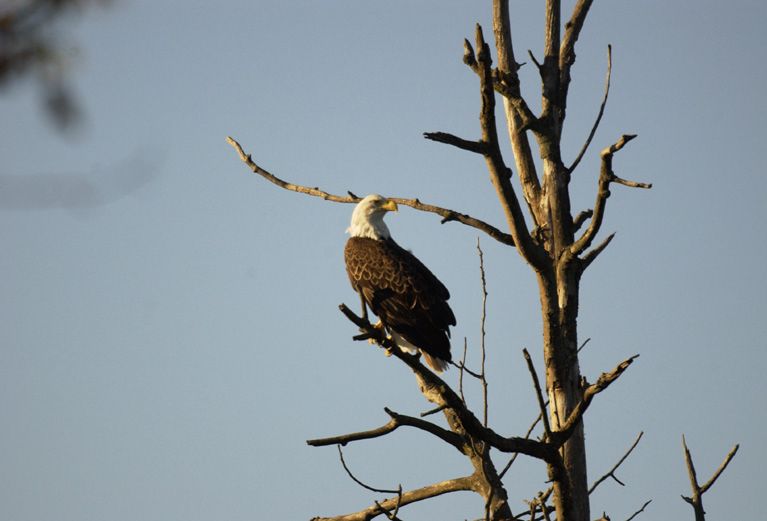
Formerly known as the Northern goshawk, the American goshawk is a large forest raptor with a slate gray back, barred light gray belly, and a bold white eyeline over red eyes. This species is perhaps most well-known for its aggressive nest defense. Requiring mature forests, the logging era of the late 1800s resulted in a substantial loss of habitat for the American goshawk, and they were left to persist in the mature forest remnants of northern Michigan. Over the last century, as Michigan’s forests re-established and matured, their distribution expanded to the extent that large contiguous mature forest is available. They are now more widespread, though primarily still in the northern portions of the state. However, while they are difficult to monitor given the remote nature of their nesting sites and their capacity for irruptions following prey population cycles, there are some indications that their population is now decreasing (Avian TAC 2019). Goshawks have large home ranges and nest in low densities using deciduous trees in the Great Lakes region, most often species like birch, beech and aspen in Michigan. Breeding sites typically have high canopy closure to protect young from aerial predators and to reduce competition (Chartier et al. 2013). This species has been documented from 204 sites in 43 counties in Michigan as of 2025 in the state's Natural Heritage Database and 99 of these occurrences were observed within the last 20 years (2005-2025; MNFI 2025).
Goals
- Determine status and distribution.
American Marten
Martes americana
The American marten is a small mustelid that is tan to chocolate in color and features a distinct chest/throat patch that varies from cream to auburn. American marten were historically associated with unfragmented areas of late-seral stage conifer forests (Thompson et al. 1989, Buskirk and Powell 1994). Recent research has highlighted complexity of forest structure, such as coarse woody debris (Payer and Harrison 2003, Godbout and Ouellet 2010, Farnell et al. 2020), snags (Porter et al. 2005) and tree diversity (Sanders et al. 2017), as important elements driving American Marten occurrence and habitat use.
The American marten was considered extirpated in the Lower Peninsula in 1911 and Upper Peninsula in 1939 due to unregulated trapping and habitat loss. Initial reintroductions began in the Upper Peninsula in 1955, with several follow-up attempts including reintroductions in the Lower Peninsula between 1984 and 1986 (Williams et al. 2007). Currently, American marten populations are stable in the Upper Peninsula and regulated as a furbearer (Michigan DNR 2023). Although scientists and managers have studied the northern Lower Peninsula populations since their reintroduction efforts (Sanders et al. 2017, Gehring et al. 2019), their broader distribution and status is largely unknown across the Lower Peninsula. This species is not tracked in the state’s Natural Heritage Database.
Goal
Enhance forest structure and habitat complexity (e.g., snags and woody debris) using silvicultural techniques to support American Marten populations and promote range expansion in known, suspected, and adjacent habitats.
- Improve understanding of ecological and environmental characteristics underlying occupied habitats in the Lower Peninsula.
Eastern Box Turtle
Terrapene carolina carolina
State Threatened
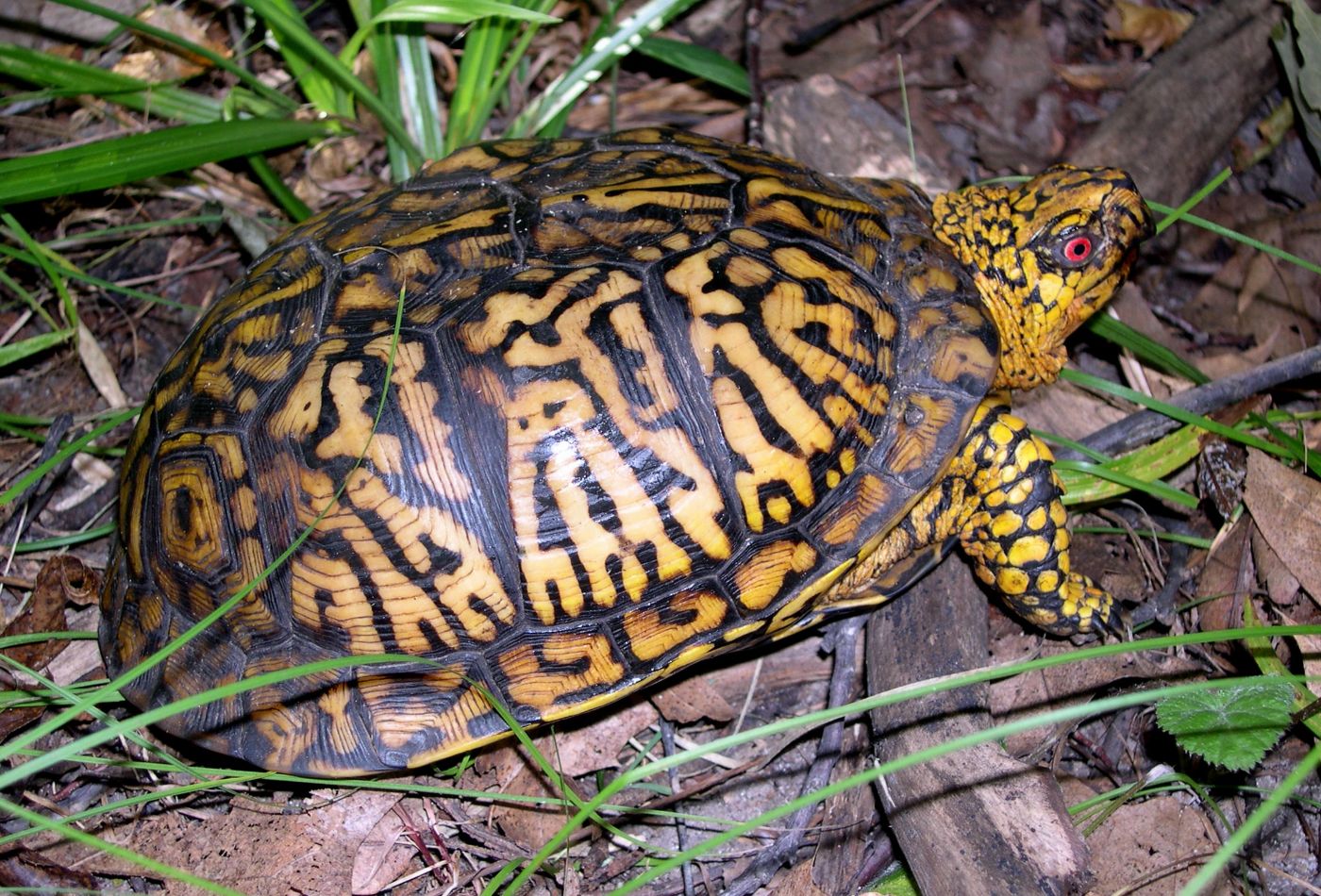
The eastern box turtle is a small, 5-8 inches long, predominantly terrestrial turtle that is easily identifiable by its highly domed, yellow and brown patterned carapace and hinged plastron which can close shut (Harding and Mifsud 2017). Eastern box turtles typically inhabit deciduous and mixed forests with a preference for forest-field edges and sandy soils near a slow-moving water source (Dodd 2001, Ernst and Lovich 2009, Harding and Mifsud 2017, Erb and Roberts 2023). Eastern box turtles are long-lived (up to 50-80 years), have delayed sexual maturity and low reproductive output and populations can continue to persist for a number of years despite small population sizes and/or insufficient recruitment (Erb and Roberts 2023). High adult survival is critical for long-term population viability (Harding and Mifsud 2017, Erb and Roberts 2023). This species is found in the southern and western Lower Peninsula. It has been documented from 375 sites in 36 counties in Michigan as of 2025 in the state’s Natural Heritage Database, with 273 of these occurrences observed within the last 30 years (1995-2025; MNFI 2025).
Goals
- Determine baseline status, distribution and potential viability of populations.
- Evaluate success and feasibility of head-starting efforts including long-term survival and reproductive success of head-started individuals and framework for implementing efforts at appropriate scale.
Golden-winged Warbler
Vermivora chrysoptera
State Threatened
Golden-winged warblers are striking and charismatic songbirds, easily recognized by their bright golden crown and flashes of gold on their wings. They have silvery-gray bodies with bold black-and-white facial patterns. They are often heard singing their buzzy songs in brushy habitats with scattered taller trees for perching. First occurring in southern Michigan around the turn of the 20th century due to the expansion of agriculture following logging, this species has demonstrated dynamic population and range shifts over a relatively short period of time. Since the mid-1900s, there continues to be a substantial range contraction and shift northward, and Michigan’s breeding population is now largely found in the northern Lower and Upper Peninsulas. This is likely driven by a combination of factors including habitat availability, land use changes, and increased temperatures (Roth et al 2019, Hightower et al 2022). In Michigan, this rare warbler relies on two primary habitat types for nesting: upland - early successional/regenerating forest stands often associated with aspen; and lowland - shrubby wetlands. The vegetation structure within these habitat types is important, as is their juxtaposition with deciduous mature forest for rearing fledglings. Breeding Bird Surveys in Michigan documented a population decline at the rate of -5.5% annually between 1966-2009 (Sauer et al. 2020). This species has been documented from 15 sites in seven counties in Michigan as of 2025 in the state's Natural Heritage Database. All 15 of these occurrences were observed within the last 20 years (2005 –2025; MNFI 2025).
Goal
- Increase habitat availability to sustain a Michigan population. [GWWA, SFMP]
Small-mouthed Salamander
Ambystoma texanum
State Endangered
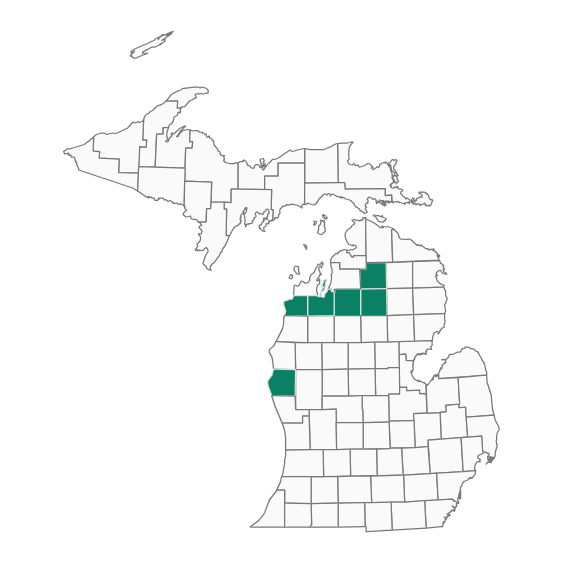
The small-mouthed salamander is one of the rarest salamanders in Michigan. It is a medium-sized (4-7 inches long) salamander with a very small head or snout and a brownish gray to black body with light gray speckles or markings along the lower sides of the body (Harding and Mifsud 2017). It can be hard to tell small-mouthed salamanders apart from other similar-looking salamanders in the wild because some related species can share their genes and look almost identical (Lee 2010). Small-mouthed salamanders primarily inhabit forested floodplains, swamp forests, deciduous forests and associated wetlands (Petranka 1998, Harding and Mifsud 2017). They require temporary, shallow bodies of water, which are usually fish-free, for breeding, including vernal pools, oxbow ponds in floodplains, swamps, roadside ditches and ponds, flooded fields and prairie ponds (Petranka 1998, Harding and Mifsud 2017). Outside the spring breeding season, small-mouthed salamanders generally remain hidden beneath rotting logs, rocks, or leaf litter or underground in crayfish or small mammal burrows. Michigan is at the northern extent of the species’ range (Petranka 1998). This species is only known from southeast Michigan from 15 sites in 5 counties according to the state’s Natural Heritage Database and none of these occurrences have been observed within the last 20 years (2005 –2025; MNFI 2025).
Goals
- Establish baseline status and distribution in Michigan.
Yellow-banded Bumblebee
Bombus terricola
Special Concern
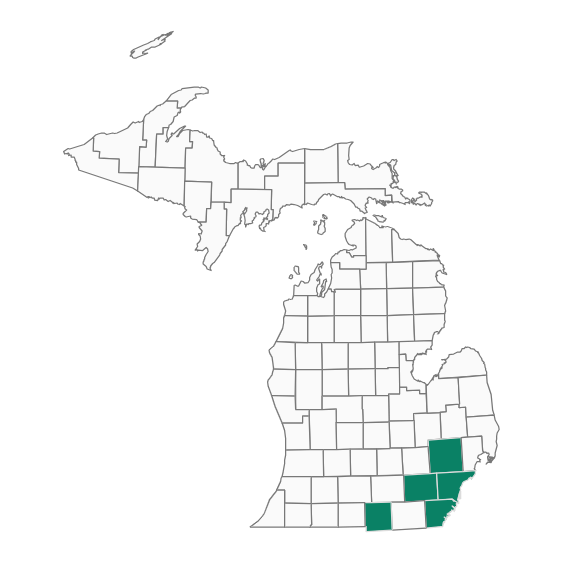
Yellow-banded bumble bees are medium to large sized bumble bees with a mostly black thorax, a single yellow stripe on mid-abdomen and orange hairs at the base of the abdomen (Williams et al. 2014). Formerly common and widespread across much of the eastern United States and seven Canadian provinces, the yellow-banded bumblebee has vanished from all but isolated patches of its range, along with several other North American bumblebees of the same subgenus (Evans et al. 2008). In Michigan, they occur primarily in the northern region of the Lower Peninsula and throughout the Upper Peninsula and are associated with natural hardwood forests and bogs. They are known for their ability to fly in cooler temperatures and lower light conditions, making them effective pollinators even in challenging environments. This species has been documented from 298 sites in 66 counties in Michigan as of 2025 in the state's Natural Heritage Database and 129 of these occurrences were observed within the last 20 years (2015 –2025; MNFI 2025).
Goals
- Complete targeted surveys at unique life stages of yellow-banded bumble bee colony development.
- Maintain stable populations of yellow-banded bumble bee at known locations.
Strengthen forest resilience by maintaining ecological integrity
Forest resilience to a changing environment depends on two key factors: species diversity and the presence of tree populations that are genetically adapted to warmer and drier conditions. Enhancing ecological integrity and supporting research into climate-adaptive genotypes are essential strategies for sustaining healthy forests. Additional challenges include the northward and eastward spread of forest pests and invasive species into Michigan, like emerald ash borer, further stressing forest ecosystems. At the landscape scale, maintaining a shifting mosaic of large blocks of both mature and young forests is logistically complex but critical for supporting biodiversity, facilitating regeneration and enhancing overall forest resilience.
Focal species adaptive capacity
Adaptive capacity is a species’ ability to tolerate or adapt to environmental change, whether that be through shifting in space or persisting in place (Thurman et al. 2020). Michigan Natural Features Inventory, with funding support from the Michigan Department of Natural Resources, assessed Adaptive Capacity for over 500 Midwest SGCN from 2023-2024 (Appendix 3). We chose to increase clarity at the expense of precision in technical language used by Thurman et al. (2020) in their paper. The Michigan Department of Natural Resources created broad management strategies based on assessment results and are intended to be stepped down based on management scale, capacity and resources. Management strategies for assessed 2025-2035 focal species are:
Lowest adaptive capacity | Strategy | |
Golden-winged Warbler | Range of Tolerances | Protect habitat reserves |
American Goshawk | Range of Tolerances | Increase habitat connectivity |
Eastern Box Turtle | Life Span and Age Structure | Increase habitat connectivity |
Yellow-banded Bumblebee | Population Size | Manage genetic diversity |
Small-mouthed Salamander | Movement | Protect habitat reserves |
Threats and conservation actions to habitat
Threats
Invasive & Other Problematic Species, Genes, & Diseases
- Invasive plants and animals can degrade habitats through significant canopy loss, native canopy replacement, reduced structural diversity and food web disruptions such as reducing habitat for the insects needed to feed breeding birds (Vose et al. 2013, Litt et al. 2014, Cohen et al. 2024)
- Timber salvage operations in response to disease outbreaks can remove high timber volumes that alters the structure, composition, and age distribution of forested landscapes, reduces wildlife habitat, and can also remove individuals with natural genetic disease resistance, lowering a species ability to better withstand such outbreaks (Thorn et al. 2017, Lindenmayer and Noss 2006).
- Overpopulation of herbivorous mammals (e.g., white-tailed deer and rabbits) can result in over-browsing. Effects can include local extinction of rare species, decreased biodiversity, disruption of long-term natural processes, limit regeneration and recruitment of native trees to overstory and spread of non-native species (Hill Bermingham 2010, Averill et al. 2016, Bernardo et al. 2018, Maybard-Bean and Kaye 2019).
- Warmer winters allow for range expansion of invasive species and pests. Allows for extra life cycle of pests, leading to longer and more intense impacts on tree species (Bentz and Jonsson 2015).
Natural Systems Modifications
- Lack of structural complexity and age class diversity within forests leads to decreased biodiversity and forest quality. Homogenization of forests to predominantly even aged stands decreases ecosystem resilience to disturbance and disease (Thompson et al. 2009).
- Altered fire regimes lead to a shift in species composition, reduced biodiversity and the loss of culturally significant species (Berkes and Davidson-Hunt 2006, Larson et al. 2025). This loss of fire tolerant species alters forest compositions and impacts management goals and implementation.
- Loss of old-growth and late-successional forests reduces overall complexity of a forest; large tracts of primary old-growth forest currently constitute less than 0.2% of Michigan (Cohen et al. 2020). Forest fragmentation also threatens resilience of old-growth and late-successional stands. Currently, many of these forest types persist as remnant patches enmeshed in a matrix of agricultural lands, early-successional forest and young northern hardwoods.
- Forest fragmentation poses a myriad of threats to species that require contiguous forests such as reduced wildlife corridors and dispersal, increased edge effects and reduced biodiversity. It is important to note this threat is scale dependent based on species needs and there is no “one size fits all” solution.
- Vernal pools are extremely sensitive to forestry operations (Calhoun and deMaynadier 2007). Negative impacts to shade quality, hydrology, soils, coarse woody debris and vegetation both within vernal pool basins and in surrounding uplands can be detrimental to amphibians throughout their life cycles.
- Herbicides and associated surfactants used as part of tree plantation operations can be deleterious to amphibian populations and may include cascading ecological effects not yet well-understood (deMaynadier and Houlahan 2007).
Changing Weather Patterns
- Extreme weather events, like the 2025 Ice Storm in the northern Lower Peninsula, cause widespread damage to Dynamic Forests which stress and disrupt management planning and implementation.
- Warmer temperatures will be less favorable to species at the southern edge of their range in Michigan, such as northern and boreal tree species. This will lead to declines and a northern shift in ranges for these species (Goldblum and Rigg 2005, Viner and Chuine 2008).
- Warmer temperatures will result in less snowpack, earlier snowmelt, longer and drier growing seasons, drier soils, and increased risk of wildfire (Westerling et al. 2006, Suriano et al. 2019), which can increase tree mortality, susceptibility to disease, reduce forest regeneration, and alter structure and composition.
- Moisture stress is of particular concern for seedlings, and this may impact tree regeneration and recruitment.
Human Intrusion & Disturbance
- Shifts in timber market demand can alter and impact large scale forest management.
- Lack of natural resource staff capacity can have long lasting, detrimental impacts on forest management in critical areas. Declines and shifts in management schedules and priorities can create setbacks that can be difficult or impossible to resolve.
- Pesticides can be an important tool in forestry management. However, careful selection of pesticides, adjuvants, application method and timing are critical to minimizing negative impacts on the ecosystem, including reduced biodiversity and damage to rare species.
Conservation Actions
Land & Water Management
- Manage dynamic forest landscapes as a matrix of community and cover types to meet diverse SGCN and State Forest Management Plan Featured Species needs based on focal species goals at appropriate scales. [SFMP]
- Incorporate course woody debris and snag retention as crucial tools for SGCN management. [FSC]
- Identify and preserve vernal pool locations. Implement best management practices around vernal pools. Conserve upland matrices around vernal pools and corridors to the pools for SGCN movements. [FSC]
- Conserve seeps and springs as important habitat features for amphibian SGCN.
- Increased prescribed fire on the landscape in fire dependent systems to promote fire-dependent species, manage fuel loads and influence succession pathways. [SFMP]
Raising Awareness
- Continue education and outreach to private landowners about the need for diverse forest management by building on existing programs and cost share opportunities. [SFAP]
- Promote voluntary best management practices to recreational users, researchers and industry for stopping the introduction and spread of invasive species. [TIS]
Conservation Designation & Planning
- Build a network of collaboration across government agencies, non-governmental organizations, and private landowners that leans on each other’s strengths and leverages resources to multiply efforts for forest management across the landscape. [MAMWG]
- Continue to support increasing state forest land resiliency and sustainability efforts through external forest certification standards [SFI, FSC].
- Increase communication around DNR/Michigan Invasive Species Program responses to emerging invasive and pest issues. Connect partners and public with relevant CISMAs for concerns about established species. [TIS]
- Continue to expand Good Neighbor Authority program to meet forest management needs throughout national forestland in Michigan.
- Recognize and protect fire-sensitive species in all prescribed fire burn plans. [PBMP]
- Protect Michigan’s declining old growth forest remnants.
Research & Monitoring
- Conduct research into impacts of deer browse on SGCN and their habitats and collate the data into a centralized database. Create and implement management actions based off the results of this research.
- Conduct research into benchmarks for SGCN needs around forest management.
- Continue to use and promote the Midwest Invasive Species Information Network (MISIN) to monitor invasive species. [TIS]
Law & Policy
- Increase support for CISMAs to protect high quality areas and develop long-term, regional invasive species management strategies. [TIS]
- Take appropriate enforcement actions for violations of the Michigan Threatened and Endangered Species Act (NREPA Part 365), the Invasive Species Order (NREPA Part 413) and maintain the Prohibited and Restricted Species list pursuant to the Natural Resources and Environmental Protection Act, P.A. 451 of 1994, as amended.
Threats and conservation actions for focal species
American Goshawk
Threats
Invasive & Problematic Species, Disease & Genes
- Mortalities due to diseases, especially avian influenza (See Wildlife Health Chapter for more details).
Natural Systems Modifications
- Loss of mature, contiguous forest stands through forest fragmentation and logging.
- Decline of prey items such as snowshoe hare and ruffed grouse.
Conservation Actions
Land & Water Management
- Protect and maintain large, contiguous tracts of mature forest. [FFMB, PIF-UGL]
- Protect active nests from timber management activities. [WRG]
Conservation Designation & Planning
- Update the 2015 DNR Woodland Raptor Guidelines. [WRG]
- Create a layer for nests that can be incorporated in the Michigan Forest Inventory (MiFI) and other planning tools. [WRG]
Research & Monitoring
- Continue to identify and monitor new and known nest sites.
American Marten
Threats
Invasive & Other Problematic Species, Genes & Diseases
- Potential for high parasite loads in marten can impact already stressed populations (Spriggs et al. 2016, Spriggs et al. 2018).
- Small founder numbers and geographically separated populations can lead to reduced genetic diversity.
Development & Natural Systems Modifications
- Interruption of ecological dynamics and commercial forestry practices can reduced forest structure and fine-scale elements (e.g., loss of snags, course woody debris, etc) (Godbout and Ouellet 2010, Saunders et al. 2017, Roloff et al. 2020, Viau et al. 2024).
Human Intrusion & Disturbance
- Habitat fragmentation and loss of contiguity throughout forest tracts in the northern Lower and Upper Peninsulas reduces habitat availability, dispersal opportunities and gene flow between populations (Hargis et al. 1999, Cushman et al. 2011, Howell et al. 2016).
Transportation & Service Corridors
- An increase in road-related mortalities poses a growing threat to American marten populations, as expanding road networks lead to more frequent vehicle collisions and habitat fragmentation, reducing connectivity between suitable habitats (Belant 2007, Sanders and Kujawa pers. communication).
Changing weather patterns
- Reduced snowfall, snowpack, and increases in average winter temperatures can impact habitat use by martens and abundance of their prey (Carroll 2007, Pozzanghera et al. 2016, Lavoie et al. 2019, Hiltner 2022).
Conservation Actions
Conservation Designation & Planning
- Increase communication and collaboration among researchers, land managers, tribes and agencies. [MAMWG]
Research & Monitoring
- Research the efficacy of silvicultural specifications for marten populations in the Lower Peninsula.
Land & Water Management
- Protect large tracts of mature forest and maintain or increase density of large and structurally complex coarse woody debris and snags within all age class forest stands during forest management. [SFMP]
- Encourage the development and maintenance of corridors between large forested tracts. [SFMP]
- Where possible, increase the within-stand component of mesic conifers in mixed stands, and expand mesic conifer types. [SFMP]
Eastern Box Turtle
Threats
Lack of Knowledge
- Lack of information on the status, demographics, critical habitats and specific threats and management needs at most populations in the state (Hyde 1999).
Residential and Commercial Development
- Habitat loss and fragmentation due to development have reduced habitat availability and connectivity, isolated existing populations, increased threats (e.g., increased distance females have to travel to access nesting habitat, increased risk of mortality from predators and roads, limited and/or degraded nesting habitat) and negatively impacted the distribution, abundance and potential long-term viability of eastern box turtles (Gibbs and Shriver 2002, Harding and Mifsud 2017, Erb and Roberts 2023a).
- Increased predation of nests, hatchlings, juveniles and adults due to larger populations of mesopredators (mid-sized carnivores), particularly raccoons, in developed areas have reduced eastern box turtle survival and population recruitment (Erb and Roberts 2023a).
Agriculture & Silviculture
- Conducting agricultural and forestry activities using heavy machinery and prescribed fire during the turtles’ active season can result in turtle mortalities, injuries and other indirect effects (Erb and Roberts 2023a and 2023b).
Invasive & Problematic Species, Pathogens & Genes
- Invasive plant species can form dense stands which reduce foraging and thermoregulatory opportunities and reduce availability and quality of nesting habitat (Erb and Roberts 2023a).
Conservation Actions
Species Management
- Maintain or increase adult survival and recruitment at priority populations by controling mesopredators to reduce predation of nests and all age classes, protecting nests, and/or augmenting populations through headstarting using a strategic framework to increase recruitment population size where needed, appropriate, and feasible.
- Reduce road mortality by identifying areas where road mortality is a significant issue, particularly at viable/potentially viable populations, and implementing mitigation measures (e.g. traffic slowing measures, signage, underpasses, culverts, barrier fencing, strategic road placement) where needed.
Land and Water Management
- Maintain, restore and/or expand forested, early successional and wetland habitats to support viable populations, particularly nesting habitat.
- Research, assess, establish and implement best practices when conducting habitat management and restoration activities to avoid/reduce adverse impacts to box turtles (e.g., timing, scope and method(s) of prescribed fire, timber harvesting, mowing and vegetation clearing to create/enhance nesting habitat) (Erb and Roberts 2023b).
Research & Monitoring
- Develop and implement a statewide monitoring strategy that includes surveys and/or potentially other methods (e.g., canine detection surveys) to identify unknown populations, and determine and monitor status of extant populations, including conducting long-term monitoring and assessing viability of select populations to understand population demographics and specific threats and management needed to support stable or viable populations statewide.
Law & Policy
- Take actions to prevent illegal collection for the pet trade, such as work with DNR law enforcement and local authorities, and reduce incidental collection by the general public.
Golden-winged Warbler
Threats
Invasive & Problematic Species, Pathogens & Genes
- Genetic loss through hybridization with blue-winged warblers across the species’ range [GWWA].
Natural Systems Modifications
- Loss of early successional habitat created by natural disturbances, such as fire.
Conservation Actions
Land & Water Management
- Increase habitat management within focal areas on public lands using golden-winged warbler best management practices.
- Within golden-winged warbler focal areas, develop landscape-level forest succession goals that meet golden-winged warbler needs across ownerships and through strong collaborative partnerships. [GWWA]
- Work with private landowners to implement golden-winged warbler best management practices [GWWA]
- Implement forestry practices that make appropriately sized forest gaps in priority areas for the warbler in deciduous forest landscapes.
Raising Awareness
- Continue to support the Southern Wings Program, a partnership conserving state-priority birds on their wintering grounds in Mexico, Central America, South America and the Caribbean. [SW]
Research & Monitoring
- Assess population status of golden-winged warblers and hybrids across species’ range in Michigan [GWWA]
- Conduct targeted surveys in suitable habitat throughout the northern Lower and Upper Peninsulas to document current distribution, assess population demographic parameters, and genetic introgression with blue-winged warbler.
- Determine if habitat associations vary throughout the species’ range and map hybridization zones
- Develop and ground truth a habitat suitability model to identify additional populations.
- Assess species’ response to 2025 Ice Storm in the northern Lower Peninsula
Small-mouthed Salamander
Threats
Lack of Knowledge
- Lack of information on the current status, distribution, abundance and potential viability of known populations in the state (Lee 2010).
Residential, Commercial and Agricultural Development
- Habitat loss, degradation and fragmentation due to clearing, draining and/or filling of forested floodplains, swamps and breeding habitats such as vernal pools for agricultural use and development (Petranka 1998).
- Habitat fragmentation and roads have reduced connectivity and caused mortality of individuals at many of the known sites which could lead to loss of genetic diversity and inbreeding and increased risk of local extirpations (Lee 2010).
- Exposure to chemical pollutants due to runoff of fertilizers, insecticides and herbicides may pose a threat to this species (Lee 2010).
Invasive & Problematic Species, Pathogens & Genes
- Presence or increase of the unisexual Ambystoma salamander complex/ individuals may increase hybridization, increase competition for food resources and increase risk of population decline and local extirpations (Lee 2010).
Changing Weather Patterns
- Increased air temperatures and increased frequency and severity of drought due to climate change can reduce water levels and duration of water in breeding pools, which could result in breeding pools drying up before larval metamorphosis is complete and reduced recruitment.
- Warmer weather will result in reduced snowpack and changing precipitation patterns that could impact availability and timing of ephemeral aquatic habitat.
Conservation Actions
Species Management
- Implement road mortality mitigation measures (e.g. temporary road closures during the breeding season and/or emergence season, traffic slowing measures, underpasses, culverts, barrier fencing, strategic road placement) where needed.
Land and Water Management
- Maintain, protect, restore and/or expand complexes of forested wetlands and upland forests with breeding habitats such as vernal pools to provide suitable and sufficient breeding and foraging habitats to support viable populations at known sites. Maintain fish-free breeding habitats that stay flooded long enough to support successful larval metamorphosis and recruitment.
- Maintain cool, moist, microenvironments, canopy cover and sufficient leaf litter and woody debris on the forest floor to provide cover and foraging habitat for juveniles and adults.
- Avoid or reduce use of chemicals, including insecticides and herbicides, near occupied habitat, particularly breeding habitats.
Research & Monitoring
- Develop and implement a statewide monitoring strategy that includes targeted surveys to identify unknown populations, determine status of historic or poorly surveyed populations and assess and monitor status and abundance of extant populations.
- Research potential use and effectiveness of eDNA to identify and/or monitor status and abundance of extant or occupied sites.
- Investigate population dynamics or impacts in relation to the unisexual blue-spotted salamander complex
- Monitor presence of diseases (e.g., chytrid/Batrachochytrium salamandrivorans) in extant populations.
Yellow-banded Bumblebee
Threats
Development & Natural Systems Modifications
- Loss of nesting and foraging habitat by increased urbanization and agricultural land use (Colla and Packer 2008).
Invasive & Other Problematic Species, Genes & Diseases
- Spread of pathogens from commercially used bumblebees threatens wild bumblebee populations (Chen et al. 2025).
- Widespread use of pesticides (neonictinoids) in or around yellow-banded bumblebee locations.
- Direct competition for nectar sources from introduced species such as commercial honeybees linked to potential long-term evolutionary declines in floral nectar production (Su et al. 2022).
Conservation Actions
Land & Water Management
- Reestablish wildflowers within agricultural and urban landscapes using native species. [PBMP]
- Manage dynamic forest systems for a diverse range of community types and cover types.
Research & Monitoring
- Identify and monitor new and known populations. [NAB]
- Promote community science efforts to identify populations.
Places for partnership
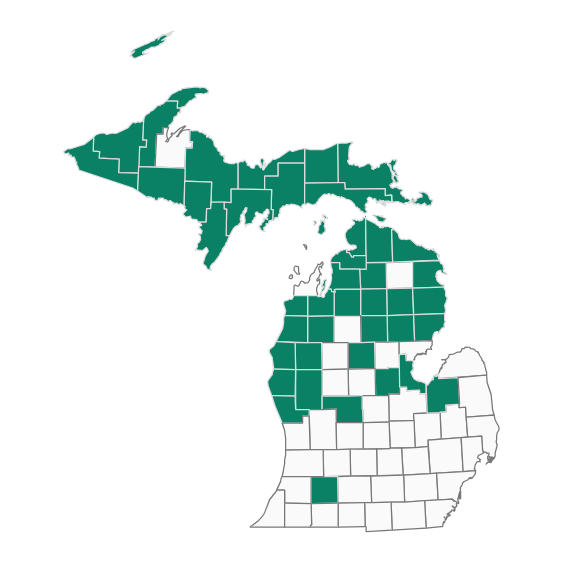
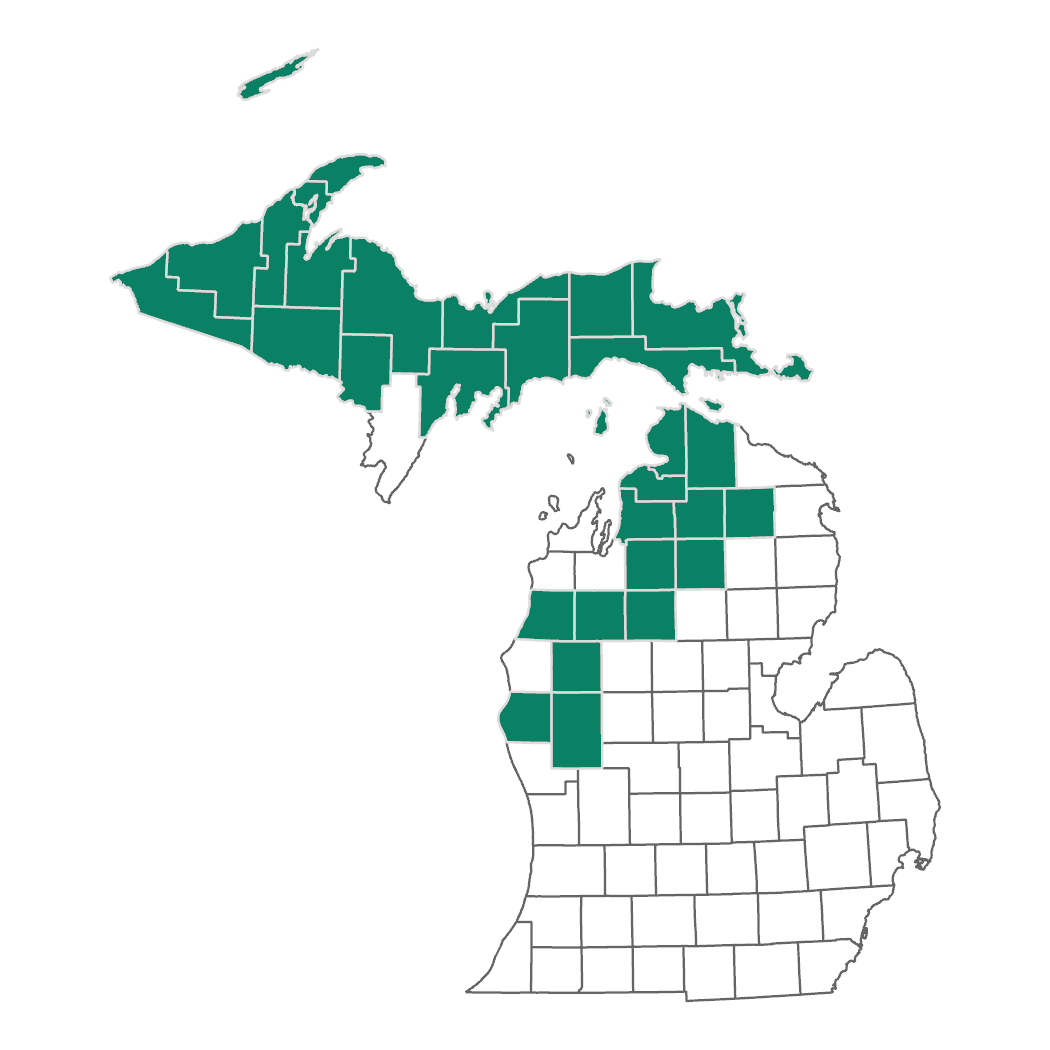
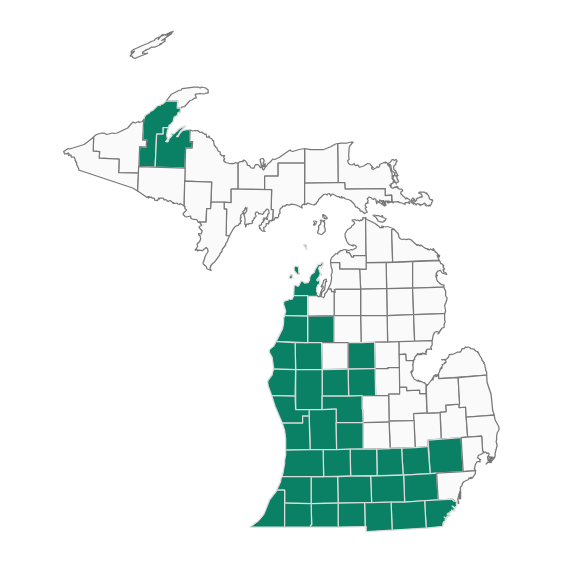
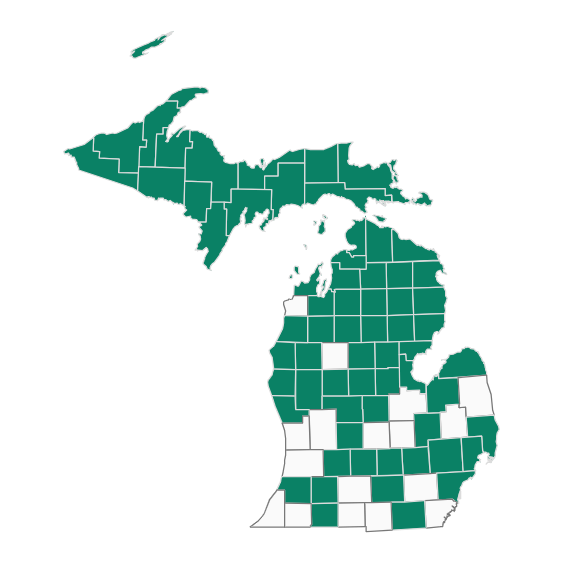
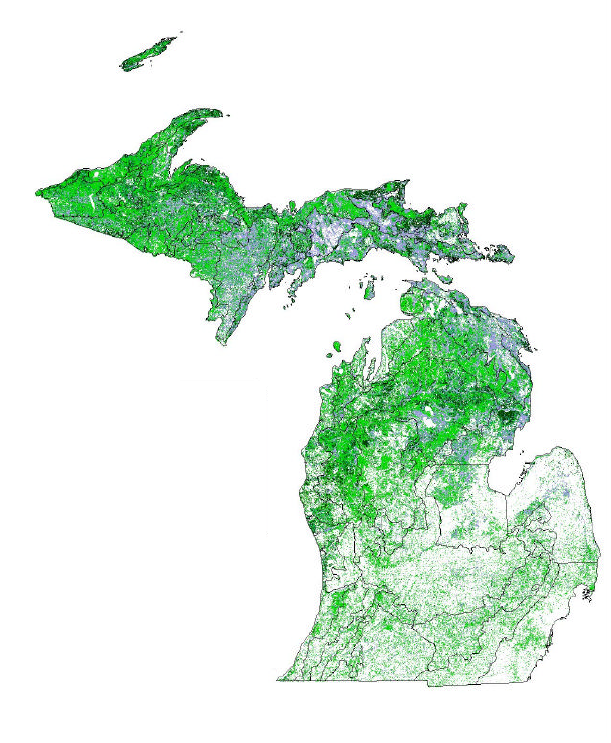
This chapter’s purpose is to provide a platform for wildlife biologists and foresters to collaborate on wildlife and forest management. To that end, any Dynamic Forest in Michigan is a Place for Partnership. Partnerships are encouraged to develop local, scale appropriate goals and actions. This map shows the broad forested lands covered under the Dynamic Forests chapter.
How will we monitor?
Dynamic forest habitat
- Use a variety of sources to monitor Dynamic Forest health such as the Michigan Forest Inventory (MiFI) and the U.S. Forest Service Forest Inventory and Analysis.
- Continue to survey for high quality young forests and mature, old growth forests. Systematically identify old-growth forest across cover types.
- Continue to map and monitor vernal pools statewide through remote sensing, targeted surveys and monitoring, and the Michigan Vernal Pool Patrol.
Focal Species
American Goshawk
- Conduct systematic surveys at known territories to document changes in distribution and track population trends.
- Conduct targeted surveys in suitable habitat during breeding season to locate new nesting sites.
- Update occurrences in the state’s Natural Heritage Database.
American Marten
- Continue to work collaboratively among agencies, tribes and non-government organizations through the Michigan American Marten Working Group.
- Establish a comprehensive population distribution map for the northern Lower Peninsula using methods like camera traps, scat detection and radio telemetry.
Eastern Box Turtle
- Continue monitoring the status, distribution, abundance and potential viability of box turtle populations in Michigan using occupancy and abundance modeling, population modelling and viability assessments and/or other survey, monitoring, or modelling methods.
- Continue to update element occurrences in the state’s Natural Heritage Database.
Golden-winged Warbler
- Continue North American Breeding Bird Survey.
- Use community science programs, like eBird, to assess distribution and abundance.
- Update occurrences in the state’s Natural Heritage Database.
Small-mouthed Salamander
- Monitor status, distribution and abundance of small-mouthed salamander populations in Michigan using trapping, visual surveys and/or coverboard surveys and potentially occupancy and abundance modeling.
- Continue to update element occurrences in the state’s Natural Heritage Database.
Yellow-banded Bumblebee
- Conduct time-meander survey transects at priority sites.
- Promote existing community science efforts, like iNaturalist, to identify populations.
- Update occurrences in the state’s Natural Heritage Database.
Links to other conservation plans
[CPEBT] Conservation Plan for the Eastern Box Turtle in the Northeastern United States (Roberts and Erb 2023)
[FFMB] Forestry for Michigan Birds (Crick and Rowse 2022)
[FSC] Forest Stewardship Council Principles and Criteria for Forest Stewardship (FSC 2002)
[GWWA] Golden-winged Warbler Habitats in the Great Lakes Region (Golden-winged Warbler Working Group 2019)
[MAMWG] Michigan American Marten Working Group (DNR 2024)
[NAB] Conservation and management of North American bumble bees (Schweitzer et al. 2012)
[PBMP] Pollinator-friendly BMPs for Federal Lands (USFS 2015)
[PIF-UGL] Partners in Flight Bird Conservation Plan for the Upper Great Lakes Plain (Knutson et al. 2001)
[SFI] Sustainable Forestry Initiative Forest Management Standard (SFI 2022)
[SFAP] State Forest Action Plan (Michigan DNR 2020)
[SFMP] Michigan State Forest Management Plan (DNR 2024)
[SW] Southern Wings Presidential Task Force 2025 Report (Southern Wings 2025)
[TIS] Terrestrial Invasive Species Management Plan (State of Michigan 2024)
[WRG] Woodland Raptor Guidelines (DNR 2015)
Literature Cited
Show all references
Averill, K.M., D.A. Mortensen, E.A. Smithwick and E. Post. 2016. Deer feeding selectivity for invasive plants. Biological Invasions 18:1247 – 1263.
Avian Technical Advisory Committee. 2019. Recommendations for listing to the DNR. Internal document.
Belant, J.L. 2007. Human-caused mortality and population trends of American marten and fisher in a U.S. National Park. Natural Areas 27:155 – 160.
Bentz, B.J. and A.M. Jonsson. 2015. Chapter 13 - Modeling bark beetle responses to climate change. In Bark Beetles: Biology and ecology of native and invasive species. Eds. F.E. Vega and R.W. Hostetter. Academic Press. pp. 533-553.
Berkes, F. and I.J. Davidson-Hunt. 2006. Biodiversity, traditional management systems, and cultural landscapes: examples from the boreal forest of Canada. International Social Science Journal 187:35-47.
Bernardo, H. L., P. Vitt, R. Goad, S. Masi and T. M. Knight. 2018. Count population viability analysis finds that interacting local and regional threats affect the viability of a rare plant. Ecological Indicators 93:822–829.
Buskirk, S.W. and R.A. Powell. 1994. Habitat ecology of fishers and American martens. p. 283–296. In: S.W. Buskirk, A.S. Harestad, M.G. Raphael, and R.A. Powell (eds.). Martens, sables, and fishers: biology and conservation. Cornell University Press, Ithaca, N.Y.
Calhoun, A.J.K. and P.G. DeMaynadier. 2007. Conserving Vernal Pool Amphibians in Managed Forests. Chapter 13 of Science and Conservation of Vernal Pools in Northeastern North America. 1st edition.
Calhoun, A.J.K., J. Arrigoni, R.P. Brooks, M.L. Hunter, and S.C. Richter. 2014. Creating Successful Vernal Pools: A Literature Review and Advice for Practitioners. Wetlands 34(5): 1027–38. Available https://doi.org/10.1007/s13157-014-0556-8.
Capps, K.A., R. Rancatti, N. Tomczyk, T.B. Parr, A.J.K. Calhoun, and M. Hunter. 2014. Biogeochemical Hotspots in Forested Landscapes: The Role of Vernal Pools in Denitrification and Organic Matter Processing. Ecosystems 17(8): 1455–68. Available https://doi.org/10.1007/s10021-014-9807-z.
Carroll, C. 2007. Interacting effects of climate change, landscape conversion and harvest on carnivore populations at range margin: marten and lynx in the northern Appalachians. Conservation Biology 21:1092 – 1104.
Chartier, A.T., J.J. Baldy, and J.M. Brenneman, eds. 2013. Michigan Breeding Bird Atlas II. Kalamazoo Nature Center, Kalamazoo, MI.
Chen, H., N.H. Bashir, Q. Li, C. Liu, M. Naseem, H. Wang, W. Gao, R.T. Corlett, C. Liu, M.C. Vidal. 2025. The role of pathogens in bumblebee decline: a review. Pathogens 14(1): 94.
Cohen, J.G., M.A. Kost, B.S. Slaughter, D.A. Albert, J.M. Lincoln, A.P. Kortenhoven, C.M. Wilton, H.D. Enander and K.M. Korroch. 2020. Michigan Natural Community Classification [web application]. Michigan Natural Features Inventory, Michigan State University Extension, Lansing, Michigan. Accessed: May 22, 2025. Available https://mnfi.anr.msu.edu/communities/classification.
Cohen, J.G., H.D. Enander, T.J. Bassett, C.M. Wilton, and A. Cole-Wick. 2024. Using GIS-based multicriteria decision analysis to prioritize invasive plant treatment: A creative solution for a pernicious problem. Ecological Modelling 495: 110807.
Colburn, E.A. 2004. Vernal pools. Natural History and Conservation. McNaughton & Gunn, Saline, MI.
Colla, S.R. and L. Packer. 2008. Evidence for decline in eastern North American bumblebees (Hymenoptera: Apidae), with special focus on Bombus affinis Cresson. Biodiversity and Conservation 17: 1379-91.
Cushman, S.A., M.G. Raphael, L.F. Ruggiero, A.S. Shirk, T.N. Wasserman and E.C. O’Doherty. 2011. Limiting factors and landscape connectivity: the American marten in the Rocky Mountains. Landscape Ecology 26:137-1149.
Crick, J. and L. Rowse. 2022. Forest for Michigan birds guidebook. Michigan Audubon. Available https://www.michiganaudubon.org/wp-content/uploads/2022/06/FMB-Forest-Managers-Guidebook-DIGITAL-Final.pdf.
Dodd, C.K., Jr. 2001. North American Box turtles: A Natural History. University of Oklahoma Press, Norman, OK.
Earl, D.J., E.C. Branch, A.A. Cole-Wick, Y.M. Lee, L.M. Rowe, P.J. Badra, C.M. Wilton, and D.L. Cuthrell. 2024. Assessing Climate Vulnerability & Adaptive Capacity of Midwest Species of Greatest Conservation Need. Michigan Natural Features Inventory, Lansing, MI. 79 pp.
Erb, L.A. and H.P. Roberts. 2023a. Status assessment for the eastern box turtle in the northeastern United States. Final report to the Northeast Association of Fish and Wildlife Agencies (NEAFWA) for a Regional Conservation Needs (RCN) award.
Erb, L.A. and H.P. Roberts. 2023b. A guide to habitat management for eastern box turtle (Terrepene carolina carolina). Final report to the Northeast Association of Fish and Wildlife Agencies (NEAFWA) for a Regional Conservation Needs (RCN) award.
Ernst, C.H. and J.E. Lovich. 2009. Turtles of the United States and Canada. 2nd Edition. The Johns Hopkins University Press, Baltimore, MD.
Evans, E., R. Thorp, S. Jepsen and S.H. Black. 2008. Status Review of Three Formerly Common Species of Bumble Bee in the Subgenus Bombus. Prepared for the Xerces Society of Invertebrate Conservation. 63 pp.
Farnell, I., C. Elkin, E. Lilles, A.M. Roberts, and M. Venter. 2020. The Effects of Variable Retention Forestry on Coarse Woody Debris Dynamics and Concomitant Impacts on American Marten Habitat after 27 Years. Canadian Journal of Forest Research 50(9): 925–35. Available https://doi.org/10.1139/cjfr-2019-0417.
Forest Stewardship Council (FSC). 2002. FSC Principles and criteria for forest stewardship. Available https://open.fsc.org/server/api/core/bitstreams/ccf3fd9d-31a9-48ab-89e3-236d48a22f2a/content Accessed: 06/2025.
Gehring, T.M., L.M. McFadden, S.A. Prussing, S.A. Bickersmith, C. Buchanan, E. Nelson, and B.J. Swanson. 2019. Spatial Ecology of Re-introduced American Martens in the Northern Lower Peninsula of Michigan. The American Midland Naturalist, 182(2), 239. Available https://doi.org/10.1674/0003-0031-182.2.239
Godbout, G. and J.P. Ouellet. 2010. Fine-scale habitat selection of American marten at the southern fringe of a boreal forest. Ecoscience 17:175 – 185.
Goldblum, D. and L.S. Rigg. 2005. Tree growth response to climate change at the deciduous-boreal forest ecotone, Ontario, Canada. Canadian Journal of Forest Research 35(11): 2709-2718.
Golden-winged Warbler Working Group. 2019. Best management practices for golden-winged warbler habitats in the Great Lakes Region. 2nd Edition. Available https://www.gwwa.org.
Harding, J.H. and D.A. Mifsud. 2017. Amphibians and Reptiles of the Great Lakes Region, Revised Edition. University of Michigan Press, Ann Arbor, MI.
Hargis, C.D., J.A. Bissonette and D.L. Turner. 1999. The influence on forest fragmentation and landscape pattern on American martens. Journal of Applied Ecology 36:157-172.
Hightower, J.N., D.L. Crawford, W.E. Thogmartin, K.R. Aldinger, S.B. Swarthout, D.A. Buehler, J. Confer, C. Friis, J.L. Larkin, J.D. Lowe, M. Piorkowski, R.W. Rohrbaugh, K.V. Rosenberg, C. Smalling, P.B. Wood, R. Vallender and A.M. Roth. 2022. Change in climatically suitable breeding distributions reduces hybridization potential between Vermivora warblers. Diversity and Distributions 29: 254-271.
Hill Bermingham, L. 2010. Deer herbivory and habitat type influence long-term population dynamics of a rare wetland plant. Plant Ecology 210:359–378.
Hiltner, E.J. 2022. Changing snow conditions and shifts in American marten (Martes americana). Thesis. University of Michigan-Ann Arbor, MI.
Howell, P.E., E.L. Koen, B.W. Williams, G.J. Roloff and K.T. Scribner. 2016. Contiguity of landscape features pose barriers to gene flow among American marten (Martes americana) genetic clusters in the Upper Peninsula of Michigan. Landscape Ecology 31:1051-1062.
John Ball Zoo. 2025. A Slow and Steady Head Start on Life. Press release. Web. Accessed online: 4 November 2025. Available https://jbzoo.org.
Joyce, L.A., G.M. Blate, S.G. McNulty, C.I. Millar, S. Moser, R.P. Neilson and D.L. Peterson. 2009. Managing for multiple resources under climate change: National forests. Environmental Management 44:1022-1032.
Knutson, M.G., G. Butcher, J. Fitzgerald and J. Shieldcastle. 2001. Partners in Flight bird conservation plan for the Upper Great Lakes Plain (Physiographic Area 16). USGS Upper Midwest Environmental Sciences Center in cooperation with Partners in Flight. La Crosse, WI.
Larson, E.R., N.M. Montano, E. Lockling, A. Ojibway, M.B. Reynolds, V.R. Zhaawendaagozikwe, L.B. Johnson, K.F. Kipfmueller, M.J. Dockry, V. Northrup, J. Savage and R. Wall Kimmerer. 2025. Indigenous fire stewardship shaped North American Great Lakes forests. Proceedings of the National Academy of Science 122:34.
Lavoie, M., A. Renard and S. Lariviere. 2019. Timber harvest jeopardize marten persistence in the heart of its range. Forest Ecology and Management 442:46-52.
Lee, Y. 2010. Special animal abstract for Ambystoma texanum (Smallmouth Salamander). Michigan Natural Features Inventory, Lansing, MI.
Lee, Y. 2016. Surveys and Monitoring for the Hiawatha National Forest – Vernal Pools. Michigan Natural Features Inventory, Lansing, MI. 93 pp.
Lindenmayer, D.B. and R.F. Noss. 2006. Salvage logging, ecosystem processes, and biodiversity conservation. Conservation Biology 20(4):931-1335.
Litt, A.R., E.E. Cord, T.E. Fulbright and G.L. Schuster. 2014. Effects of invasive plants on arthropods. Conservation Biology 28:1532-1549.
Maynard-Bean E. and M. Kaye. 2019. Invasive shrub benefits native plants in an eastern deciduous forest of North America. Invasive Plant Science and Management 12:3-10.
Michigan Department of Natural Resources (DNR). 2015. Management Guidance for Woodland Raptors (specifically Red-shouldered Hawks and Northern Goshawks) on State Forest Lands. Michigan Department of Natural Resources, Lansing, MI. 3 pp.
Michigan Department of Natural Resources (DNR). 2023. 2021 Marten and Fisher Harvest Survey. Michigan Department of Natural Resources, Wildlife Division Report No. 3714. Lansing, MI 26.pp. Michigan Department of Natural Resources (DNR). 2024a. State Forest Management Plan. Michigan Department of Natural Resources, Lansing, MI. 1749 pp.
Michigan Department of Natural Resources (DNR). 2024b. Forest Health Highlights. Michigan Department of Natural Resources, Lansing, MI. 62 pp.
Michigan Natural Features Inventory (MNFI). 2025. Michigan Natural Heritage Database, Lansing, Michigan.
Monfils, M.J. 2021. Monitoring of high priority bird species at Camp Grayling, Michigan. Michigan Natural Features Inventory, Report No. 2021-08, Lansing, MI. 20 pp.
Monfils, M.J. 2022. Monitoring of high priority bird species at Camp Grayling, Michigan. Michigan Natural Features Inventory, Report No. 2022-22, Lansing, MI. 22 pp.
Monfils, M.J., E.C. Branch and A.A. Cole-Wick. 2023. Monitoring of high priority bird species at Camp Grayling Joint Maneuver Training Center. Michigan Natural Features Inventory, Report No. 2023-24, Lansing, MI. 32 pp.
Monfils, M.J., E.C. Branch and A.A. Cole-Wick. 2025. Monitoring of priority bird species at Camp Grayling Joint Maneuver Training Center. Michigan Natural Features Inventory, Report No. 2025-01, Lansing, MI. 32 pp.
Morin, X., D. Viner and I. Chuine. 2008. Tree species range shifts at a continental scale: new predictive insights from a process-based model. Journal of Ecology 96(4):784-794.
Payer, D.C. and D.J. Harrison. 2003. Influence of forest structure on habitat use by American marten in an industrial forest. Forest Ecology and Management 179:145-156.
Petranka, J. W. 1998. Salamanders of the United States and Canada. Smithsonian Institution Press, Washington, D.C.
Porter, A.D., C.C. St. Clair and A. de Vries. 2005. Fine-scale selection by marten during winter in a young deciduous forest. Canadian Journal of Forest Research 35:901-909.
Pozzenghera, C.B., K.J. Sivy, M.S. Lindberg and L.R. Prugh. 2016. Variable effects of snow conditions across boreal mesocarnivore species. Canadian Journal of Zoology 94:697-705.
Preisser, E.L., J.Y. Kefer, J.D. Lawrence and T.W. Clark. 2000. Vernal Pool Conservation in Connecticut: An Assessment and Recommendations. Environmental Management 26(5): 503–13. Available https://doi.org/10.1007/s002670010108.
Roberts, H.P. and L.A. Erb. 2023. Conservation plan for the eastern box turtle in the northeastern United States. Final report to the Northeast Association of Fish and Wildlife Agencies (NEAFWA) for a Regional Conservation Needs (RCN) award. 78 pp.
Roloff, G.J., B.R. Silet, S.M. Gray, J.M. Humphreys and E.M. Clark. 2020. Resource use by marten at fine spatial extents. Mammal Research 65:655 – 665.
Roth, A.M, R.W. Rohrbaugh, T. Will, S.B. Swarthout and D.A. Buehler. 2019. Golden-winged warbler status review and conservation plan. 2nd edition. Available https://www.gwwa.org.
Rowe, L.M., D.L. Cuthrell, D.J. Earl, S.G. Eckhardt and H.D. Enander. 2023. Michigan Statewide Bumble Bee and Habitat Surveys. Michigan Natural Features Inventory Report No. 2023‐21, Lansing, MI.
Rowe, L.M., Y. Lee and D.L. Cuthrell. 2025. Zoology Surveys for the Hiawatha National Forest: FY 2024 Report. Michigan Natural Features Inventory, Report No. 2025-02, Lansing, MI. 24 pp.
Sanders, R.L., A. Cornman, P. Keenlance, J.J. Jacquot, D.E. Unger, and M. Spriggs. 2017. Resting site characteristics of American marten in the northern Lower Peninsula of Michigan. The American Midland Naturalist 177:211-225.
Sauer, J.R., Link, W.A. and Hines, J.E. 2020. The North American Breeding Bird Survey, Analysis Results 1966-2019: U.S. Geological Survey data release. Available https://doi.org/10.5066/P96A7675.
Schweitzer, D.F., N.A. Capuano, B.E. Young and S.R. Colla. 2012. Conservation and management of North American bumble bees. NatureServe, Arlington, Virginia, and USDA Forest Service, Washington, D.C. 18 pp.
Southern Wings. 2025. Southern Wings Presidential Task Force 2025 Report. Association of Fish and Wildlife Agencies. Web. Accessed 7 November 2025. Available https://southern-wings.fishwildlife.org/
Spriggs, M.C., L.L. Kaloustian and R.W. Gerhold. 2016. Endoparasites of American marten (Martes americana): review of literature and parasite survey of reintroduced American marten in Michigan. Internation Journal for Parasitology: Parasites and Wildlife 5:240-248.
Spriggs, M.C., R.W. Gerhold, R.P. Wilkes, P. Keenlance, R.L. Saunders, J. Witt, E. Clark and D. Miller. 2018. Serosurvey, hematology and causes of mortality of free-ranging American martens (Martes americana) in Michigan. Journal of Zoo and Wildlife Medicine 49:371 – 383.
Su, R., W. Dai, Y. Yang, X. Wang, R. Gao, M. He, C. Zhao and J. Mu. 2022. Introduced honey bees increase host plant abundance but decrease native bumble bee species richness and abundance. Ecosphere 13(6):e4085.
Sustainable Forestry Initiative (SFI). 2022. Forest Management Standard. Available https://forests.org/forestmanagementstandard/ Accessed: June 2025.
State of Michigan. 2024. Terrestrial Invasive Species Management Plan. Lansing, MI. 46 pp.
Suriano, Z.J., D.A. Robinson and D.J. Leathers. 2019. Changing snow depth in the Great Lakes basin (USA): Implications and trends. Anthropocene 26:100208.
Thomas, S.A., Y. Lee, M.A. Kost and D.A. Albert. 2010. Abstract for vernal pool. Michigan Natural Features Inventory, Lansing, MI. 24 pp.
Thompson, I.D., and P.W. Colgan. 1994. Marten activity in uncut and logged boreal forests in Ontario. The Journal of Wildlife Management, 58:280– 288.
Thompson, I., B. Mackey, S. McNulty and A. Mosseler. 2009. Forest Resilience, Biodiversity, and Climate Change. A synthesis of the biodiversity/resilience/stability relationship in forest ecosystems. Secretariat of the Convention on Biological Diversity, Montreal. Technical Series no. 43. 67 pp.
Thorn, S., C. Bässler, R. Brandl, P.J. Burton, R. Cahall, J.L. Campbell, J. Castro, C.Y. Choi, T. Cobb, D.C. Donato, E. Durska, J.B. Fontaine, S. Gauthier, C. Hebert, T. Hothorn, R.L. Hutto, E.J. Lee, A.B. Leverkus, D.B. Lindenmayer, M.K. Obrist, J. Rost, S. Seibold, R. Seidl, D Thom, K. Waldron, B. Wermelinger, M.B. Winter, M. Zmihorski and J. Müller. 2017. Impacts of salvage logging on biodiversity: A meta-analysis. Journal of Applied Ecology 55:279-289.
Thurman, LL, B Stein, EA Beever, W Foden, SR Geange, N Green, JE Gross, DJ Lawrence, O LeDee, JD Olden, LM Thompson, and BE Young. 2020. Persist in place or shift in space? Evaluating the adaptive capacity of species to climate change. Frontiers in Ecology and Evolution 18(9): 520-528.
U.S. Department of Agriculture, Forest Service (USDA). 2023. Future of America’s Forest and Rangelands: Forest Service 2020 Resources Planning Act Assessment. Gen. Tech. Rep. WO-102. Washington, DC. 348 p. Available https://doi.org/10.2737/WO-GTR-102
U.S. Forest Service (USFS). 2015. Pollinator-friendly Best Management Practices for Federal Lands. 52 pp.
Viau, J.P., D. Sigouin and M.H. St-Laurent. 2024. Seasonality in functional connectivity: a case study with the American marten in Forillon National Park, Ecosphere 15:1-15.
Vose, J.M., D.N. Wear, A.E. Mayfield III and C.D. Nelson. 2013. Hemlock woolly adelgid in the southern Appalachians: control strategies, ecological impacts and potential management responses. Forest Ecology and Management 291:209-219.
Westerling, A.L., H.G. Hidalog, D.R. Cayan and T.W. Swetnam. 2006. Warming and earlier spring increase western U.S. forest wildfire activity. Science 313, 5789:940-943.
Williams, B.W., J.H. Gilbert, and P.A. Zollner. 2007. Historical Perspective on the Reintroduction of the Fisher and American Marten in Wisconsin and Michigan. United States Department of Agriculture, Forest Service, Northern Research Station. 33 pp.
Williams, P.H., R.W. Thorp, L.L. Richardson and S.R. Colla. 2014. Bumble Bees of North America: An Identification Guide (Princeton Field Guides).