
Forested Wetlands
Contributors
Michigan Natural Features Inventory
Michigan Nature Association
Sault St. Marie Tribe of Chippewa Indians
Keweenaw Bay Indian Community
Ducks Unlimited
Eastern Michigan University
U.S. Fish and Wildlife Service
John Ball Zoo
Michigan Department of Natural Resources
U.S. Geological Survey, Michigan Fish and Wildlife Cooperative Research Unit
Recommended Citation: Yu Man Lee, Aaron Kortenhaven, Connor Wojtowicz, and Anthony K. Henehan. 2026. Michigan’s Wildlife Action Plan: 2025-2035, Forested Wetlands. Michigan Department of Natural Resources, Lansing, MI.
What are forested wetlands?
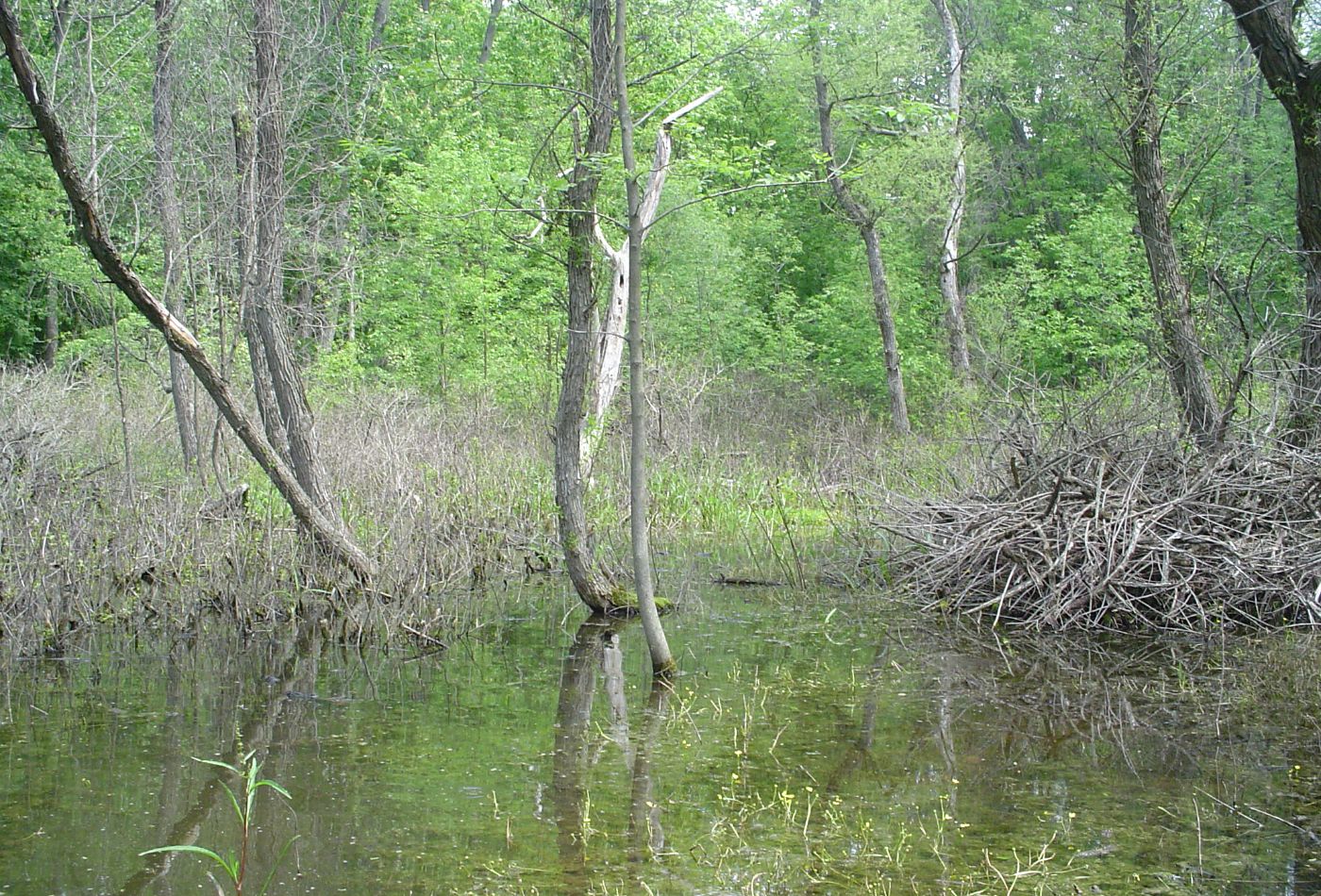
Forested wetlands are constantly changing ecosystems found in low-lying, poorly drained areas, often along rivers and streams, at the base of slopes or on flat lakeplains and outwash plains. These wetlands are shaped by a variety of natural forces, including seasonal flooding, groundwater seepage, beaver activity, ice movement, windstorms, insect outbreaks and occasional fires.
Water plays a central role in shaping these landscapes. Processes like river flooding, groundwater seeps, and water retention by plants and mosses create a range of wet conditions. Each type of forested wetland, from swamps with permanent standing water to seasonally flooded woods, supports a different mix of plant communities.
There are many types of forested wetlands in Michigan, each with its own plant communities. Some are dominated by hardwoods, others by conifers. Common tree species include red maple, silver maple, tamarack, black spruce, black ash, green ash, and northern white-cedar. In many parts of the Lower Peninsula, black ash and green ash have been devastated by the invasive emerald ash borer, which has dramatically reduced the presence of ash trees in these ecosystems.
Why are forested wetlands important?
Forested wetlands are important for both people and wildlife. Black ash trees hold deep cultural importance for the Anishinaabe people such as being used for generations in traditional basket making. Skilled artisans carefully harvest the trees, then pound the wood to separate the growth rings and create splints for weaving baskets used in gathering, storage, and ceremonies. Indigenous communities also used the waterways provided by rivers and surrounding forested wetlands for travel and to provide food, practices that continue to this day.
Forested wetlands also serve as travel corridors for wildlife, allowing animals to safely move between habitats. This is especially important in southern Michigan where natural areas are more fragmented. The natural rise and fall of water levels in wetlands creates a wide variety of microhabitats that support many types of wildlife. For instance, spring flooding can warm the soil earlier in the year than surrounding uplands, leading to earlier insect hatches in time for migrating songbirds that stop to rest and feed. Forested wetlands offer incredible opportunities for wildlife viewing thanks to the diversity of species they support.
Forested wetlands also provide crucial ecological benefits and services. They help reduce flooding by slowing water flow during heavy rains that may cause severe flooding if unchecked. Forested wetlands then slowly release this water into the ground, which helps recharge underground aquifers. Their soils and plants filter out pollutants and sediments, improving the quality of nearby rivers, lakes and recharged groundwater. Other ecological services provided by these wetlands include the peat-rich soils of conifer swamps acting as a carbon sink, storing significant amounts of carbon which helps to regulate the climate.
These wetlands also provide beautiful backdrops for canoeing, kayaking, fishing and other outdoor activities that connect people to Michigan’s rich natural heritage.
What is the health of forested wetlands?
The state's Natural Heritage Database monitors natural communities by recording their locations, condition and the species they support. Each entry, known as an element occurrence, represents a documented location and extent of a species or community across the landscape. This information helps assess the overall health of ecosystems such as forested wetlands. Between 2015 and 2025, 53 new forested wetland sites were added to the database, bringing the total to 366. These sites are evaluated based on their ecological condition, which ranges from excellent to poor. Over time, many sites have shown signs of change; previously documented locations were revisited during this period and 38% were found to be in declining condition. This highlights the importance of ongoing monitoring and conservation efforts to maintain the health and stability of these valuable natural areas.
Natural communities found in Forested Wetlands | |
Acidic sandy flatwoods | Rich conifer swamp |
Floodplain forest | Rich tamarack swamp |
Hardwood-conifer swamp | Southern hardwood swamp |
Northern hardwood swamp | Wet-mesic flatwoods |
Poor conifer swamp |
|
Helpful resources for identifying and understanding Michigan’s natural communities include Michigan Natural Features Inventory’s natural community classification (Cohen et al. 2015, Cohen et al. 2025) and natural community abstracts, both of which are available online along with photos, comprehensive descriptions, distribution maps, and thorough references from the scientific literature. MNFI’s most detailed bibliography on Michigan’s natural communities can be found in the publication “Distribution Maps of Michigan’s Natural Communities” (Albert et al. 2008), which is also available for viewing and downloading at the MNFI website.
Accomplishments
Michigan Natural Features Inventory (MNFI) conducted surveys from 2015 through 2025 and documented 80 new occurrences of forested wetland natural community types (MNFI 2025).
MNFI developed draft monitoring protocols for evaluating the ecological integrity of southern hardwood swamp (Cohen and Enander 2019).
MNFI developed an invasive plant species treatment prioritization model and GIS-based Web Map Application (Cohen et al. 2024).
19 new occurrences of Ram’s-head Orchid documented in Michigan’s Natural Heritage Database between 2015 and 2025.
MNFI and Michigan Department of Natural Resources (DNR) implemented a bat roost community science monitoring program with input from the U.S. Fish and Wildlife Service (USFWS).
Management and regular surveys have supported annual populations nearly 40 singing males for Cerulean Warblers at Fort Custer Training Center with support from Kalamazoo Nature Center. The Kalamazoo Nature Center has banded 239 males and two females at Fort Custer Training Center since 2005.
MNFI, in collaboration with John Ball Zoo, Potter Park Zoo, Eastern Michigan University, Ohio Department of Natural Resources, Michigan Department of Natural Resources, Toledo Zoo, Ohio State University, and Purdue University – Ft. Wayne, investigated the status, distribution, and threats facing Blanding’s turtles in parts of Michigan and Ohio. Surveys documented 10 new occurrences from at least 6 populations, and management led to the protection and release of 387 hatchlings.
Focal Species
Blanding’s Turtle
Emydoidea blandingii
Special Concern
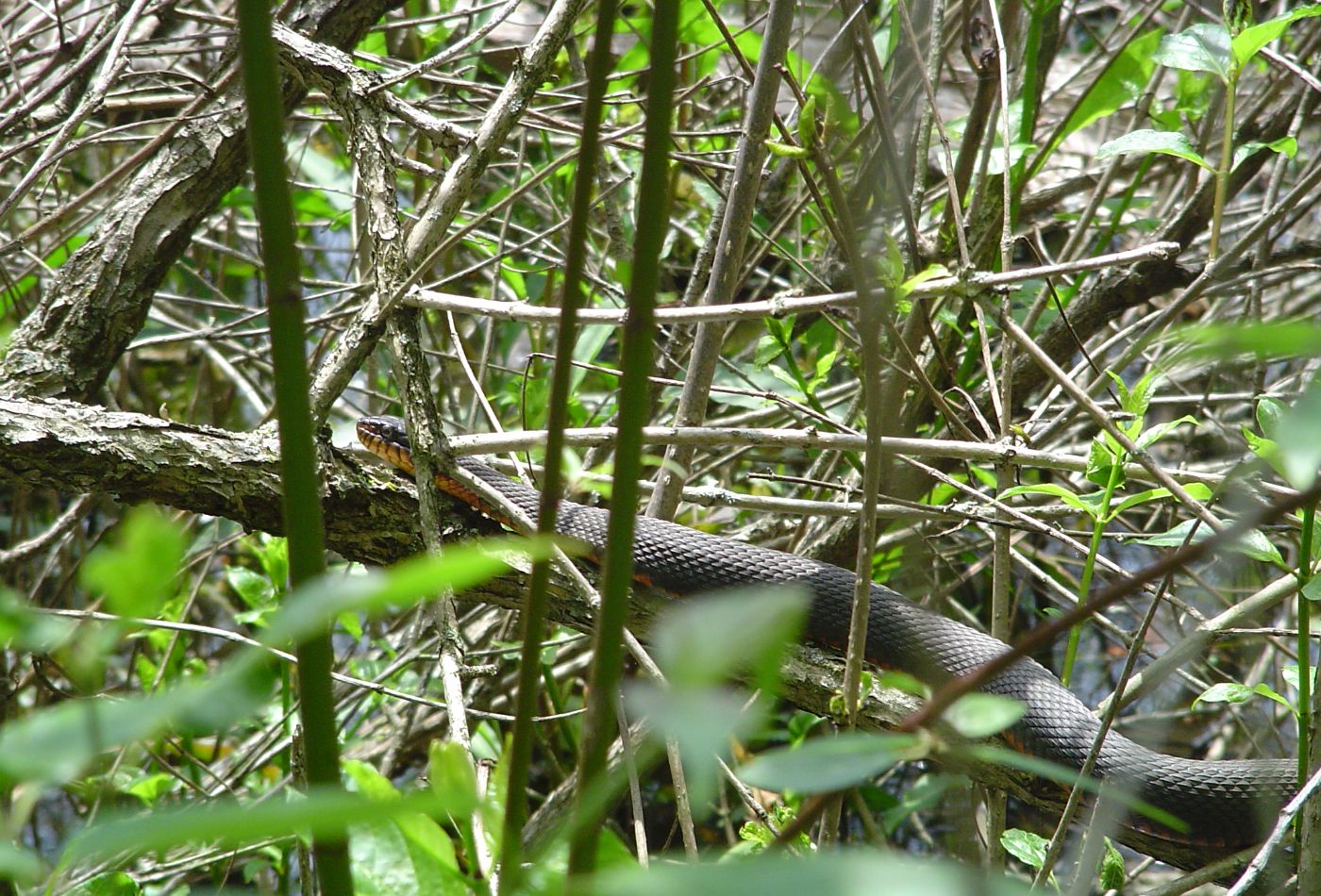
The Blanding’s turtle is one of the most recognizable turtles in Michigan with its bright yellow throat and neck and high domed, dark shell with tan or yellowish spots and/or streaks. Adults range from 6-11 inches long and they appear to have a permanent “smile” from their profile (Harding and Mifsud 2017; Lee 1999). Blanding’s turtles inhabit a variety of shallow, stagnant or slow-moving wetlands and waterbodies with abundant vegetation, ranging from fens, bogs, marshes and wet meadows and prairies to shrub and forested wetlands, vernal pools, shallow edges of ponds and lakes, low-gradient streams and rivers and embayments (Compton 2007, Harding and Mifsud 2017, Cross et al. 2023). They also utilize surrounding uplands for nesting, moving between wetlands, basking and aestivation in the summer. Blanding’s turtles are widely distributed and frequently encountered in the Lower Peninsula but appear to be more scattered and much less common in the Upper Peninsula (MNFI 2025). Although a fair number of Blanding’s turtle populations still occur in Michigan, the status, abundance, demographics and long-term viability of most of these populations remain unknown. This species has been documented from 660 sites in 72 counties in Michigan as of 2025 in the state's Natural Heritage Database and 638 of these occurrences were observed within the last 30 years (1995-2025; MNFI 2025).
Goals
- Establish baseline status and distribution, especially in the Upper Peninsula.
- Conserve healthy, resilient, self-sustaining populations in sufficient number and distribution to ensure long-term viability in Michigan, consisting of at least 5 to 10 stable or growing populations distributed throughout Lake Erie, Lake Michigan and Lake Huron watersheds.
Cerulean Warbler
Setophaga cerulea
State Threatened
These beautiful blue songbirds are often heard and rarely seen because they nest and feed high in the treetops. The females are often called bungee jumpers; jumping out of the nest head first with wings tucked into their body until well below the nest and only then opening their wings to fly. Cerulean Warblers require large tracts (>3,000 ha) of mature deciduous forest with an understory containing 85% canopy cover and some forest gaps (Potter et al. 2007); while smaller tracts (700 ha) will support smaller populations (USFWS 2006; MNFI 2007). In Michigan, bottomlands, particularly floodplains, are usually preferred over upland areas (Hyde et al. 2000); the birds are known to use black locust, black walnut and black cherry in a greater proportion than available for both nesting and foraging (Department of Defense 2015). The North American Breeding Bird Atlas data shows a 1.37% annual decline in Cerulean Warbler populations in Michigan; and an almost 72% loss in population for Cerulean Warbler populations from 1970 to 2014 (Partners in Flight 2016; Sauer et al. 2020). The estimated breeding population in Michigan is 5,000 birds. This species appears to be declining at a similar level within their core range in the Appalachian Mountains (Buehler et al. 2013). This species has been documented from 64 sites in 31 counties in Michigan as of 2025 in the state's Natural Heritage Database and 36 of these occurrences were observed within the last 20 years (2005-2025; MNFI 2025).
Goals
- Reduce population decline by 75% by 2030. [JV]
- Implement experimental forest management practices for Cerulean Warbler and assess bird community response.
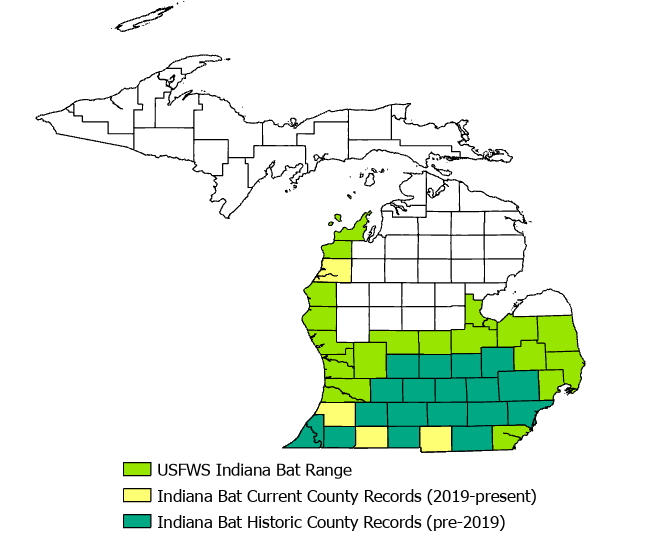
Indiana Bat
Myotis sodalis
Federally and State Endangered
The Indiana bat is a small brown bat that can be distinguished from other bats based on a characteristic ridge on the calcar or ankle-like structure on the wing of the bat (Kurta et al. 2023). Like all bats, the Indiana bat eats insects and can consume over half of its body weight every night. It has been estimated that a colony of 150 bats can eat nearly 1.3 million pest insects each year (Boyles et al. 2011). Male and female bats roost under peeling bark in trees with an average diameter of 13 and 18 inches, respectively, and where the roost receives direct sunlight for more than half the day; trees are typically in gaps in or along edges of forests (USFWS 2007). In Michigan, they prefer elms (Ulmus spp.), ashes (Fraxinus spp.), or maples (Acer spp.) and will change trees every few days throughout summer (Kurta et al. 2002). Nevertheless, Indiana bats show long-term site fidelity, which may facilitate conservation and management (Kurta et al. 2024; Mellos et al. 2014). Most of Michigan’s Indiana bats migrate up to 350 miles to Indiana, Ohio and Kentucky for hibernation (Rockey et al. 2013), although some overwinter at Tippy Dam in Manistee County. White-nose syndrome has devastated these hibernating populations, with estimated losses up to 81% (Cheng et al. 2021) and this species has become very uncommon in Michigan during summer (Kurta et al. 2024). This species has been documented from 25 sites in 16 counties in Michigan as of 2025 in the state's Natural Heritage Database and 14 of these occurrences were observed within the last 30 years (1995-2025; MNFI 2025).
Goals
- Maintain known Indiana bat populations.
- Obtain a more accurate summer population estimate.
- Determine summer roosting areas for bats that overwinter at Tippy Dam.
Ram’s Head Lady’s-Slipper
Cypripedium arietinum
Special Concern
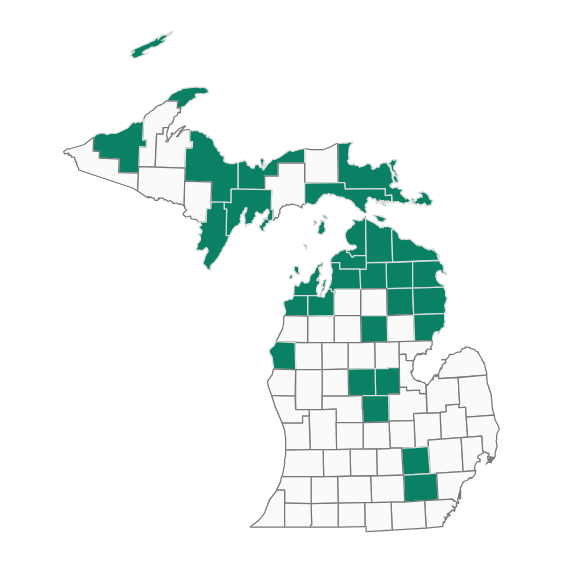
The ram’s head lady’s-slipper is Michigan’s smallest native lady’s-slipper orchid, ranging from about 4-12 inches tall (Case 1987, Penskar and Higman 1999). It has 3 to 5 bluish-green, narrow, elliptical leaves growing in a spiral along the stem and a small flower that has a deeply pouched lower lip marked with dark red, netted venation (Penskar and Higman 1999). The Ram’s Head Lady’s-slipper is found primarily in boreal forests along the Great Lakes shoreline in northern Michigan (Case 1987). It also occurs in dry northern forests, in rich conifer swamp and along the margins of limestone bedrock glades. The species is associated with cool temperatures and is often confined to northern exposures and cold air channels (Penskar and Higman 1999). It mainly occurs in the northern Lower Peninsula and across the Upper Peninsula. Despite historic records in central and southeastern Michigan, this orchid has not been documented south of Mason County since 1928 (MNFI 2025). In total, this species has been documented from 118 sites in 29 counties in Michigan as of 2025 in the state's Natural Heritage Database and 73 of these occurrences were observed within the last 40 years (1985-2025; MNFI 2025).
Goals
- Determine current status, distribution and abundance of existing populations.
- Maintain and protect at least 20 existing populations, particularly large populations, across the species range.
Regal Fern Borer
Papaipema speciosissima
Special Concern
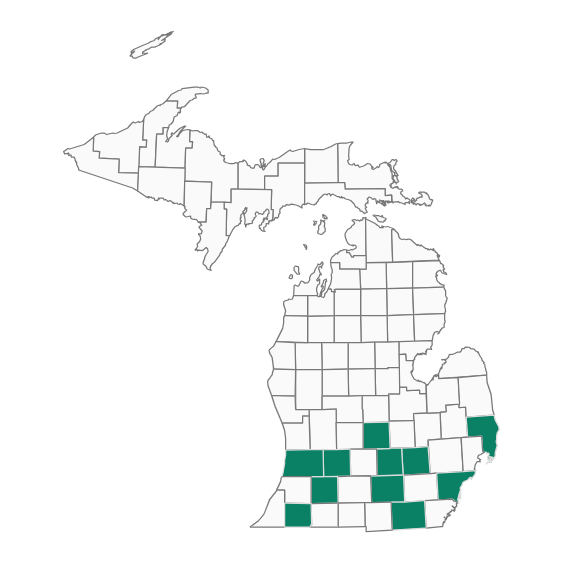
The regal fern borer is a small moth with an average wingspan of about 2 in (Covell 1984). The forewings or upper wings are bright orange, with some brown and violet shading and have three white or brown, narrow vertical bars or spots with the two inner spots almost fused (Covell 1984). The hind wings or lower wings are orangish with slightly darker shading with a visible, light median line in the center of the hind wing (Covell 1984). The regal fern borer moth typically inhabits forested wetlands but also is associated with prairie, idle/old field, lowland shrub, lowland hardwood, fen and river/stream/riparian/floodplain habitats (Cuthrell 2007). The larvae bore into the roots of their host plant: regal fern (Osmunda regalis) and cinnamon fern (Osmundastrum cinnamomeum) (Cuthrell 2007). The regal fern borer moth is considered rare and may be imperiled in Michigan. This species has been documented from 15 sites in 11 counties in southern Michigan as of 2025 in the state’s Natural Heritage Database and only four of these occurrences were observed within the last 20 years (2004-2024) (MNFI 2025).
Goals
- Establish baseline status and distribution.
- Protect and maintain at least four existing populations.
Enhance and connect forested wetlands
Forested wetlands are shaped by the frequency and intensity of flooding events, which influence their structure, function and extent. Changes in weather patterns are causing an increase in the intensity of winter and spring floods, potentially expanding wetlands into adjacent uplands while converting forested wetlands into open wetlands along their aquatic edges. At the same time, more frequent and severe summer droughts pose additional stress to these ecosystems. Forested wetlands, especially those along river corridors, serve as critical habitat and migration pathways across multi-county and multi-state landscapes, supporting species movement and range shifts in response to changing conditions. Expanding and enhancing connectivity among forested wetlands will be key to improving their ecological resilience and supporting biodiversity.
Focal species adaptive capacity
Adaptive capacity is a species’ ability to tolerate or adapt to environmental change, whether that be through shifting in space or persisting in place (Thurman et al. 2020). Michigan Natural Features Inventory, with funding support from the Michigan Department of Natural Resources, assessed Adaptive Capacity for over 500 Midwest SGCN from 2023-2024 (Appendix 3). We chose to increase clarity at expense of precision in technical language used by Thurman et al. (2020) in their paper. The Michigan Department of Natural Resources created broad management strategies based off assessment results and are intended to be stepped down based on management scale, capacity and resources. Management strategies for assessed 2025-2035 focal species are:
Lowest adaptive capacity | Strategy | |
Cerulean Warbler | Range of Tolerances | Protect habitat reserves |
Blanding's Turtle | Life Span and Age Structure | Increase habitat connectivity |
Indiana Bat | Population Size | Increase habitat connectivity |
Threats and conservation actions to habitat
Threats
Invasive & Other Problematic Species, Genes, & Diseases
- Invasive plants may out-compete native plants species in forested wetlands; invasive animals may kill adult trees including emerald ash borer (Agrilus planipennis), which can provide a pathway for other invasive species like reed canary grass (Phalaris arundinaceae) (Tepley et al. 2004, Poland and McCullough 2006, Kost et al. 2007, D’Amato et al. 2018).
- High densities of white-tailed deer can result in over-browsing of native plant species. Effects can include local extinction of rare species, decreased biodiversity, disruption of long-term natural processes and invasion and spread of non-native species (Bernardo et al. 2018, Hill Bermingham 2010).
Natural Systems Modifications
- Hydrological modifications such as human-made levees, impoundments, channelization, dams, hardening of shorelines and changes in land use and climate can cause higher flood pulses and generally higher water levels over the entire year, while eliminating periods of very low flow which were once common in the fall (Knutson et al. 1996, Tepley et al. 2004).
- Impacts to key disturbance regimes such as fire and hydrologic fluctuations can degrade ecosystems over time. Infrequent fire is an important component of conifer swamps during periods of drought; however, higher fire frequencies due to increased drought conditions can convert these communities to open systems or, in extreme cases, completely remove the organic content of soils (Frelich et al. 2021).
Agriculture and Silviculture
- Drains and tiling alter the hydrology in forested wetlands which can lead to an alteration in the vegetative community (Burt 1997, Gergel et al. 2002).
- Incompatible timber management, specifically management for shorter rotations and even-aged stands, can degrade habitat for focal species (Knutson et al. 2001).
- Conversion of mature bottomland forests to agricultural land has resulted in loss of forested wetlands, an increase in invasive species, altered hydrology and increased sedimentation (Tockner and Stanford 2002, Tepley et al. 2004).
- Runoff and drift from surrounding agricultural lands (fertilizers, pesticides) can contaminate the water and soils in forested wetlands and impact plant and animal populations (Daniel et al. 1998, Clement and Steinman 2017).
Residential and Commercial Development
- Conversion of habitats to industrial and residential land use fragment and destroy continuous areas of large mature bottomland deciduous forests; creating pockets that may be too small to support several key wildlife species (USFWS 2007).
- Pollution from nearby industry operating within floodplains can be transported downstream and negatively impact wildlife across multiple trophic levels (Yun et al. 2008, Fredricks et al. 2011a, Fredricks et al. 2011b).
- Increase in impervious surfaces, such as roads and parking lots, change the hydrology of these systems, resulting in increased flooding, erosion and sedimentation (Shuster et al. 2005, Andreadis et al. 2022).
Transportation & Service Corridors
- Indiscriminate use of herbicides along utility corridors and runoff from roads such as road salt and oil near forested wetlands can reduce biodiversity, aid invasive species colonization and degrade the quality of these ecosystems (GLRI 2024, USEPA 2024).
- Oil spills and train derailments caused by deteriorating and failing infrastructure along peatlands can negatively impact forested wetlands (Otten et al. 2023).
- Increased utility corridors, such as roads, can fragment formally interior habitat increasing the spread of invasive or damaging species.
Changing Weather Patterns
- Forested wetland communities of all types will likely be impacted by tree mortality and decreased habitat suitability for some plants and animals (Hoving et al. 2013). Loss of trees will change community composition with a shift towards shrub dominated areas or open wetlands and exacerbate invasive species spread (Primack 2000, Havrdová et al. 2023).
Conservation Actions
Land & Water Management
- Restore, maintain and protect existing forested wetlands, upland buffers and adjacent wetlands for focal species. [CC; SFMP]
- Implement best management forestry practices within and around forested wetlands. [BSGA; SFMP]
- Allow for reforestation of fragments within larger forest blocks that are important for focal species. [BSGA; CC; SFMP; CW-DOD]
- Conduct targeted invasive species management in priority places. [SFMP; TIS; AIS; SFAP]
- Implement invasive species decontamination and prevention protocols, and Continue early detection and rapid response efforts for invasive species. [TIS; SFAP]
- Work with road commissions and utilities to develop and/or implement best management practices around important forested wetlands.
Raising Awareness
- Promote and educate land managers and private landowners regarding the values of forested wetlands and best management practices [SFAP].
- Connect with local watershed councils, local governments and land planners to enhance understanding and collaboration to facilitate conservation of forested wetlands [SFAP].
Conservation Designation & Planning
- Incorporate forested wetlands and adjacent large forest blocks important to focal species into DNR master plans, watershed management plans and other planning efforts. Develop and/or provide resources to support these efforts. [SFMP; CC; CW-DOD]
- Identify high-quality forested wetlands in resilient landscapes and incorporate into conservation planning and management. [CC]
- Evaluate dams to remove to restore hydrology, increase available habitat and improve connectivity for aquatic species and evaluate dams to keep for mitigating hydrologic changes, sea lamprey and other invasive species impacts and environmental change effects. [CC; AIS]
Law & Policy
- Continue to support an effective Michigan Department of Environment, Great Lakes and Energy (EGLE) protection program for wetlands and provide incentives for conservation practices.
- Take appropriate enforcement actions for violations of the Michigan Threatened and Endangered Species Act (NREPA Part 365), the Invasive Species Order (NREPA Part 413) and maintain the Prohibited and Restricted Species list pursuant to the Natural Resources and Environmental Protection Act, P.A. 451 of 1994, as amended.
Research & Monitoring
- Continue to delineate and assess forested wetlands to better determine their distribution and status; work with EGLE on landscape level assessments of wetlands.
- Use and promote the Midwest Invasive Species Information Network (MISIN) to monitor invasive species. [CC; TIS; SFAP]
- Conduct systematic surveys for rarest forested wetland natural community types including acidic sandy flatwoods and wet-mesic flatwoods.
- Develop monitoring protocols to evaluate the ecological integrity of forested wetlands and implement monitoring in benchmarks.
Threats and conservation actions for focal species
Blanding’s Turtle
Threats
Lack of Knowledge
- Lack of information on the status, trends, demographics and specific threats and management needs at most populations in the state (Lee 1999, MWPARC 2010).
Residential, Commercial and Agricultural Development
- Loss of wetland and upland habitats from development reduce habitat quantity, quality, diversity and connectivity (Harding and Mifsud 2017).
• Increase in predators, particularly raccoons, increase predation of nests, hatchlings and juveniles; reduce recruitment (Compton 2007).
• Road mortality threatens turtles traveling overland between wetlands or to nest (Compton 2007, Cross et al. 2023). [BT-OHMI]
- Turtles that nest in agricultural fields or residential yards are vulnerable to mortality and injury due to tractors, mowers and other machinery and reduced nesting success (Compton 2007).
Human Intrusions & Disturbance
- Illegal collection for consumption, pet trade and medicinal use threatens the long-term viability of Blanding’s turtle populations, which are especially vulnerable to the loss of adults given their long-lived nature and delayed sexual maturity (Stanford et al. 2020).
Natural System Modifications
- Hydrological alterations such as flooding and drawdowns can expose or flood overwintering sites and/or force turtles to move which could potentially result in mortality (Compton 2007, Gasbarrini et al. 2021, Cross et al. 2023). [BT-OHMI]
Conservation Actions
Species Management
BT1. Control predators at priority populations to increase recruitment by protecting nests, hatchlings and juveniles.
BT2. Protect nests and investigate and initiate head-starting to increase recruitment where appropriate/feasible. Develop framework and protocols for head-starting.
BT3. Implement road mortality mitigation measures such as traffic slowing measures, underpasses, culverts, barrier fencing and more strategic road placement where needed.
Land and Water Management
BT4. Maintain, restore and/or expand suitable wetland and nesting habitat. Establish buffer zones around wetlands to protect associated terrestrial habitat and limit wetland loss and disturbance. [SFMP]
BT5. Control invasive species including glossy buckthorn, European common reed and invasive cat-tails. [TIS; AIS]
BT6. Maintain stable hydrology, particularly at overwintering sites.
Conservation Designation & Planning
BT7. Develop and implement a conservation plan or strategy for Michigan that aligns with those designed across the species range. [BT-NEWG]
BT8. Collaborate on regional conservation strategies/efforts. [BT-OHMI]
Research & Monitoring
BT9. Conduct focused, long-term demographic monitoring of select, representative populations to understand population demographics, trends and habitat needs; identify viable populations; and develop population viability assessment models.
BT10. Research and develop effective and efficient strategies to reduce predation.
BT11. Collect data and develop model to identify potential areas where road mortality may be a significant issue, particularly at viable/potentially viable populations. [BT-OHMI]
BT12. Investigate prevalence of diseases (e.g., ranavirus, Emydomyces testivorans) in wild and captive/headstarting populations. (see Wildlife Health chapter for more information).
Law & Policy
BT12. Take actions to prevent illegal collection for the pet trade, such as work with DNR law enforcement and local authorities, and reduce incidental collection by the general public.
Cerulean Warbler
Threats
Lack of Knowledge
- Lack of information on life history, nesting success rates and other limiting factors (Flaspohler 1993; Hyde et al. 2000; Potter et al. 2007).
Conservation Actions
Land & Water Management
CW1. Where feasible, follow Cerulean Warbler management guidelines for enhancing breeding habitat from Appalachian Hardwood Forests during forest management. [CW-MG]
CW2. Maintain existing large blocks of floodplain forests where Cerulean warblers are known to exist.
CW3. Develop habitat management guidelines specific for Michigan Cerulean Warblers.
Species Management
CW4. Follow Cerulean Warbler Conservation Plan and recommendations from the Upper Mississippi / Great Lakes Joint Venture Landbird Habitat Conservation Strategy. [CW]
Research & Monitoring
CW5. Work with partners, including industry, to acquire more data on the distribution of Cerulean Warbler. [CC]
CW6. Assess productivity of Cerulean Warbler at known sites to aid management. [PIF; IB; JV]
Indiana Bat
Threats
Lack of Knowledge
- Lack of information on population biology and full distribution in Michigan.
Invasive & Problematic Species, Pathogens
- Population declines from white-nose syndrome(see Wildlife Health chapter for more information).
Energy Production & Mining
- Wind turbine farms constructed and operated in ways not aligned with best practices cause bat mortality (USFWS 2007; NASBR 2024).
Biological Resource Use
- Loss of standing snags and other suitable living roost site for summer habitat in Michigan, especially in sites known to support Indiana Bat (USFWS 2007).
Conservation Actions
Land & Water Management
IB1. Protect and manage known summer roosting locations, especially maternity colonies. [IB]
IB2. Protect the Tippy Dam hibernacula, the only known Michigan hibernacula for Indiana Bat.
Conservation Designation & Planning
IB3. Continue to implement Lake States Forest Management Bat Habitat Conservation Plan [HCP].
IB4. Encourage participation in state wind best management practices to reduce bat fatalities at wind facilities.
Research & Monitoring
IB5. Work with partners, including industry, to acquire more data on the distribution of Indiana Bat. [CC; IB]
IB6. Determine migration pathways between maternity and hibernacula sites for Indiana Bat. [IB]
IB7. Assess productivity of Indiana Bat at known sites to aid management. [IB]
Ram’s Head Lady’s-Slipper
Threats
Lack of Knowledge
- Limited information on current status, distribution, habitat requirements, ecology and management needs in Michigan to inform species management and conservation.
Residential & Commercial Development
- Habitat alteration and destruction due to residential, commercial and recreational development, particularly along Great Lakes shorelines.
- Ram’s head lady’s-slipper is unable to tolerate high levels of sunlight and is thought to be vulnerable to other habitat disturbances such as those that alter the diversity of soil microbes including fungi that may have a beneficial association with orchid roots.
Agriculture & Silviculture
- Timber harvesting and clearing of forests for agricultural use lead to loss of habitat.
Human Intrusions & Disturbance
- Overcollection by orchid enthusiasts and poachers threatens populations with extinction.
Conservation Actions
Species Management
RHL1. Protect and maintain extant populations.
Law & Policy
RHL2. Minimize illegal collection by working with DNR law enforcement and local authorities, increased education and outreach. [RPRS]
Land and Water Management
RHL3. Maintain and protect sufficient and suitable habitat at existing populations.
RHL4. Establish buffers around documented populations, particularly along the Great Lakes. Within these buffers limit activities that significantly alter suitable habitat (i.e., clearcutting and residential development). [HCVL]
RHL5. Maintain or restore natural disturbance and hydrological regimes to maintain suitable habitat at existing populations.
Research & Monitoring
RHL6. Conduct surveys and detailed assessments of known occurrences to determine the species’ current status, abundance and distribution. [HCVL; RPRS]
RHL7. Research mycorrhizal association(s) as well as the reproductive biology and genetic variation within and between known populations to develop effective conservation strategies. [RPRS]
Regal Fern Borer
Threats
Lack of Knowledge
- Lack of information on the species’ status, distribution, life history, habitat requirements and ecology. (Cuthrell 2007)
Residential, Commercial and Agricultural Development
- Habitat loss, degradation and fragmentation due to conversion of floodplain forests, shrub and forested swamps, fens and other wetland habitats to agricultural lands and for industrial, residential and/or recreational development (Landis et al. 2010; van Diggelen et al. 2006).
- Use of pesticides and herbicides may have contributed to species decline.
Invasive & Problematic Species, Pathogens
- Habitat loss and degradation and loss or reduction of host plants due to encroachment by invasive plants (Bowels and Jones 2006; Landis et al. 2010).
Natural System Modifications
- Altered fire and hydrological regimes can reduce habitat quantity and quality and availability of larval host/food plants (Amon et al. 2002; Landis et al. 2010).
Conservation Actions
Species Management
RFB1. Protect and maintain extant populations.
RFB2. Avoid or minimize use of pesticides and herbicides in and near existing populations.
Land and Water Management
RFB3. Maintain or expand suitable habitat at existing populations to provide sufficient densities of the species’ host plants. This could include maintaining or restoring hydrologic regimes, controlling invasive species, or using management tools such as tree girdling. [SFMP]
RFB4. Restore natural disturbance regimes and ecological processes such as prescribed fire to help maintain or increase habitat at existing populations. [SFMP]
Research & Monitoring
RFB5. Conduct surveys to determine the species’ status, abundance and distribution.
RFB6. Implement research to obtain more information on life history, ecology, habitat requirements and threats, particularly adult dispersal ability/distances, minimum size and age of host plant population necessary to support the species indefinitely and effects of management on the moth and host plant populations.
Places for partnership
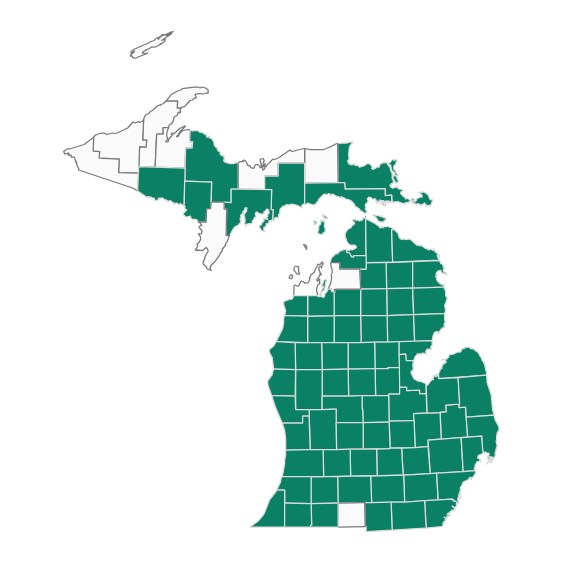
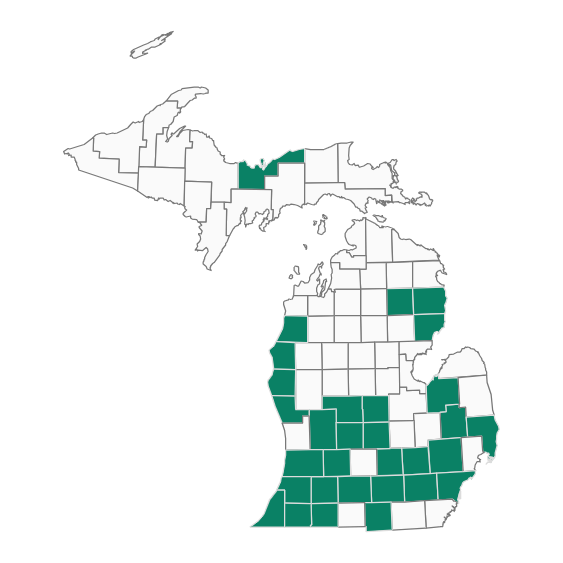
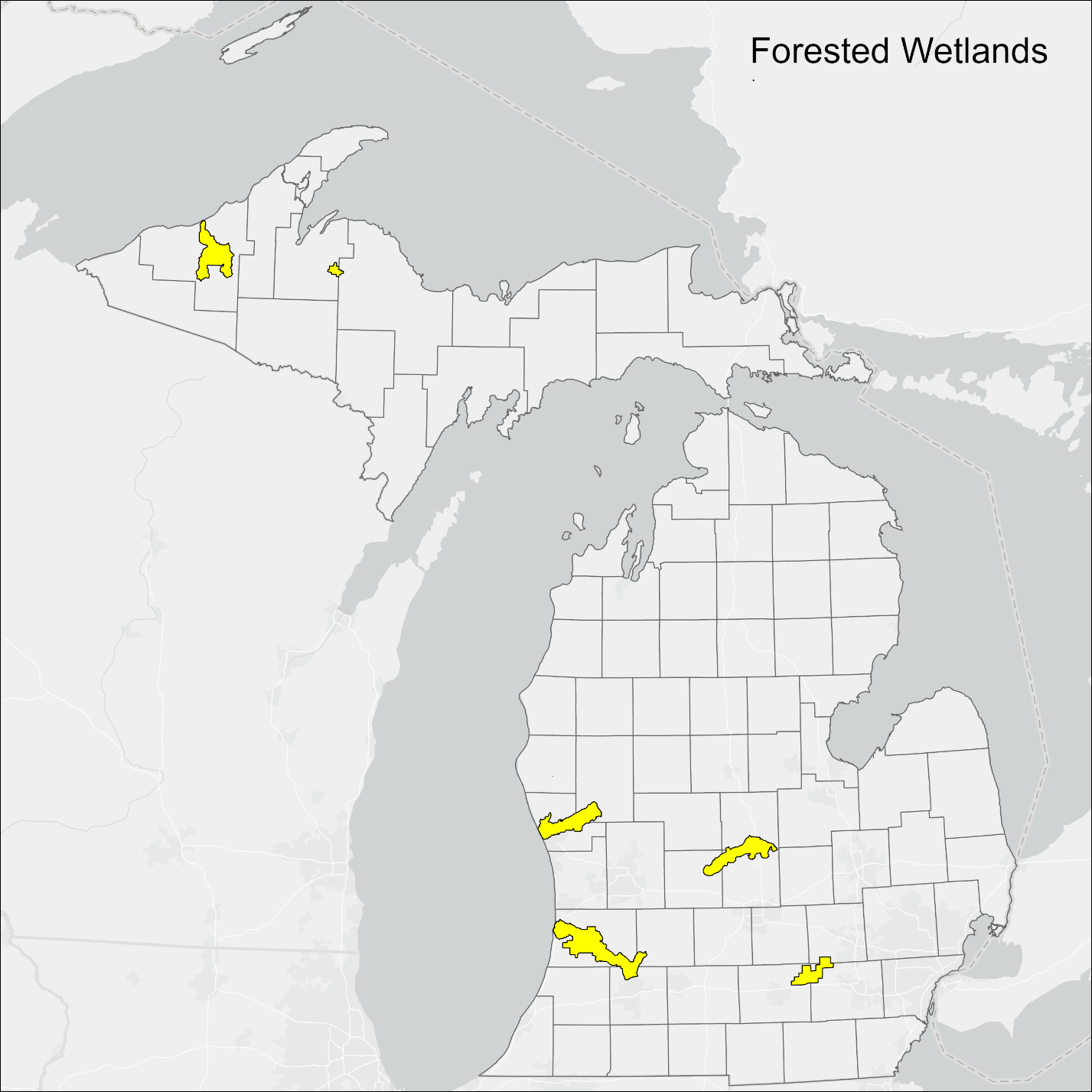
This map was created in collaboration with partners and highlights focal areas to work in over the next 10 years. Creating shared goals helps focus efforts and build collaboration. While this map has a select few areas highlighted, conservation work benefitting any Forested Wetland is welcome and encouraged.
How will we monitor?
Assessing status and measuring progress toward goals
Habitat
- Conduct systematic surveys and update the state’s Natural Heritage Database, for rarest forested wetland natural community types.
- Develop monitoring protocols to evaluate the ecological integrity of forested wetlands and implement monitoring in reference sites.
Blanding’s Turtle
- Continue monitoring the demographics of populations using standardized surveys, occupancy and abundance modeling and population growth and viability assessments.
- Continue monitoring status, distribution and population demographics with existing databases such as the state’s Natural Heritage Database, iNaturalist and HerpMapper.
- Update occurrences in the state’s Natural Heritage Database.
Cerulean Warbler
- Continue annual North American Breeding Bird Survey for population trends.
- Use community science programs, like eBird, to help assess distribution and relative abundance.
- Update occurrences in the state’s Natural Heritage Database.
Indiana Bat
- Work with landowners to preserve and survey the Tippy Dam hibernacula.
- Continue and expand hibernacula surveys to visit known or priority sites more frequently.
- Use community science programs like the Michigan Bat Roost Monitoring Program
- Update occurrences in the state’s Natural Heritage Database.
Ram’s Head Lady’s-Slipper
- Every five years or less, collect count-based and potentially density population measurements in a manner so that the data is interoperable with that collected by other states and agencies.
- Every five years or less, document any observable changes with the area occupied for a population.
- Update occurrences in the state’s Natural Heritage Database.
Regal Fern Borer
- Conduct surveys to monitor known populations and identify additional new populations.
- Continue to update element occurrences in the state’s Natural Heritage Database.
Links to other conservation plans
[BSGA] Barry State Game Area Master Plan (DNR 2015a).
[BT-NEWG] Conservation Plan for the Blanding’s Turtle and Associated Species of Greatest Conservation Need in the Northeastern United States (Willey and Jones 2014)
[BT-OHMI] Blanding’s Turtle Conservation Plan for Michigan and Ohio. Version 1.0 (Cross et al. 2023)
[CC] National fish, wildlife and plants climate adaptation strategy (National Fish, Wildlife and Plants Climate Adaptation Partnership 2012).
[CW] A conservation action plan for the Cerulean Warbler (Dendroica cerulea) (USFWS 2007).
[CW-MG] Management guidelines for enhancing Cerulean Warbler breeding habitat in Appalachian hardwood forests (Wood et al. 2013).
[CW-DOD] Establishing regional mentor sites for the management of the cerulean warbler and other mature forest avifauna (DOD 2015)
[HCVL] Interim Forest Management Policy for High Conservation Value Forests: HCVL Ram’s-head lady’s slipper orchid (Cypripedium arietinum) (Petersen et al 2021)
[HCP] Lake States Bat Habitat Conservation Plan (ICF 2023)
[IB] Indiana Bat (Myotis sodalis) Draft Recovery Plan: First Revision (USFWS 2007)
[JV] Upper Mississippi / Great Lakes Joint Venture Landbird Habitat Conservation Strategy (Soulliere et al. 2020)
[NWR] Shiawassee National Wildlife Refuge Comprehensive Conservation Plan. U.S. Fish and Wildlife Service (USFWS) 2001
[RPRS] Recovery Plan for Ram’s-head lady slipper (Cypripedium arietinum R. Br.) in Nova Scotia [Final] (NSDLF 2020)
[SFAP] Forest Action Plan 2020 (Michigan Department of Natural Resources Forest Resources Division 2020)
[SFMP] State Forest Management Plan 2024 (MDNR 2024)
[TIS] Michigan’s Terrestrial Invasive Species State Management Plan (2018)
Literature Cited
Show all references
Amon J.P., C.A. Thompson, Q.J. Carpenter, and J. Miner. 2002. Temperate zone fens of the glaciated Midwestern USA. Wetlands 22:301–317.
Andreadis, K.M., O.E.J. Wing, E. Colven, C.J. Gleason, P.D. Bates and C.M. Brown. 2022. Urbanizing the floodplain: global changes of imperviousness in flood-prone areas. Environmental Research Letters 17:1-9.
Bermingham, L.H. 2010. Deer herbivory and habitat type influence long-term population dynamics of a rare wetland plant. Plant Ecology 210:359–378.
Bernardo, H. L., P. Vitt, R. Goad, S. Masi and T. M. Knight. 2018. Count population viability analysis finds that interacting local and regional threats affect the viability of a rare plant. Ecological Indicators 93:822–829.
Bowles, M. and M. Jones. 2006. Trends of Change in Composition and Structure of Chicago Region Wetland Vegetation. Chicago Wilderness Journal 4(3):25-34.
Boyles, J.G., F.P.M. Cryan, G.F. McCracken, and T.H. Kunz. 2011. Economic importance of bats in agriculture. Science 332:41-42.
Buehler, D., T. Boves, and P. Hamel. 2013. Cerulean Warbler (Setophaga cerulea). The Birds of North America Online 506:10.2173/bow.cerwar.01.
Burt, T.P. 1997. The hydrological role of floodplains within the drainage basin system. Pages 21-32 in: N.E. Haycock, T.P. Burt, K.W.T. Goulding and G. Pinay, eds. Buffer Zones: Their Processes and Potential in Water Protection. Environmental Science. Hertfordshire, UK.
Case, F.W. Jr. 1987. Orchids of the Western Great Lakes Region revised edition. Cranbrook Institute of Science. Bulletin number 48. 251 pp.
Cheng, T.L., J.D. Reichard, J.T.H. Coleman, T.J. Weller, W.E. Thogmartin, B. Reichert, A. Bennett, H.G. Broders, J. Campbell, K. Etchison, D.J. Feller, R. Geboy, T. Hemberger, C. Herzog, A.C. Hicks, S. Houghton, J. Humber, J.A. Kath, R.A. King, S.C. Loeb, A. Masse, K.M. Morris, H. Niederriter, G. Nordquist, R.W. Perry, R. Reynolds, D.B. Sasse, M.R. Scafini, R.C. Stark, C.W. Stihler, S.C. Thomas, G.C. Turner, S. Webb, B. Westrich, and W.F. Frick. 2021. The scope and severity of white-nose syndrome on hibernating bats in North America. Conservation Biology 35:1586–1597.
Clement, D.R. and A.D. Steinman. 2017. Phosphorus loading and ecological impacts from agricultural tile drains in a west Michigan watershed. Journal of Great Lakes Research 43: 50-58.
Compton, B.W. 2007. Status assessment for the Blanding’s turtle (Emydoidea blandingii) in the Northeast. Unpublished U.S. Fish & Wildlife Service Report. 132 pp.
Cohen, J.G. 2006. Natural community abstract for poor conifer swamp. Michigan Natural Features Inventory, Lansing, MI. 23 pp.
Cohen J.G., and H.D. Enander. 2019. Rare coastal ecosystem monitoring. Michigan Natural Features Inventory Report Number 2019-08, Lansing, MI. 60 pp.
Cohen, J.G., H.D. Enander, T.J. Bassett, C.M. Wilton, and A.A. Cole-Wick. 2024. Using GIS-based multicriteria decision analysis to prioritize invasive plant treatment: A creative solution for a pernicious problem. Ecological Modelling. Volume 495: 110807
Cohen, J.G., M.A. Kost, B.S. Slaughter, D.A. Albert, J.M. Lincoln, A.P. Kortenhoven, C.M. Wilton, H.D. Enander, M.E. Anderson, M.R. Parr, T.J. Bassett, and K.M. Korroch. 2025. Michigan Natural Community Classification [web application]. Michigan Natural Features Inventory, Michigan State University Extension, Lansing, MI. Available at https://mnfi.anr.msu.edu/communities/classification.
Covell, C.V., Jr. 1984. A field guide to the moths of eastern North America. Houghton Mifflin Co., Boston, MA. 496 p. 76 ill. 64 pl. 76 figs.
Cross, M.D., G.J. Lipps, Y. Lee, M. Jordan and J.C. Sockman. 2023. Blanding’s Turtle Conservation Plan for Michigan and Ohio. Version 1.0. Ohio Division of Wildlife, Columbus, OH, USA. 59 pp.
Cuthrell, D.L. 2007. Special animal abstract for Papaipema speciosissima (regal fern borer moth). Michigan Natural Features Inventory, Lansing, MI. 2 pp.
D'Amato, A., B. Palik, R. Slesak, G. Edge, C. Matula, and D. Bronson. 2018. Evaluating Adaptive Management Options for Black Ash Forests in the Face of Emerald Ash Borer Invasion. Forests 9: 348-365.
Daniel, T.C., A.N. Sharpley, and J.L. Lemunyon.1998. Agricultural Phosphorus and Eutrophication: A Symposium Overview. Journal of Environmental Quality 27: 251-257.
Department of Defense (DoD) Natural Resources Program. 2014. Strategic Plan for Bird Conservation and Management on Department of Defense Lands.
Earl, D.J., E.C. Branch, A.A. Cole-Wick, Y.M. Lee, L.M. Rowe, P.J. Badra, C.M. Wilton, and D.L. Cuthrell. 2024. Assessing Climate Vulnerability & Adaptive Capacity of Midwest Species of Greatest Conservation Need. Michigan Natural Features Inventory, Lansing, MI. 79 pp.
Flaspohler, D. 1993. Wisconsin Cerulean Warbler Recovery Plan. Wisconsin Endangered Resources Report #101. Bureau of Endangered Resources, Wisc. Dept. of Natural Resources. Madison, WI.
Fredricks, T.B., J.P. Giesy, S.J. Coefield, R.M. Seston, M.M. Haswell, D.L. Tazelaar, P.W. Bradley, J.N. Moore, S.A. Roark, and M.J. Zwiernik. 2011a. Dietary exposure of three passerine species to PCDD/DFs from the Chippewa, Tittabawassee and Saginaw River floodplains, Midland, MI, USA. Environmental Monitoring and Assessment 172: 91–112.
Fredricks, T.B, M.J. Zwiernik, R.M. Seston, S.J. Coefield, D.L. Tazelaar, S.A. Roark, D.P. Kay, J.L. Newsted, and J.P. Giesy. 2011b. Effects on tree swallows exposed to dioxin‐like compounds associated with the Tittabawassee River and floodplain near Midland, MI, USA. Environmental Toxicology and Chemistry 30(6):1354–1365.
Frelich, L.E., C. G. Lorimer, and M.C. Stambaugh. 2021. History and Future of Fire in Hardwood and Conifer Forests of the Great Lakes-Northeastern Forest Region, USA. Pages 245-285 in C.H. Greenberg and B. Collins, eds. Managing Forest Ecosystems 39:245-285. Springer, Cham. Available https://doi.org/10.1007/978-3-030-73267-7_7
Gasbarrini, D.M.L., D. Lesbarrères, A. Sheppard and J.D. Litzgus. 2021. An enigmatic mass mortality event of Blanding’s turtles (Emydoidea blandingii) in a protected area. Canadian Journal of Zoology 99:470–479.
Gergel, S.E., M.D. Dixon and M.G. Turner. 2002. Consequences of human-altered floods: Levees, floods and floodplain forests along the Wisconsin River. Ecological Applications 12:1755-1770.
Great Lakes Restoration Initiative (GLRI). 2024. GLRI Action Plan IV (FY2025-2029). Retrieved from: https://glri.us/sites/default/files/glri-action-plan-4-202411-43pp_0.pdf.
Harding, J.H. and D.A. Mifsud. 2017. Amphibians and Reptiles of the Great Lakes Region, Revised Edition. University of Michigan Press, Ann Arbor, MI. 392 pp.
Havrdová, A., J. Douda, and J. Doudová. 2023. Threats, biodiversity drivers and restoration in temperate floodplain forests related to spatial scales. Science of The Total Environment 854:158743.
Hoving, C.L., Y. Lee, P.J. Badra, and B.J. Klatt. 2013. Changing climate, changing wildlife: a vulnerability assessment of 400 species of greatest conservation need and game species in Michigan. Michigan Department of Natural Resources Wildlife Division Report No. 3564. Lansing, MI. 82 pp.
Hyde, D., D. Thomson, and J. Legge. 2000. Special animal abstract for Dendrioica cerulea (Cerulean Warbler). Michigan Natural Features Inventory, Lansing, MI. 4pp.
ICF. 2023. Lake States Forest Management Bat Habitat Conservation Plan. Fairfax, VA.
Knutson, M.G., J.P. Hoover, and E.E. Klaas. 1996. The importance of floodplain forests in the conservation and management of neotropical migratory birds in the Midwest. Pages 168-188 in F. R. Thompson, ed. Management of midwestern landscapes for the conservation of neotropical migratory birds. General Technical Report NC-187. U.S. Forest Service, North Central Forest Experiment Station, St. Paul, MN.
Knutson, M.G., G. Butcher, J. Fitzgerald, and J. Shieldcastle. 2001. Partners in Flight bird conservation plan for the Upper Great Lakes Plain (Physiographic area 16). USGS Upper Midwest Environmental Sciences Center in cooperation with Partners in Flight. La Crosse, WI.
Kost, M.A. 2001. Natural community abstract for rich tamarack swamp. Michigan Natural Features Inventory, Lansing, MI. 7 pp.
Kost, M.A. 2002. Natural community abstract for rich conifer swamp. Michigan Natural Features Inventory, Lansing, MI. 10 pp.
Kost, M.A., D.A. Albert, J.G. Cohen, B.S. Slaughter, R.K. Schillo, C.R. Weber, and K.A. Chapman. 2007. Natural communities of Michigan: classification and description. Michigan Natural Features Inventory, Report No. 2007-21, Lansing, MI.
Kurta, A., G. P. Bell, K. A. Nagy, T. H. Kunz. 1989. Energetics of pregnancy and lactation in free-ranging little brown bats (Myotis lucifugus). Physiological Zoology 62(3):804–818.
Kurta, A., S. W. Murray, and D. H. Miller. 2002. Roost selection and movements across the summer landscape. Pages 118–129 in The Indiana bat: biology and management of an endangered species. A. Kurta and J. Kennedy, eds. Bat Conservation International, Austin, TX.
Kurta, A., A.K. Wilson, and R.M. Kurta. 2023. A search for remnant populations of endangered Indiana Bats and Northern Long-eared Bats in southern Lower Michigan. Unpublished report. United States Fish and Wildlife Service, East Lansing Field Office, East Lansing, MI. 38 pp.
Landis, D.A., A.K. Fiedler, C.A. Hamm, D.L. Cuthrell, E.H. Schools, D.R. Pearsall, M.E. Herbert, and P.J. Doran. 2012. Insect Conservation in Michigan Prairie Fen: Addressing the Challenge of Global Change. Journal of Insect Conservation 16(1):131–42. Available https://doi.org/10.1007/s10841-011-9398-3.
Lee, Y. 1999. Special animal abstract for Emydoidea blandingii (Blanding’s Turtle). Michigan Natural Features Inventory. Lansing, MI. 4 pp.
Markle, C.E. and P. Chow-Fraser. 2018. Effects of European common reed on Blanding’s turtle spatial ecology. Journal of Wildlife Management 82:857–864.
Michigan Department of Natural Resources (DNR). 2015a. Barry State Game Area master plan. Barry County, MI. 16 pp.
Michigan Natural Features Inventory [MNFI]. 2025. Michigan Natural Heritage Database, Lansing, MI.
Midwest Partners in Amphibian and Reptile Conservation (MWPARC). 2010. Blanding’s Turtle (Emydoidea blandingii) Conservation Assessment Survey. http://www.mwparc.org/
North American Society for Bat Research (NASBR). 2024. NASBR statement on wind energy impacts on bat populations. Available https://www.nasbr.org/wind.
Nova Scotia Department of Lands and Forestry (NSDLF). 2020. Recovery Plan for Ram’s-head lady slipper (Cypripedium arietinum R. Br.) in Nova Scotia [Final]. Nova Scotia Endangered Species Act Recovery Plan Series. 53 pp.
Otten, J.G., L. Williams, and J.M. Refsnider. 2023. Freshwater turtle populations as bioindicators following an oil spill: Delayed demographic changes reveal long-term impacts. Ecological Indicators 154:110519.
Penskar, M.R. and P.J. Higman. 1999. Special plant abstract for Cypripedium arietinum (ram’s-head lady’s-slipper). Michigan Natural Features Inventory. Lansing, MI. 2 pp.
Petersen, L., W. Smith, D. Bundy, and N. Jensen. 2021. Interim Forest Management Policy for High Conservation Value Forests: HCVL Ram’s-head lady’s slipper orchid (Cypripedium arietinum). Minnesota Department of Natural Resources, Saint Paul, MN. 9 pp.
Poland, T.M. and D.G. McCullough. 2006. Emerald Ash Borer: Invasion of the Urban Forest and the Threat to North America's Ash Resource. Journal of Forestry April-May 2006:118-124.
Potter, B.A., G.J. Soulliere, D.N. Ewert, M.G. Knutson, W.E. Thogmartin, J.S. Castrale, and M.J. Roell. 2007. Upper Mississippi River and Great Lakes Region Joint Venture Landbird Habitat Conservation Strategy. U.S. Fish and Wildlife Service, Fort Snelling, MN. 124pp.
Primack, A.B. 2000. Simulation of climate-change effects on riparian vegetation in the Pere Marquette River, Michigan. Wetlands 20(3):538–547.
Rockey, C. D., J. Stumpf, and A. Kurta. 2013. Additional winter records of Indiana bats (Myotis sodalis) banded during summer in Michigan. Northeastern Naturalist 20(3):N8–N13.
Rosenberg, K.V., J.A. Kennedy, R. Dettmers, R.P. Ford, D. Reynolds, J.D. Alexander, C.J. Beardmore, P.J. Blancher, R.E. Bogart, G.S. Butcher, A.F. Camfield, A. Couturier, D.W. Demarest, W.E. Easton, J.J. Giocomo, R.H. Keller, A.E. Mini, A.O. Panjabi, D.N. Pashley, T.D. Rich, J.M. Ruth, H. Stabins, J.
Sauer, J.R., W.A. Link, and J.E. Hines. 2020. The North American Breeding Bird Survey, Analysis Results 1966 - 2019: U.S. Geological Survey data release, Available https://doi.org/10.5066/P96A7675.
Shuster, W.D., J. Bonta, H. Thurston, E. Warnemuende, and D.R. Smith. 2005. Impacts of Impervious Surface on Watershed Hydrology: A Review. Urban Water Journal 2:263-275.
Slaughter, B.S. 2009. Natural community abstract for southern hardwood swamp. Michigan Natural Features Inventory, Lansing, MI. 16 pp.
Slaughter, B.S., J.G. Cohen, and M.A. Kost. 2007. Natural community abstract for hardwood-conifer swamp. Michigan Natural Features Inventory, Lansing, MI. 20 pp.
Slaughter, B.S., J.G. Cohen, and M.A. Kost. 2010. Natural community abstract for wet-mesic flatwoods. Michigan Natural Features Inventory, Lansing, MI. 14 pp
Soulliere, G.J., M.A. Al-Saffar, K.R. VanBeek, C.M. Tonra, M.D. Nelson, D.N. Ewert, T. Will, W.E. Thogmartin, K.E. O’Brien, S.W. Kendrick, A.M. Gillet, J.R. Herkert, E.E. Gnass Giese, M.P. Ward and S. Graff. 2020. Upper Mississippi / Great Lakes Joint Venture Landbird Habitat Conservation Strategy – 2020 Revision. U.S. Fish and Wildlife Service, Bloomington, MN, USA.
Stanford, C.B., J.B. Iverson, A.G.J. Rhodin, P. Paul van Dijk, R.A. Mittermeier, G. Kuchling, K.H. Berry, A. Bertolero, K.A. Bjorndal, T.E.G. Blanck, K.A. Buhlmann, R.L. Burke, J.D. Congdon, T. Diagne, T. Edwards, C.C. Eisemberg, J.R. Ennen, G. Forero-Medina, M. Frankel, U. Fritz, N. Gallego-García, A. Georges, J.W. Gibbons, S. Gong, E.V. Goode, H.T. Shi, H. Hoang, M.D. Hofmeyr, B.D. Horne, R. Hudson, J.O. Juvik, R.A. Kiester, P. Koval, M. Le, P.V. Lindeman, J.E. Lovich, L. Luiselli, T.E.M. McCormack, G.A. Meyer, V.P. Páez, K. Platt, S.G. Platt, P.C.H. Pritchard, H.R. Quinn, W.M. Roosenburg, J.A. Seminoff, H.B. Shaffer, R. Spencer, J.U. Van Dyke, R.C. Vogt and A.D. Walde. 2020. Turtles and Tortoises Are in Trouble. Current Biology 30:R721–R735.
Stanton, and T. Will. 2016. Partners in Flight Landbird Conservation Plan: 2016 Revision for Canada and Continental United States. Partners in Flight Science Committee. 119 pp.
Tepley, A.J., J.G. Cohen, and L. Huberty. 2004. Natural community abstract for floodplain forest. Michigan Natural Features Inventory, Lansing, MI.15 pp.
Thurman, LL, B Stein, EA Beever, W Foden, SR Geange, N Green, JE Gross, DJ Lawrence, O LeDee, JD Olden, LM Thompson, and BE Young. 2020. Persist in place or shift in space? Evaluating the adaptive capacity of species to climate change. Frontiers in Ecology and Evolution 18(9): 520-528
Tockner, K. and J. Stanford. 2002. Riverine Flood Plains: Present State and Future Trends. Environmental Conservation 29:308-330.
U.S. Environmental Protection Agency (USEPA). 2024. Herbicide Strategy to Reduce Exposure of Federally Listed Endangered and Threatened Species and Designated Critical Habitats from the Use of Conventional Agricultural Herbicides. Docket ID EPA-HQ-OPP-2023-0365-1137. August 2024. Office of Chemical Safety and Pollution Prevention. Office of Pesticide Programs. Available https://www.regulations.gov/document/EPA-HQ-OPP-2023-0365-1137.
U.S. Fish and Wildlife Service (USFWS). 2007. Indiana Bat (Myotis sodalis) draft recovery plan: first revision.
van Diggelen, R., B. Middleton, J. Bakker, A. Grootjans, and M. Wassen. 2006. Fens and Floodplains of the Temperate Zone: Present Status, Threats, Conservation and Restoration 9(2):157–162. Available https://doi.org/10.1658/1402-2001(2006)9%255B157:FAFOTT%255D2.0.CO;2.
Weber, C.R, J.G. Cohen, and M.A. Kost. 2007. Natural community abstract for Northern Hardwood Swamp. Michigan Natural Features Inventory, Lansing, MI. 9 pp.
Willey, L.L. and M.T. Jones. 2014. Conservation Plan for the Blanding’s Turtle and Associated Species of Conservation Need in the Northeastern United States. Report prepared on behalf of the Northeast Blanding’s Turtle Working Group for the New Hampshire Fish and Game Department and U.S. Fish and Wildlife Service. 132 pp.
Wilton, C.M. 2021. White-tailed Deer (Odocoileus virginianus) Density and Habitat Use on the Beaver Island Archipelago Using a Camera Trap Array. Michigan Natural Features Inventory Report Number 2021-05, Lansing, MI
Wood, P., J. Sheehan, P.D. Keyser, D.A. Beuhler, J. Larkin, A.D. Rodewald, S.H. Stoleson, T.B. Wigley, J. Mizel, T.J. Boves, G. George, M.H. Bakermans, T.A. Beachy, A. Evans, M.E. McDermott, F.L. Newell, K.A. Perkins and M. White. 2013. Management guidelines for enhancing Cerulean Warbler breeding habitat in Appalachian hardwood forests. American Bird Conservancy. The Plains, VA. https://amjv.org/documents/cerulean_guide_1-pg_layout.pdf.
Yun, S.H, R. Addink, J.M. McCabe, A. Ostaszewski, D. Mackenzie-Taylor, A.B. Taylor and K. Kannan. 2008. Polybrominated Diphenyl Ethers and Polybrominated Biphenyls in Sediment and Floodplain Soils of the Saginaw River Watershed, Michigan, USA. Archives of Environmental Contamination and Toxicology 55:1–10.