Contributors
Michigan Natural Features Inventory
Bay Mills Indian Community
Keweenaw Bay Indian Community
Michigan Nature Association
Audubon Great Lakes
U.S. Fish and Wildlife Service
Michigan Department of Environment, Great Lakes and Energy (EGLE)
Michigan Department of Natural Resources
U.S. Geological Survey, Michigan Fish and Wildlife Cooperative Research Unit
Lake Superior State University
Recommended Citation: Rachel A. Hackett, Logan M. Rowe, Michael J. Monfils, and Anthony K. Henehan. 2026. Michigan’s Wildlife Action Plan: 2025-2035, Great Lakes Coastal Systems. Michigan Department of Natural Resources, Lansing, MI.
What are Great Lakes Coastal Systems?
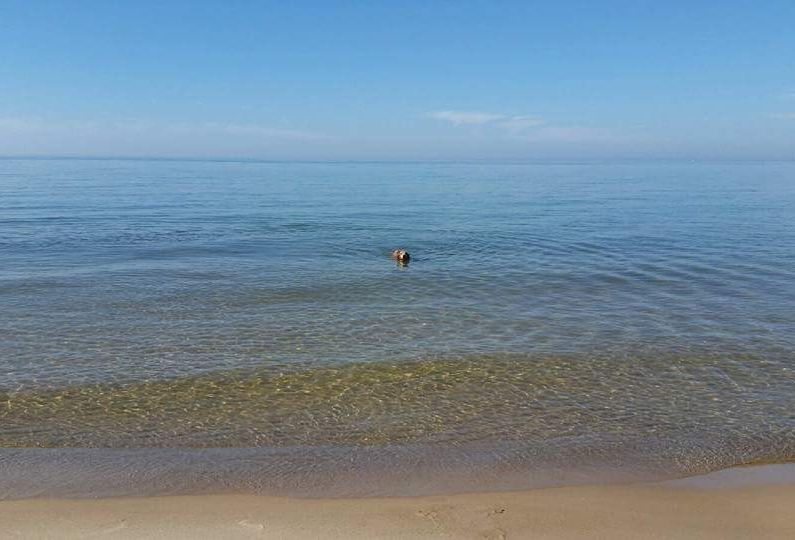
Michigan’s Great Lakes shoreline is home to a wide variety of natural communities, including dunes, beaches, cliffs, bedrock lakeshores, and wetlands. These coastal systems are constantly shaped by changing lake levels, wind, waves, ice scour and other natural forces. With the exception of wetlands and wooded dune and swales, many of these coastal systems are sparsely vegetated with little or no soil development. Open dunes, predominantly composed of loose sand, are formed and reshaped by strong lake winds, resulting in a sparse plant community (Albert 1999). Similarly, sand and gravel shores are consistently shaped by wind, waves and ice, resulting in an unstable environment for plant communities (Albert 2007c). A variety of bedrock communities can be found along the Great Lakes coastal zone. Soil development and plant establishment are limited to depressions in the bedrock where organic matter can accumulate, resulting in sparse plant communities (Albert 2007a, 2007c, 2009a, 2009b; Cohen et al. 2020; Comer et al. 1997).
Great Lakes marshes, coastal fens, lakeplain prairies, and other wetland types also occur along the coastal zone. These wetlands tend to form in more sheltered areas like swales, protected bays and river mouths. Unlike other coastal systems, wetlands have soil that can support rich plant life. The vegetation in these systems helps buffer the impacts of wind and waves before they reach farther inland (Cohen et al. 2010, Kost and Penskar 2000). Thanks to a unique combination of geology, climate and location, Michigan’s coastal systems support an incredible range of plants and animals including many that are rare, found only in this region, or far from their usual range.
Why are Great Lakes coastal systems important?
The Great Lakes shoreline is one of Michigan’s most iconic features, drawing millions of visitors each year. With its sweeping sand dunes, gravel beaches, and scenic cliffs, the coast supports a $29 billion tourism industry. Beyond their beauty and recreational appeal, these places are also essential for wildlife and clean water.
The value of natural Great Lakes coastal ecosystems and the services they provide is often underestimated. Great Lakes Coastal Systems offer habitat for plants and animals found nowhere else. Meanwhile, coastal wetlands play a powerful role in protecting both people and the environment. For example, they absorb floodwaters from heavy rains and snowmelt, reducing flood risk in nearby communities. They also act as natural filters, removing excess nutrients, sediments, and pollutants from water before it reaches rivers, lakes, and groundwater. This improves water quality for swimming, drinking, and wildlife.
Wetlands are also some of the most wildlife-rich habitats in the state. They support a wide range of species including common loon, American mink, North American beaver, and bald eagle. These areas are also popular with hunters, anglers, kayakers, birdwatchers, and photographers.
What is the health of Great Lakes coastal systems?
In 2025, there were 434 documented Great Lakes Coastal Systems in Michigan’s Natural Heritage Database, covering nearly 155,000 acres. The majority of these natural communities are ranked as having excellent or good viability for future persistence. The quality of remaining open dunes, wooded dune and swale complexes, Great Lakes marsh, and lakeplain prairies is generally lower than other systems primarily due to development pressure and invasive species. These coastal systems may need more protections, regulations and management than others.
Biodiversity conservation assessments were conducted for each of the Great Lakes, including their associated Great Lakes Marsh communities. Lake Erie and Lake Huron were assessed as having fair viability, whereas lakes Michigan and Superior were assessed as good viability (Franks Taylor et al. 2010; Pearsall et al. 2012a; Pearsall et al. 2012b; Lake Superior Binational Program 2015).
Natural communities found in Great Lakes Coastal Systems | |
Clay bluff | Limestone cobble shore |
Coastal fen | Limestone lakeshore cliff |
Granite bedrock lakeshore | Open dunes |
Granite lakeshore cliff | Sand and gravel beach |
Great Lakes barrens | Sandstone bedrock lakeshore |
Great Lakes marsh | Sandstone cobble shore |
Hanging bog | Sandstone lakeshore cliff |
Interdunal wetland | Wooded dune and swale complex |
Lakeplain oak openings | Volcanic bedrock lakeshore |
Lakeplain wet-mesic prairie | Volcanic cobble shore |
Lakeplain wet prairie | Volcanic lakeshore cliff |
Limestone bedrock lakeshore |
|
Michigan Natural Features Inventory’s natural community classification (Cohen et al. 2015, Cohen et al. 2025) and natural community abstracts, both of which are available online along with photos, comprehensive descriptions, distribution maps, and thorough references from the scientific literature. MNFI’s most detailed bibliography on Michigan’s natural communities can be found in the publication “Distribution Maps of Michigan’s Natural Communities” (Albert et al. 2008), which is also available for viewing and downloading at the MNFI website.
Accomplishments
The number of Great Lakes Piping Plover mating pairs increased to 88 in 2025 after a decline due to high water levels in 2018-2020 that reduced the population to 64 pairs. Over the last 10 years, on average, 32 of these pairs were found at Sleeping Bear Dunes National Lakeshore (Cavalieri pers. comm.).
Conservation efforts, at least partially funded by the Great Lakes Restoration Initiative, led to the establishment or re-establishment of 13 new Piping Plover sites across the Great Lakes since 2015, including six sites in Michigan (Cavalieri pers. comm.).
Designed a unique floating platform to address nest failure and risks of Black Tern populations decline in Michigan by Stantec and Audubon Great Lakes (Stantec 2025).
Confirmed breeding observations of Black Terns at 43 of 92 sites in Michigan from 2021-2024 by Audubon Great Lakes scientists.
In 2018-2020, Audubon Great Lakes treated invasive plants in Wigwam Bay State Wildlife Area with herbicide and monitored for seven marsh birds, including the Black Tern, resulting in population estimates and a conservation action plan (AGL 2021).
Five new locations and 77 updated records of Pitcher’s Thistle as a result of 2012-2016 field surveys (Slaughter and Cuthrell 2017).
With funding from U.S. Fish and Wildlife Service (USFWS), U.S. Environmental Protection Agency (EPA), Little Traverse Bay Bands of Odawa Indians, Michigan Department of Natural Resources (DNR), Little Traverse Conservancy, Huron Pines, and Michigan Department of Environment, Great Lakes and Energy, MNFI conducted surveys from 2015 through 2025 and documented 65 new occurrences of Great Lakes shoreline natural communities (MNFI 2025).
Michigan Natural Features Inventory developed draft monitoring protocols for evaluating the ecological integrity of coastal fen, Great Lakes marsh, lakeplain prairie, and open dunes (Cohen and Enander 2019).
Working in partnership, GEI, Michigan State University Department of Geography, Michigan Tech Great Lakes Research Center, Michigan Tech Research Institute, and Michigan Natural Features Inventory developed a rapid assessment methodology to evaluate ecological integrity and geomorphology in dunes and evaluated all of Michigan's dune complexes for designation as Critical Dune Areas.
Focal species
Black Tern
Chlidonias niger
State Threatened
Black terns are small migratory birds and the smallest tern species found in Michigan. Black terns prefer marshes with extensive stands of emergent vegetation such as bulrush, cattail, sedge, or wild rice and large areas of open water with floating plant material for nesting (Soulliere et al. 2007). They also need wetland complexes greater than 50 acres in size (Soulliere et al. 2007). Habitat suitability appears to be determined more by landscape structure at a larger scale (wetland complex) than local vegetation conditions within wetlands, and terns selectively choose high-density wetland landscapes (Heath et al. 2020). Among marsh bird species, Black Terns face the most significant declines in the Great Lakes (Tozer 2015). Between 1966 and 2019, Black Terns have declined 2.4% annually throughout the U.S., and by 7.6% in the state of Michigan (Sauer et al. 2020). Black Terns are predicted to lose 97% of breeding habitat across a significant proportion of their range by 2100, likely contributing to these population declines (Steen and Powell 2012). This decline in active colony sites has been further documented by a more recent statewide study by Audubon Great Lakes (Beilke et al. 2025). The long-term trend for Black Terns across their range and the Great Lakes region indicates a significant decline (Upper Mississippi and Great Lakes Region Joint Venture, unpublished report). This species has been documented from 35 sites in 20 counties in Michigan as of 2025 in the state's Natural Heritage Database and 14 of these occurrences were observed within the last 20 years (2005-2025; MNFI 2025).
Goals
- Determine key population limiting factors.
- Develop an inventory, and categorize the health, of Black Tern nesting sites across Michigan.
- Promote habitat management at large breeding colonies, including encouraging and maintaining floating vegetation mats for nesting.
Eastern Fox Snake
Pantherophis gloydi
State Threatened
Eastern fox snakes are identified by the dark brown or black blotches down their back and sides and a yellowish to light brown body. They will buzz their tail when threatened and can be mistaken for a venomous snake. However, they are harmless and provide a great rodent control service. These snakes are seldom found far from water and can swim long distances (Harding 1997). They inhabit wetlands along the shorelines of the Great Lakes and can be associated with large rivers and impoundments (Evers 1994). They primarily occur in open wetlands but will occupy drier habitats such as vegetated dunes and beaches (Harding 1997). Uncommon or rare in many areas where they were once abundant, Eastern fox snakes occur only in the Great Lakes basin in southern Ontario, Michigan and Ohio. There has been a population reduction of more than 50% over the last 10 years. This species has been documented from 52 sites in 8 Michigan counties as of 2025 in the state's Natural Heritage Database. 34 of these occurrences were observed within the last 30 years (1995-2025; MNFI 2025).
Goals
- Establish current status, distribution, abundance, threats and management needs of extant populations.
- Maintain or increase existing populations, particularly large and/or potentially stable populations.
Hine’s Emerald Dragonfly
Somatochlora hineana
Federally and State Endangered
Hine’s emerald adults have brilliant green eyes and can be distinguished from all other species of Somatochlora by a combination of their dark metallic green thorax with two distinct creamy-yellow lateral lines and distinctively shaped terminal appendages. Hine’s emerald primarily relies on coastal fen habitats, which are graminoid dominated wetlands that contain seeps, or slow-moving rivulets required by the larvae (Cuthrell 1999). This species has been documented from 16 sites in five counties in Michigan as of 2025 in the state's Natural Heritage Database and 11 of these occurrences were observed within the last 20 years (2005– 2025; MNFI 2025).
Goals
- Maintain existing viable populations.
- Maintain wetland hydrology and quality at known populations.
Lake Huron Locust
Trimerotropis huroniana
State Threatened
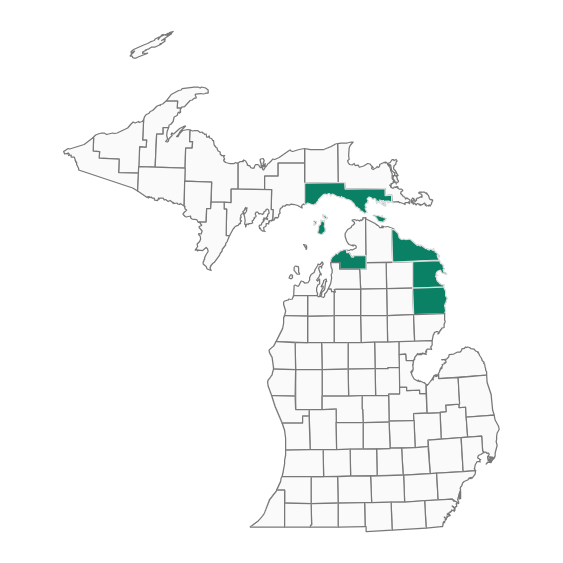
Lake Huron locusts are small ash-gray grasshoppers with dark brown and white markings and wings with a prominent dark band (Bland 2023). They occur only in sparsely vegetated, high-quality Great Lakes dunes along northern Lake Michigan, northern Lake Huron and eastern Lake Superior and primarily feed on dune grass, beach grass and wormwood, but will eat other forbs, including the federally threatened pitcher's thistle (Rabe 1999). Lake Huron locusts are endemic to the Great Lakes and the long-term decline is estimated to be as high as 50% (NatureServe 2025). This species has been documented from 90 sites in 18 counties in Michigan as of 2025 in the state's Natural Heritage Database and 13 of these occurrences were observed within the last 20 years (2005-2025; MNFI 2025).
Goals
- Maintain existing viable populations.
- Determine population status at 15 occurrences along the Great Lakes.
Piping Plover
Charadrius melodus
Federally and State Endangered
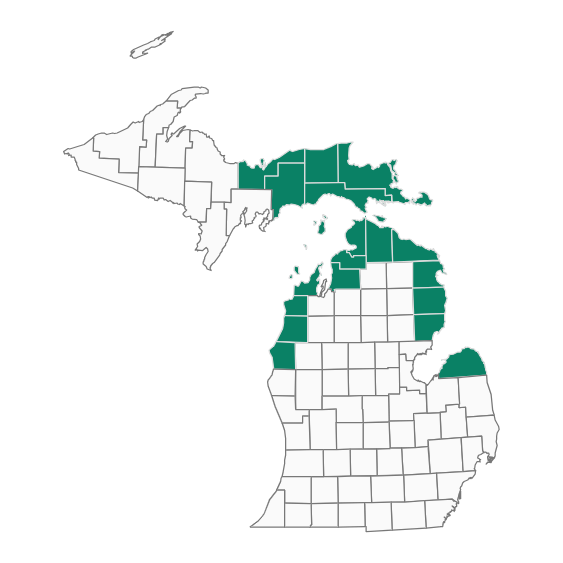
Piping plovers are small shorebirds (less than 8 inches tall) that nest on sand, gravel, or cobble beaches. They nest on sand, gravel or cobble beaches and prefer wide, sandy, open beaches with sparse vegetation and scattered cobble along the Great Lakes (Hyde 1999). Piping plover conservation is a priority for the U.S. Fish and Wildlife Service, the Upper Mississippi River and Great Lakes Region Joint Venture and Michigan’s Department of Natural Resources. Management efforts are ongoing as their populations are still critically low. Captive-rearing efforts continue to supplement the population and, in 2025, released 36 chicks into the wild, bringing the fledge rate to 1.6 chicks/pair (above the recovery goal of 1.5 chicks/pair annually). Despite gains made due to intense conservation efforts, the species remains vulnerable to extirpation in the Great Lakes Region (Cuthbert 2011). As of 2025, there were 66 breeding pairs in the state that fledged 70 chicks, an average of 1.06 chicks per pair. This species has been documented from 56 sites in 20 counties in Michigan as of 2025 in the state's Natural Heritage Database and 34 of these occurrences were observed within the last 20 years (2005– 2025; MNFI 2025).
Goals
- Increase the number of breeding pairs in the Great Lakes to 150. [PIPL]
- Maintain the average number of chicks fledged per pair at or above 1.5. [PIPL]
Pitcher’s Thistle
Cirsium pitcheri
Federally and State Threatened
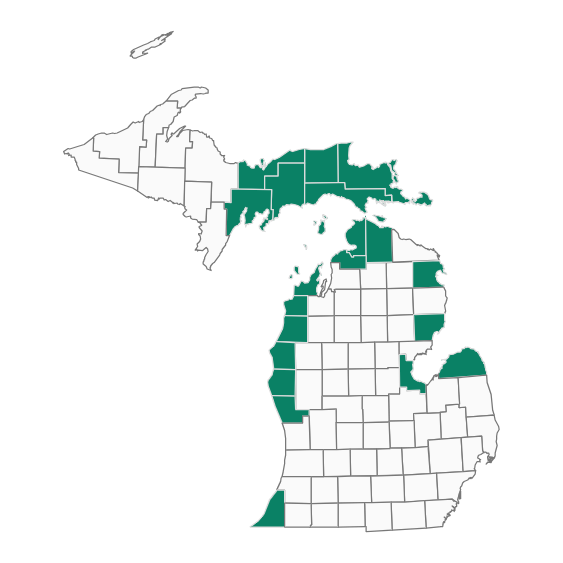
Pitcher’s Thistle is a perennial, light pink- or white-flowered thistle. It spends several years as a blue-green, basal rosette of leaves and then one year it produces a long stem with blooms beginning mid-June. The entire plant is covered by white-wooly hairs and blooms are large and cream-colored, occasionally pinkish (Higman and Penskar 1999). Pitcher’s Thistle is endemic to sandy habitat along Great Lakes shores, especially open dunes. In sparsely vegetated Great Lakes Coastal Systems, this species is a keystone food supply for nectar feeders and pollinators when few other species are blooming on beaches. This species has been documented from 172 sites in 26 counties in Michigan as of 2025 in the state's Natural Heritage Database and 144 of these occurrences were observed within the last 40 years (1985 – 2025; MNFI 2025).
Goals
- Regularly monitor at least 50% of Michigan populations and document trends annually.
- Identify populations impacted by non-native weevils.
Maintain dynamic shoreline processes
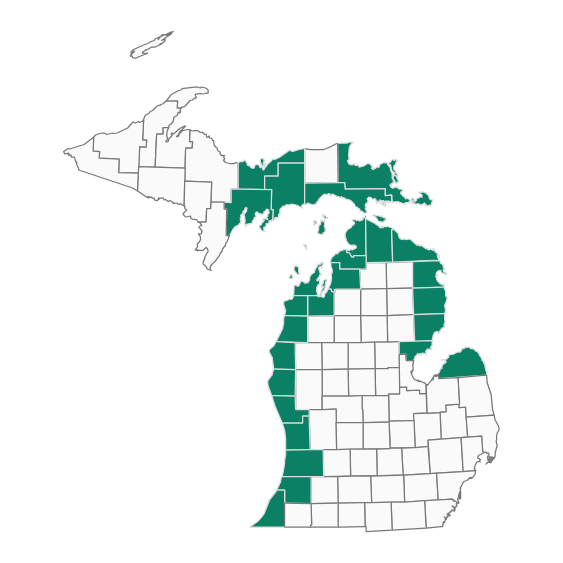
Dunes, cobble shores and coastal marshes are dynamic ecosystems shaped and sustained by natural processes such as sand deposition, lake currents, wave action, ice scour and fluctuating lake levels. These fluctuations are essential for maintaining open dunes and shorelines. Coastal marshes have historically adapted to these variable conditions and disturbance regimes. Preserving the natural variability and connectivity of shoreline and hydrologic processes is critical to sustaining the ecological integrity and resilience of Great Lakes coastal habitats.
Call Out Box: Great Lakes Coastal Systems on Public Lands
Most known dune, cobble shore and coastal marsh communities located upon state and federal public lands are generally identified and protected within management systems and provide continuity of habitat for associated focal species. For example, all known dune, cobble shore and coastal marsh communities on state forest land are protected as high conservation value Ecological Reference Areas, and most of the remainder of coastal dunes communities in Michigan are located within state and federal parks and national forest land.
Focal species adaptive capacity
Adaptive capacity is a species’ ability to tolerate or adapt to environmental change, whether that be through shifting in space or persisting in place (Thurman et al. 2020). Michigan Natural Features Inventory, with funding support from the Michigan Department of Natural Resources, assessed Adaptive Capacity for over 500 Midwest SGCN from 2023-2024 (Appendix 3). We chose to increase clarity at expense of precision in technical language used by Thurman et al. (2020) in their paper. The Michigan Department of Natural Resources created broad management strategies based off assessment results and are intended to be stepped down based on management scale, capacity and resources. Management strategies for assessed 2025-2035 focal species are:
Lowest adaptive capacity | Strategy | |
Black Tern | Range of Tolerances | Increase habitat connectivity |
Eastern Fox Snake | Population Size | Increase habitat connectivity |
Hine's Emerald Dragonfly | Movement | Manage genetic diversity |
Lake Huron Locust | Movement | Manage genetic diversity |
Piping Plover | Range of Tolerances | Enhance reproduction or survival |
Threats and conservation actions for habitat
Threats
Invasive & Other Problematic Species, Genes & Diseases
- Invasive plants (e.g., Phragmites, Lyme grass, baby’s breath, glossy buckthorn, invasive cattails) cause changes in structural diversity, natural processes and microhabitats (Soulliere et al. 2007).
- Invasive animals (e.g., quagga mussels, zebra mussels, mute swans, copi [formerly Asian carp], invasive thistle weevils) cause changes in nutrient dynamics and food webs, disease outbreaks including large-scale waterbird die-offs and displace native wildlife (Mills et al. 1994; Herbert et al. 2014).
Development and Natural Systems Modifications
- Bulkheads, breakwalls, jetties, retaining walls, shoreline development and dredging alter hydrology and sediment transport and other natural ecosystem processes (Albert 2001); these changes can significantly impact the types, quantity and quality of habitats and limit the capacity for dynamic coastal systems to change in space and time in response to fluctuating Great Lakes water levels.
- Loss of natural disturbance or lack of management that sets back succession in areas dependent on succession; lack of management can be due to inaccessibility or willingness of landowners.
- Fragmentation of large wetland complexes affects ecological functions.
- Habitat loss through filling of wetlands.
Transportation & Service Corridors
- Dredging river mouths during low water levels can cause loss of sand replenishment.
- Excessive salting and sediment runoff can change plant and amphibian communities and invite invasive species establishment or expansion (Stoler et al. 2018, Meindl et al. 2020).
Human Intrusions & Disturbance
- Unrestricted beachgoers, jet skis and ORVs can introduce invasive species, disturb wildlife and destabilize habitats (USFWS 2003, Kost et al. 2007).
- Limestone mining along coastal areas poses threats to habitat quality.
- Residential and commercial development can destroy habitat and impact coastal ecosystem functions including hydrology, nutrient cycling, sedimentation and more (Lee et al. 2006).
Agriculture & Aquaculture
- Conversions to other land uses and tiling and draining of agricultural fields changes wetland hydrology (Albert 2001).
- Sand mining permanently alters natural processes of dune and adjacent ecosystems.
Pollution
- Point and non-point source pollutions such as nutrient runoff from Areas of Concern (AOC), septic systems, lawns and agricultural increases rates of eutrophication sedimentation and other contaminants (Albert 2001, Kost et al. 2007).
- Many factors contribute to harmful algae blooms (e.g., wind and water currents, excess nutrients, high water temperatures and extreme weather events; NOAA 2024), which may cause fish kills and discolored or foul-smelling water, affecting both human and ecosystem health.
Changing Weather Patterns
- Changing weather pattern effects like higher temperatures, summer drought, longer growing season and greater variability in lake level fluctuations will likely result in greater evapotranspiration and evaporation, less soil moisture and smaller/fewer wetlands (DeVries-Zimmerman et al. 2021).
- Precipitation is very likely to become more extreme and less consistent increasing the frequency and severity of flash flooding and drought resulting in less consistent moisture for wetlands and greater impacts from runoff pollution.
Conservation Actions
Land & Water Management
- Restore, manage and protect Great Lakes coastal ecosystems on state, federal and private lands for focal species. [MLCP]
- Soften shorelines from bulkheads or retaining walls to options that are more wildlife friendly. Use Areas of Concern remedial action plans to focus efforts. [MLCP]
- Manage for priority invasive species and address factors causing ecosystem susceptibility to invasion (e.g., degraded water quality, salt from roads, altered flood or hydrological regime). Develop long-term and regional integrated invasive management plans. [GSGP; TIS; AIS; GLCC; BMPF; WBBB]
- Continue early detection and rapid response efforts for invasive species. [GSCP’ TIS; AIS; GLCC]
- Use invasive plant species prioritization tools to focus restoration efforts in the ecologically most important areas (Cohen et al. 2024).
- Implement Michigan’s Aquatic and Terrestrial Invasive Species State Management Plans.
Raising Awareness
- Develop and promote educational materials about natural processes of Great Lakes coastal ecosystems and responsible recreation. [MCMP]
- Work with agencies and industry to make dredging and other projects more wildlife friendly. [GLCC]
- Support and participate in Great Lakes Coastal Assembly. [GLCA]
- Educate policymakers on the value and importance of Great Lakes coastal ecosystems and how to protect them.
- Educate private landowners on the values of Great Lakes ecosystems, management and the wildlife that rely on them. Work with existing private lands programs within the U.S. Forest Service, U.S. Fish and Wildlife Service, Natural Resources Conservation Service, Department of Natural Resources and Department of Agriculture and Rural Development.
- Promote voluntary best management practices for stopping the introduction and spread of invasive species by recreational users, researchers and industry. [TIS; AIS]
- Continued support for voluntary best management programs like the Clean, Drain, Dry Initiative and Clean Boats, Clean Water and their grantees’ efforts to increase awareness and reduce transportation of aquatic invasive species. Expand efforts to other recreational vehicles. [GSCP]
- Promote and use Michigan’s HerpAtlas website and app (http://www.miherpatlas.org), Midwest Invasive Species Information Network website and app (www.misin.msu.edu).
- Regularly update and fund outreach on aquatic and terrestrial watch list invasive species. [TIS; AIS]
Conservation Designation & Planning
- Use conservation easements and acquisition to increase long-term viability of restored habitats. [GLCC]
- Find common conservation objectives and collaboration opportunities with Tribal communities, such as wild rice restoration to enhance marsh habitat. Consider cultural importance of natural communities beyond biological and economic significance.
- Develop and promote best practices for including important habitat components for focal species during habitat management, similar to the waterfowl management handbook {Nelms et al. 2007).
- Explore opportunities to work with the Army Corps of Engineers regarding sediment shifts to protect important Great Lakes wetlands. [MCMP]
- Identify high-quality Great Lakes coastal ecosystems in climate resilient landscapes and incorporate into conservation planning and management. Focus survey efforts in Upper Peninsula where high-quality systems are most likely to occur and that are more vulnerable to development. [LSCC]
- Develop best management practices and implement recommendations for climate-smart wetland infrastructure that is engineered to withstand projected extreme precipitation events over the design-life of the project rather than the mean of past precipitation events. [GLCC]
- Re-evaluate Critical Dune Areas and assess new potential areas. [AMCD]
Law & Policy
- Work with land planners and EPA 319 watershed groups to promote, develop and implement model ordinances and best management practices to support conservation and protection of wetland and shoreline communities. [RGLP; SBWLE]
- Continue to administer an effective EGLE protection program for wetlands and provide incentives for conservation practices.
- Target mitigation dollars from EGLE and Natural Resources Damage Assessment (NRDA) on priorities identified in this plan.
- Support continuation of Great Lakes Restoration Initiative, Coastal Zone Management grants program, North America Wetlands Conservation Act and other programs that support Great Lakes coast conservation and management. [SSH]
- Take appropriate enforcement actions for violations of the Michigan Threatened and Endangered Species Act (NREPA Part 365), the Invasive Species Order (NREPA Part 413) and maintain the Prohibited and Restricted Species list pursuant to the Natural Resources and Environmental Protection Act, P.A. 451.
Research & Monitoring
- Monitor management and restoration activities to evaluate results and share lessons learned.
- Work with EGLE, and conservation NGOs such as Audubon Great Lakes, on landscape level assessments of wetlands.
- Fund work to better predict and mitigate climate effects on most vulnerable Great Lakes coastal ecosystems and species.
- Develop monitoring protocols to evaluate the ecological integrity and biodiversity of Great Lakes Coastal Systems and implement monitoring of reference sites.
Threats and conservation actions for focal species
Black Tern
Threats
Lack of Knowledge
- Lack of information on limiting factors, key habitat needs and basic biology throughout the species’ life cycle. More research is needed to understand the habitat and other factors associated with nest colony abandonment and colonization (Soulliere et al. 2018).
Invasive & Problematic Species, Pathogens & Genes
- Disturbance from predators and humans (e.g., wake from shipping and water recreation, air boats running over nests) (Currier 2000).
- Predation of eggs by raccoons and mink has been consistently documented at multiple breeding sites (e.g., Wigwam Bay, Portage Marsh, Shiawassee NWR). Chicks may be taken by owls, raptors, and occasionally large fish such as northern pike. While predation does not appear to be the greatest threat across all colonies, localized predation events can cause significant nest failure.
Changing Weather Patterns
- Changing weather patterns could have a variety of impacts: higher lake levels could decrease available habitat; colonies could get swamped due to increased precipitation or intense storms; intense storms can also cause high chick mortality; changes in Great Lakes water levels can affect nesting colony locations and success (Hoving et al. 2013).
Conservation Actions
Conservation Designation & Planning
- Maintain habitat in areas with existing nesting colonies (Soulliere et al. 2018). Promote floating vegetation mats and in some cases provide supplemental nesting habitat via platforms (Beilke et al. 2025). [WHCS; SSCP; WBBB]
- Restore and enhance degraded emergent marsh, especially in areas where nesting colonies have been abandoned (Soulliere et al. 2018). [WHCS]
Research & Monitoring
- Identify limiting factors for Black Tern to aid management. [JV; JV2; WCA; PIF]
- Conduct rapid assessments of breeding sites with information gaps (Beilke et al. 2025). [SSCP]
- Determine migration pathways and important overwintering areas for Black Tern. [WHCS; CBT]
- Determine key habitat components for Black Tern colony site selection and causes of colony abandonment. [JV; JV2]
Eastern Fox Snake
Threats
Lack of Knowledge
- Management decisions are hindered by the lack of information on current status, distribution, key habitat needs and basic biology of Eastern Fox Snake (Lee 2009).
Residential & Commercial Development
- Development and agriculture can destroy and degrade habitat (Harding 1997).
- Roads and bank stabilization infrastructure, such as bulkheads and retaining walls, can cause mortality, disrupt movements and remove and/or fragment wetland and upland habitats (Lee 2009).
Human Intrusions & Disturbance
- Human persecution and illegal collection have contributed to the species’ decline (Harding 1997).
Natural System Modifications
- Inappropriate habitat management during critical life stages, specifically flooding important habitats during hibernation and dike mowing, can reduce individual survival and/or fitness and cause population declines (Lee 2009).
- Degradation of habitat due to invasive species infestations can impact connectivity and access to resources, reducing species fitness and/or survival.
Conservation Actions
Conservation Designation & Planning
- Use conservation easements and acquisition to protect, secure and expand occupied sites.
Research & Monitoring
- Conduct surveys and monitoring to determine current status, distribution and abundance of extant populations to identify large and potentially stable populations.
- Determine habitat requirements and identify limiting factors for the Eastern fox snake to aid management. [CRA]
- Identify hibernacula and nesting areas for the Eastern fox snake. [CAS; CRA]
- Investigate and compare survey and monitoring methods to increase effectiveness and efficiency in detecting and monitoring this species.
- Determine if the species is genetically distinct from the Western fox snake (Pantherophis vulpinus) and implications for species management in Michigan.
Land and Water Management
- Maintain, restore and/or expand availability and quality of suitable wetland and upland habitats at occupied sites, including controlling invasive species such as common reed/Phragmites and narrow-leaved cattail. [BMPF]
Law & Policy
- Take actions to prevent illegal collection for the pet trade, such as work with DNR law enforcement and local authorities, and reduce incidental collection by the general public.
Hine’s Emerald Dragonfly
Threats
Lack of Knowledge
- Management decisions are hindered by the lack of information on specific habitat requirements (including impacts of fragmentation), hydrologic needs, general life history and impacts of herbicides (USFWS 2001, 2013).
Residential & Commercial Development
- Development of habitat leads to loss or degradation, reducing usable spaces for this species (USFWS 2001, 2013).
Pollution
- Sensitive to degraded water quality (i.e., contamination via herbicides, oil, fertilizers and other contaminants) (USFWS 2001, 2013; Zercher and The Hine’s Emerald Dragonfly Recovery Team 2001).
Changing Weather Patterns
- Sensitive to environmental extremes due to long larval stage (USFWS 2001, 2013).
Conservation Actions
Species Management
- Implement the Hine’s Emerald Dragonfly Recovery Plan through multiple steps, including but not limited to surveys, conducting research (e.g., hydrology, population dynamics, ecology, life history, etc.) and habitat management. [RPHE]
Conservation Designation & Planning
- Develop site conservation plans for Hine’s Emerald Dragonfly. [RPHE]
Research & Monitoring
- Determine feasibility and cost effectiveness of larval surveys for Hine’s emerald dragonfly.
- Determine other limiting factors affecting populations to aid management through larval and adult population monitoring [RPHE; FWHE]
Lake Huron Locust
Threats
Lack of Knowledge
- Poor understanding of current status along the Great Lakes shoreline, including population trends and host plant availability.
Residential & Commercial Development
- Increased residential and commercial development along shoreline alters or destroys habitat.
Human Intrusions & Disturbance
- ORV trails and recreational use of lakeshore disturbs habitat.
Invasive & Problematic Species, Pathogens & Genes
- Invasive species (e.g., Spotted Knapweed, Baby’s Breath) encroach on habitat, outcompeting host plants.
Climate Change & Severe Weather
- Changes in Great Lakes water levels can affect habitat availability and connectivity for Lake Huron locust.
Conservation Actions
Species Management
- Protect and maintain the existing viable populations. [RSLH]
- Determine population status at 15 populations along the Great Lakes, including relative abundance and population trends. [RSLH]
Conservation Designation & Planning
- Remove invasive plants through habitat management within 5 currently occupied sites. [TIS, AIS, RSLH]
Piping Plover
Threats
Human Intrusions & Disturbance
- Disturbance from unrestricted recreation, such as unleashed dogs, beach-goers, fireworks and ORVs. These disturbances can crush eggs or cause adults to abandon nests (USFWS 2003, Kost et al. 2007).
Invasive & Problematic Species, Pathogens & Genes
- Predation of chicks after hatching by mammals and birds. Predation of adults by Merlins, mammals, Great Horned Owls and other predators can cause abandonment of nests (USFWS 2003).
- Because population numbers are so low, diseases like Type E Botulism and Avian Influenza can have significant impacts (USFWS 2009).
Changing Weather Patterns
- Changing weather patterns and severe weather events may have a variety of impacts, including sea-level rise on wintering grounds that restrict habitat, changes in food availability due to timing of insect emergence, temperature changes and increases in invasive species (Hoving et al. 2013).
- High lake levels can flood habitats or wash out nests during storms (Cuthbert et al. 2003) and prolonged low lake levels can result in open beaches becoming densely vegetated but can also result in increased potential nesting habitat.
Conservation Actions
Species Management
- Continue predator management at piping plover sites using lethal and nonlethal techniques as needed and as permitted; explore using electric fencing and other options to exclude predators. [RGLP; MGPP; ACPP]
- Continue nest site identification, protection and monitoring for piping plovers. [RGLP]
- Continue salvage captive rearing program for piping plovers and continue to evaluate and modify the program as needed to increase effectiveness.
- Continue to maintain current and historical prioritized habitat with invasive species management and coastal modifications (e.g., pushing back tree line, increasing beach width).
Raising Awareness
- Continue and expand Piping Plover education and outreach efforts (e.g., social media); consider installing nest cameras in the wild or at captive nests, or conducting open houses to gain local support, etc. [RGLP; MGPP]
Conservation Designation & Planning
- Develop and implement long-term regional management plans for Piping Plover nesting areas that provide specific management guidance at current, historical and potential sites. [RGLP]
- Revise and implement the Piping Plover Recovery Plan and include a disease response plan.
- Develop a Piping Plover business plan with partners to create short- and long-term budgets that address resources needed to continue conservation post-delisting of Piping Plover.
Research & Monitoring
- Use new technology, as it becomes available, to increase efficiency of work and quality of data for monitoring, planning and evaluations.
- Use existing citizen science efforts, such as eBird, to find new nesting sites of Piping Plover.
- Continue ongoing efforts to monitor and respond to Type E Botulism and other emergency issues.
- Continue color banding of piping plovers to determine population demographic information and movements.
Pitcher’s Thistle
Threats
Human Intrusions & Disturbance
- Trampling from beach and dune visitors and off-road vehicle use destroy plants and increase frequency of dune destabilization (USFWS 2002).
- Sand mining operations decrease the extent of dune habitat and potential habitat for Pitcher’s thistle.
Invasive & Problematic Species, Pathogens & Genes
- Introduced thistle weevils decrease seed viability and plant vitality (Havens et al. 2012).
- Shoreline invasive species like baby’s breath and spotted knapweed impact habitat and populations (Havens et al. 2012).
Natural System Modifications
- Habitat destruction and degradation through development, sand mining, beach and dune stabilization projects (USFWS 2002).
- Shoreline stabilization projects (e.g., jetties, seawalls) alters local dune processes and prevents the creation and maintenance of habitat (USFWS 2002).
Changing Weather Patterns
- More frequent high lake levels predicted with climate change will reduce the vitality of near-shore populations (Vitt et al. 2024).
Conservation Actions
Species Management
- Restore two historic sites where sufficient habitat remains in southern Lower Michigan (USFWS 2002, Halsey et al. 2017). [FWPT]
- Investigate potential assisted migration sites and plans (Vitt et al. 2024).
Conservation Designation & Planning
- Collect and bank seeds from a variety of representative populations, prioritizing populations where invasive weevils have not been observed, range edges and genetically unique and representative populations (Vitt et al. 2010).
- Develop management plans for all occurrences in southern Lower Michigan and all complex perched dune systems (USFWS 2002). [FWPT]
Research & Monitoring
- Regularly monitor populations to facilitate population- and species-level trend analysis (USFWS 2002). [FWPT]
- Continued research into the effects of non-native weevils on Pitcher’s thistle populations (Havens et al. 2012, Vitt et al. 2024).
- Continued research into response and recovery of Pitcher’s thistle to high-impact trampling, sand deposition and high-water levels (Vitt et al. 2024).
Places for partnership
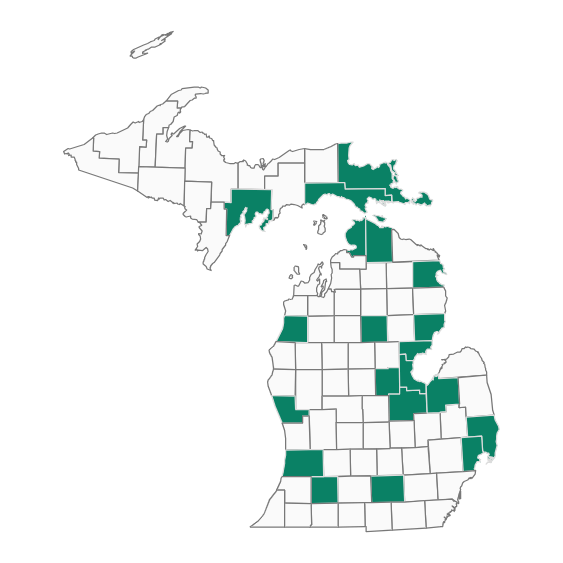
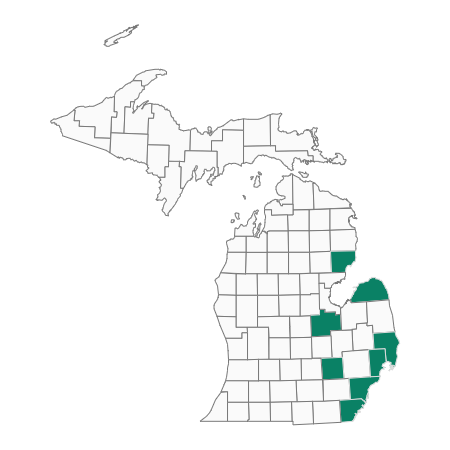
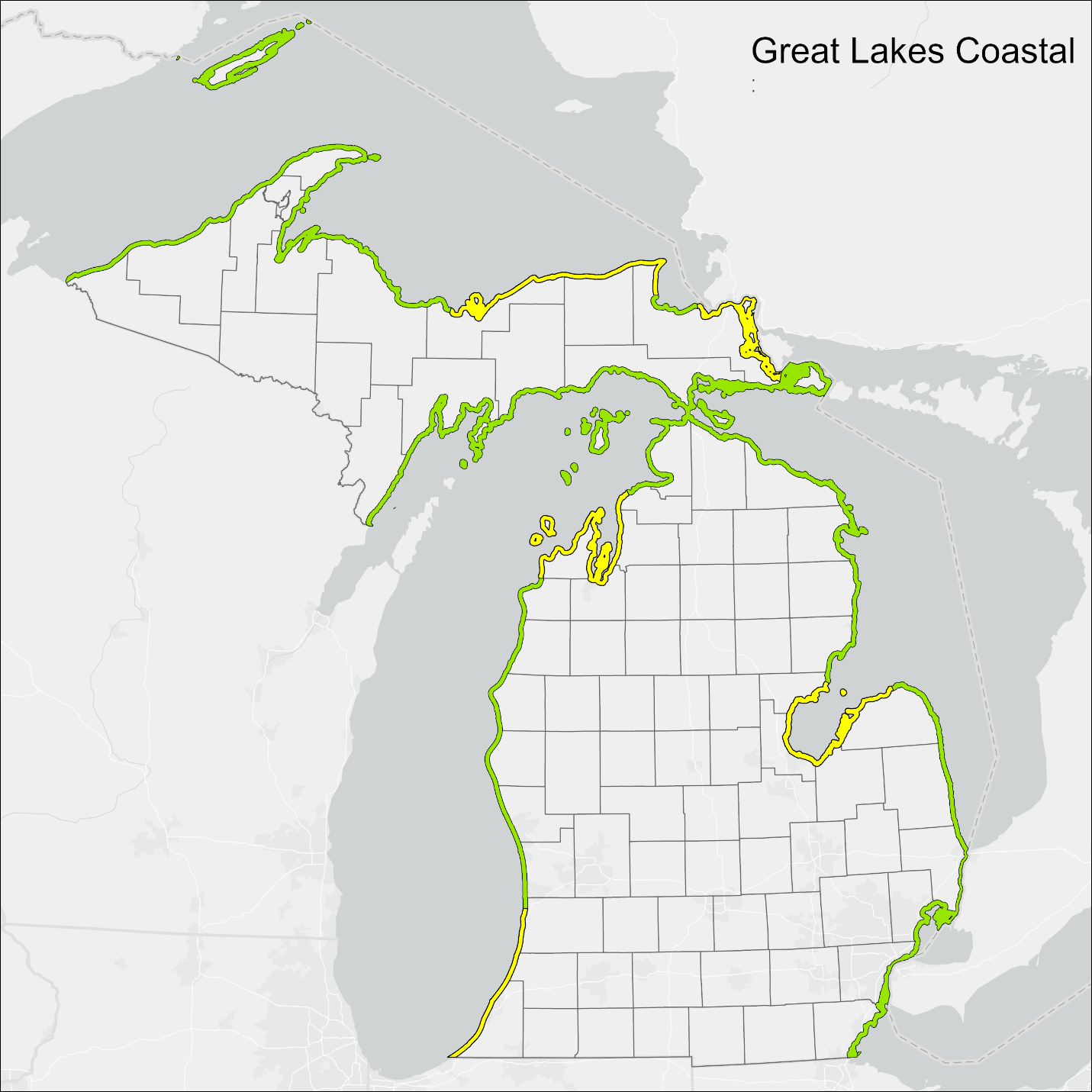
This map was created in collaboration with partners and highlights focal areas (yellow) to work in over the next 10 years while showcasing the general areas (green) covered by Great Lakes Coastal Systems. Creating shared goals helps focus efforts and build collaboration. While this map has a select few areas highlighted, conservation work benefitting any Great Lakes Coastal System is welcome and encouraged.
How will we monitor?
Habitat
- Continue to survey and update quality rankings for Great Lakes Coastal Systems in the state’s Natural Heritage Database.
- Develop monitoring protocols to evaluate the ecological integrity of Great Lakes Coastal systems and implement monitoring in reference sites.
Focal Species
Piping Plover
- Continue to use existing monitoring and research (color band) programs.
- Continue to update the state’s Natural Heritage Database.
Black Tern
- Continue the Michigan Marsh Bird Survey to assess distribution and abundance.
- Use community science programs, like eBird, to assess distribution and abundance.
- Work with partners, such as Audubon Great Lakes, to monitor known populations.
- Continue to update the state’s Natural Heritage Database.
Eastern Fox Snake
- Survey known and potential new sites to determine distribution and abundance.
- Continue monitoring status, distribution and population demographics with existing databases such as the state’s Natural Heritage Database, iNaturalist and HerpMapper.
- Continue to update the state’s Natural Heritage Database.
Hine’s Emerald Dragonfly
- Conduct adult surveys at known occupied sites.
- Survey for new Hine’s emerald locations.
- Continue to update the state’s Natural Heritage Database.
Lake Huron Locust
- Conduct time-meander survey transects.
- Continue to update the state’s Natural Heritage Database.
Pitcher’s Thistle
- Annually collect standardized count-based and density population measurements.
- Annually document any observable changes within a population and its occupied area.
- Continue to update the state’s Natural Heritage Database.
Linkages to other conservation plans
[ACPP] Guidelines for managing recreational activities in Piping Plover breeding habitat on the U.S. Atlantic coast to avoid take under section 9 of the Endangered Species Act (USFWS 1994)
[ACCP] Atlantic Coast Piping Plover Strategic Communications Plan: Reducing Human Disturbance, 2017-2021 (USFWS 2017)
[AIS] Michigan’s Aquatic Invasive Species State Management Plan 2013 Update (State of Michigan 2013)
[AMCD] Information on the Proposed Delineation and Assessment of Michigan’s Critical Dune Area (EGLE 2025)
[BMPF] Best Management Practices: Western Foxsnake and Eastern Foxsnake (Missouri Department of Conservation 2022)
[CAS] Advancing the national fish, wildlife, and plants climate adaptation strategy into a new decade (National Fish, Wildlife, and Plants Climate Adaptation Network 2021)
[CBT] Conservation of Black Terns – A Michigan Species of Special Concern
[CRA] Clinton River Assessment (Francis and Haas 2006)
[FWPT] Pitcher’s Thistle (Cirsium pitcheri) Recovery Plan (USFWS 2002)
[FWHE] Hine’s Emerald Dragonfly (Somatochlora Hineana) 5-year review (USFWS, 2013)
[GLCA] Great Lakes Coastal Assembly 2025-2026 Action Plan (GLCA 2025)
[GLCC] Strategies for Adapting Great Lakes Coastal Ecosystems to Climate Change (Schmitt 2022)
[GSGP] Great Lakes Regional Collaboration Strategy: To Restore and Protect the Great Lakes (GSGP 2005)
[JV] Upper Mississippi Valley / Great Lakes Regional Shorebird Conservation Plan - Version 2.0 (Russell et al. 2016)
[JV2] Upper Mississippi River and Great Lakes Region Joint Venture waterbird habitat conservation strategy (Soulliere et al. 2007)
[LSCC] Lake Superior Climate Change Impacts and Adaptation (Huff and Thomas 2014)
[MCMP] Michigan Coastal Management Program (CSO and EGLE 2025)
[MGPP] Featured Species Habitat Management Guidance for Piping Plover (MDNR 2016)
[MLCP] Michigan Coastal and Estuarine Land Conservation Plan (Coastal Zone Management Program) (MDEQ, 2008)
[PIF] Partners in Flight Bird Conservation Plan for the Upper Great Lakes Plain (Physiographic Area 16) (Knutson et al. 2001)
[PIPL] Great Lakes Piping Plover Recovery Plan (USFWS 2003)
[RGLP] Recovery Plan for the Great Lakes Piping Plover (Charadrius melodus) (USFWS 2003)
[RPHE] Hine’s Emeral Dragonfly (Somatochlora hineana Williamson) Recovery Plan (Zercher and The Hine’s Emerald Dragonfly Recovery Team 2001)
[RSLH] Recovery Strategy for the Lake Huron Grasshopper (Trimerotropis huroniana) in Ontario (Jones 2018)
[SBWLE] Saginaw Bay to Western Lake Erie Coastal Wetland Conservation Blueprint
[SSCP] Restoring Michigan’s black tern populations: statewide status & conservation action plan (Beilke et al. 2025)
[SSH] Tools and Tactics Guidebook Phase 2 (Sustainable Small Harbors 2023)
[TIS] Terrestrial Invasive Species Management Plan (State of Michigan 2024)
[WBBB] Restoring Wigwam Bay for Breeding Marsh Birds: 2018-2020 Report and Conservation Action Plan (AGL 2021)
[WCA] Waterbird Conservation for the Americas: The North American Waterbird Conservation Plan, Version 1 (Kushlan et al. 2002)
[WHCS] Upper Mississippi River and Great Lakes Region Joint Venture Waterbird Habitat Conservation Strategy – 2018 Revision (Soulliere et al. 2018)
Literature Cited
Show all references
Albert, D. A. 1999. Natural community abstract for open dunes. Michigan Natural Features Inventory, Lansing, MI, USA. 6 pp.
Albert, D. A. 2001. Natural community abstract for Great Lakes marsh, updated 2010. Michigan Natural Features Inventory, Lansing, MI, USA. 13 pp.
Albert, D. A. 2007a. Natural community abstract for granite bedrock lakeshore. Michigan Natural Features Inventory, Lansing, MI, USA. 8 pp.
Albert, D.A. 2007b. Natural community abstract for Great Lakes Limestone cobble shore. Michigan Natural Features Inventory, Lansing, MI.
Albert, D. A. 2007c. Natural community abstract for sand and gravel beach. Michigan Natural Features Inventory, Lansing, MI, USA. 8 pp.
Albert, D. A. 2009a. Natural community abstract for Sandstone Lakeshore Cliff. Michigan Natural Features Inventory, Lansing, MI, USA. 8 pp.
Albert, D. A. 2009b. Natural community abstract for Volcanic Bedrock Lakeshore. Michigan Natural Features Inventory, Lansing, MI, USA. 11 pp.
Albert, D. A. 2009b. Natural community abstract for Sandstone Lakeshore Cliff. Michigan Natural Features Inventory, Lansing, MI, USA. 8 pp.
Albert, D. A. 2009c. Natural community abstract for Volcanic Bedrock Glade. Michigan Natural Features Inventory, Lansing, MI, USA. 8 pp.
Albert, D.A. and P.J. Comer. 1999. Natural community abstract for wooded dune and swale complex. Michigan Natural Features Inventory, Lansing, MI.
Audubon Great Lakes (AGL). 2021. Restoring Wigwam Bay for Breeding Marsh Birds: 2018-2020 Report and Conservation Action Plan. Audubon Great Lakes, Chicago, Illinois, USA. 81 pp.
Audubon Great Lakes (AGL). 2025. Restoring Michigan’s Black Tern Population: Statewide Status and Conservation Plan. Audubon Great Lakes, Chicago, Illinois, USA. 20 pp.
Beilke, S., J.L. Fuller, K.R. McElrath, A.R. Hinickle, K. Bernard, and E. Ford. 2025. Restoring Michigan’s black tern populations: statewide status & conservation action plan. Audubon Great Lakes, Chicago, Illinois, USA.
Coastal States Organization (CSO) and Michigan Department of Environment, Great Lakes, and Energy (EGLE). 2025. Michigan Coastal Management Program (Section 309 Enhancement Assessment and Strategies, 2026 – 2030). Water Resource Division, Department of Environment, Great Lakes, and Energy. 103 pp.
Cohen, J.G., D.A. Albert, M.A. Kost, and B.S. Slaughter. 2010. Natural community abstract for coastal fen. Michigan Natural Features Inventory, Lansing, MI, USA. 16 pp.
Cohen J.G., and H.D. Enander. 2019. Rare coastal ecosystem monitoring. Michigan Natural
Features Inventory Report Number 2019-08, Lansing, MI. 60 pp.
Cohen, J.G., M.A. Kost, B.S. Slaughter and D.A. Albert. 2015. A field guide to the natural communities of Michigan. Michigan State University Press, East Lansing, Michigan. 362 pp.
Cohen, J.G., H.D. Enander, T.J. Bassett, C.M. Wilton, and A.A. Cole-Wick. 2024. Using GIS-based multicriteria decision analysis to prioritize invasive plant treatment: A creative solution for a pernicious problem. Ecological Modelling. Volume 495: 110807
Cohen, J.G., M.A. Kost, B.S. Slaughter, D.A. Albert, J.M. Lincoln, A.P. Kortenhoven, C.M. Wilton, H.D. Enander, M.E. Anderson, M.R. Parr, T.J. Bassett, and K.M. Korroch. 2025. Michigan Natural Community Classification [web application]. Michigan Natural Features Inventory, Michigan State University Extension, Lansing, MI. Available at https://mnfi.anr.msu.edu/communities/classification.
Comer, P.J., D.L. Cuthrell, D.A. Albert, and M.R. Penskar. 1997. Natural community abstract for limestone bedrock lakeshore. Michigan Natural Features Inventory, Lansing, MI, USA. 5 pp.
Currier, C.L. 2000. Special animal abstract for Chlidonias niger (Black Tern). Michigan Natural Features Inventory, Lansing, MI. 3 pp.
Cuthbert, F.J., L.R. Wires, and K. Timmerman. 2003. Status assessment and conservation recommendations for the common tern (Sterna hirundo) in the Great Lakes Region. U.S. Fish and Wildlife Service, Ft. Snelling, MN. 90 pp.
Cuthbert, F. 2011. Piping Plover (Charadrius melodus). in A.T. Chartier, J.J. Baldy and J.M. Brenneman, editors. 2011. The Second Michigan Breeding Bird Atlas. Kalamazoo Nature Center. Kalamazoo, MI, USA.
Cuthrell, D.L. 1999. Special animal abstract for Somatochlora hineana (Hine’s Emerald Dragonfly). Michigan Natural Features Inventory, Lansing, MI. 3 pp.
Davis, K.L., S.P. Saunders, S. Beilke, E.R. Ford, J. Fuller, A. Landgraf, and E.F. Zipkin. 2023. Breeding Season Management Is Unlikely to Improve Population Viability of a Data-Deficient Migratory Species in Decline. Biological Conservation 283(July):110104. https://doi.org/10.1016/j.biocon.2023.110104.
DeVries-Zimmerman, S.J., B. Yurk, K.M. Fast, A. Donaldson, and E.C. Hansen. 2021. Waxing and waning slacks: The changing ecohydrology of interdunal wetlands/slacks in a Lake Michigan coastal dune complex during rising Lake Michigan-Huron levels. Journal of Great Lakes Research, 47 (6): 1565-1580.
Earl, D.J., E.C. Branch, A.A. Cole-Wick, Y.M. Lee, L.M. Rowe, P.J. Badra, C.M. Wilton, and D.L. Cuthrell. 2024. Assessing Climate Vulnerability & Adaptive Capacity of Midwest Species of Greatest Conservation Need. Michigan Natural Features Inventory, Lansing, MI. 79 pp.
Evers, D.C., ed. 1994. Endangered and threatened wildlife of Michigan. University of Michigan Press, Ann Arbor, Michigan. 412 pp.
Francis, T. J., and R. C. Haas. 2006. Clinton River Assessment. Lansing, MI, Michigan Department of Natural Resources, Fisheries. 367 pp.
Franks Taylor, R., A. Derosier, K. Dinse, P. Doran, D. Ewert, K. Hall, M. Herbert, M. Khoury, D. Kraus, A. Lapenna, G. Mayne, D. Pearsall, J. Read, and B. Schroeder. 2010. The Sweetwater Sea: An International Biodiversity Conservation Strategy for Lake Huron - Technical Report. A joint publication of The Nature Conservancy, Environment Canada, Ontario Ministry of Natural Resources Michigan Department of Natural Resources and Environment, Michigan Natural Features Inventory Michigan Sea Grant and The Nature Conservancy of Canada. 264 pp. with Appendices.
Great Lakes Coastal Assembly (GLCA). 2025. Great Lakes Coastal Assembly 2025-2026 Action Plan. Web. Available https://www.greatlakescoastalassembly.org/
Halsey, S.J., T.J. Bell, and M. Bowles. 2017. Initial transplant size and microsite influence transplant survivorship and growth of a threatened dune thistle. Ecological Restoration 35:52–59.
Harding, J.H. and D. A. Mifsud. 2017. Amphibians and reptiles of the Great Lakes Region, Revised edition. University of Michigan Press, Ann Arbor, MI. 392 pp.
Havens, K., C.L. Jolls, J.E. Marik, P. Vitt, A.K. McEachern, and D.Kind. 2012. Effects of a non-native biocontrol weevil, Larinus planus and other emerging threats on populations of the federally threatened Pitcher's thistle, Cirsium pitcheri. Biological Conservation, 155, 202–211.
Heath, S.R., E.H. Dunn, and D.J. Agro. 2020. Birds of the World, Black Tern, Chlidonias niger. Version 1.0
Hebert, C.E., J. Chao, D. Crump, T.B. Johnson, M.D. Rudy, E. Sverko, K. Williams, D. Zaruk, and M.T. Arts. 2014. Ecological Tracers Track Changes in Bird Diets and Possible Routes of Exposure to Type E Botulism. Journal of Great Lakes Research 40 (1): 64–70. Available https://doi.org/10.1016/j.jglr.2013.12.015.
Higman, P.J., and M.R. Penskar, 1999. Special plant abstract for Cirsium pitcheri. Michigan Natural Features Inventory, Lansing, MI, USA. 3 pp.
Hoving, C.L., Y. M. Lee, P.J. Badra, and B.J. Klatt. 2013. Changing climate, changing wildlife: a vulnerability assessment of 400 species of greatest conservation need and game species in Michigan. Wildlife Division Report No. 3564. Lansing, MI. 82 pp.
Hyde, D.A. 1999. Special animal abstract for Charadrius melodus (Piping Plover). Michigan Natural Features Inventory, Lansing, MI. 4 pp.
Huff, A. and A. Thomas. 2014. Lake Superior Climate Change Impacts and Adaptation. Prepared for the Lake Superior Lakewide Action and Management Plan – Superior Work Group. 139 pp.
Michigan Department of Environment, Great Lakes, and Energy (EGLE). 2025. Information on the Proposed Delineation and Assessment of Michigan’s Critical Dune Area. Michigan Department of Environment, Great Lakes, and Energy, Lansing, MI. 21 pp.
Jones, J. 2018. Recovery Strategy for the Lake Huron Grasshopper (Trimerotropis huroniana) in Ontario (Ontario Recovery Strategy Series). Ministry of the Environment, Conservation and Parks, Peterborough, Ontario. 36 pp.
Kost, M.A., D.A. Albert, J.G. Cohen, B.S. Slaughter, R.K. Schillo, C.R. Weber, and K.A. Chapman. 2007. Natural communities of Michigan: classification and description. Michigan Natural Features Inventory, Lansing, MI. 322 pp.
Kushlan, J. A., M.J. Steinkamp, K.C. Parsons, J. Capp, M.A. Cruz, M. Coulter, I. Davidson, L. Dickson, N. Edelson, R. Elliot, M. Erwin, S. Hatch, S. Kress, R. Milko, S. Miller, S. Mills, R. Paul, R. Phillips, J.E. Salvia, B. Sydeman, J. Trapp, J. Wheeler, and K. Wohl. 2002. Waterbird Conservation for the Americas: The North American Waterbird Conservation Plan, Version 1. Waterbird Conservation for the Americas. 84 pp.
Knutson, M.G., G. Butcher, J. Fitzgerald, and J. Shieldcastle. 2001. Partners in Flight Bird Conservation Plan for the Upper Great Lakes Plain (Physiographic Area 16). U.S. Geological Survey. https://pubs.usgs.gov/publication/94816.
Lake Superior Binational Program. 2015. A biodiversity conservation strategy for Lake Superior: a guide to conserving and restoring the health of the world’s largest freshwater lake. 20 pp.
Lee, S.Y., R.J.K. Dunn, R.A. Young, R.M. Connolly, P.E.R. Dale, R. Dehayr, C.J. Lemckert, S. McKinnon, B. Powell, P.R. Teasdale, and D.T. Welsh. 2006. Impact of Urbanization on Coastal Wetland Structure and Function. Austral Ecology 31(2):149–63. https://doi.org/10.1111/j.1442-9993.2006.01581.x.
Lee, Y. 2000. updated 2009. Special animal abstract for Pantherophis gloydi (Eastern Fox Snake). Michigan Natural Features Inventory, Lansing, MI. 3 pp.
Meindl, G.A., N. Schleissmann, B. Sander, M. Lam, W. Parker, C. Fitzgerald, R. Oltmer, J. Jua. 2020. Exposure to metals (Ca, K, Mn) and road salt (NaCl) differently affect development and survival in two model amphibians. Chemistry in Ecology 36(3):194-204.
Michigan Department of Environmental Quality (MDEQ). 2008. Michigan Coastal and Estuarine Land Conservation Plan (Coastal Zone Management Program). National Oceanic and Atmospheric Administration. 73 pp.
Michigan Department of Natural Resources (MDNR). 2016. Featured Species Habitat Management Guidance for Piping Plover. Michigan Department of Natural Resources, Lansing, MI. 2pp.
Michigan Natural Features Inventory (MNFI). 2025. Michigan’s Natural Heritage Database, Lansing, MI.
Mills, E.L., J.H. Leach, J.T. Carlton, and C.L. Secor. 1994. Exotic Species and the Integrity of the Great Lakes. BioScience 44(10):666–76. https://doi.org/10.2307/1312510.
Missouri Department of Conservation. 2022. Best Management Practices: Western Foxsnake and Eastern Foxsnake. Missouri Department of Conservation, Kirksville, MO. 2 pp.
National Fish, Wildlife, and Plants Climate Adaptation Network. 2021. Advancing the national fish, wildlife, and plants climate adaptation strategy into a new decade. Association of Fish and Wildlife Agencies, Washington, D.C. 93 pp.
National Oceanic and Atmospheric Administration (NOAA). 2024. Why do harmful algal blooms occur? National Ocean Service website, Available https://oceanservice.noaa.gov/facts/why_habs.html. Accessed 25 Feb 2025.
NatureServe. 2021. Biotics 5 online help: EO Definitions of EO Ranks and Origin Subranks. NatureServe, Arlington, Virginia, USA. Website Available https://help.natureserve.org/biotics/. Accessed 28 June 2021.
Nelms, K.D., B. Ballinger, and A. Boyles. 2007. Wetland Management for Waterfowl Handbook. Mississippi River Trust, Natural Resources Conservation Service, United States Fish and Wildlife Service, and United States Department of Agriculture, Washington D.C. 136 pp.
Parks Canada Agency. 2011. Recovery Strategy for Pitcher’s Thistle (Cirsium pitcheri) in Canada. Species at Risk Act Recovery Strategy Series. Parks Canada Agency. Ottawa. x + 31 pp.
Pearsall, D., P.C. de Grammont, C. Cavalieri , C. Chu, P. Doran, L. Elbing, D. Ewert, K. Hall, M. Herbert, M. Khoury, D. Kraus, S. Mysorekar, J. Paskus and A. Sasson. 2012a. Returning to a healthy lake: Lake Erie biodiversity conservation strategy. Technical Report. A joint publication of The Nature Conservancy, Nature Conservancy of Canada and Michigan Natural Features Inventory. 340 pp. with Appendices.
Pearsall, D., P. Carton de Grammont, C. Cavalieri, P. Doran, L. Elbing, D. Ewert, K. Hall, M. Herbert, M. Khoury, S. Mysorekar, S. Neville, J. Paskus and A. Sasson. 2012b. Michigami: Great Water. Strategies to conserve the biodiversity of Lake Michigan. Technical Report. A joint publication of The Nature Conservancy and Michigan Natural Features Inventory. 309 pp. with Appendices.
Rabe, M.L. 1999. Special animal abstract for Trimerotropis huroniana (Lake Huron locust). Michigan Natural Features Inventory, Lansing, MI. 3 pp.
Rowan, E. n.d. Conservation of Black Terns – A Michigan Species of Special Concern. Audubon Great Lakes, Chicago, IL. 6 pp.
Russell, R.P., K.E. Koch, and S.J. Lewis. 2016. Upper Mississippi Valley / Great Lakes Regional Shorebird Conservation Plan - Version 2.0. U. S. Fish and Wildlife Service, Division of Migratory Birds, Bloomington, MN. 64 pp.
Sauer, J.R., J.E. Hines, J.E. Fallon, K.L. Pardieck, D.J. Ziolkowski, Jr. and W.A. Link. 2014. The North American Breeding Bird Survey, results and analysis 1966 - 2013. Version 01.30.2015 USGS Patuxent Wildlife Research Center, Laurel, Maryland.
Sauer, J.R., W.A. Link, and J.E. Hines. 2020. The North American Breeding Bird Survey, Analysis Results 1966—2019 [Dataset]. U.S. Geological Survey. Available https://doi.org/10.5066/P96A7675
Scharf, W.C. 2011. Black Tern (Chlidonias niger). in A.T. Chartier, J.J. Baldy and J.M. Brenneman, editors. The second Michigan breeding bird atlas. Kalamazoo Nature Center. Kalamazoo, Michigan, USA. Available https://www.mibirdatlas.org.
Schmitt, K., R. Krska, C. Deloria, P.D. Shannon, M. Cooper, J. Eash, S.E. Johnson, S.M. Johnson, M.R. Magee, G. Mayne, C. Nelson, C. Nigg, A. Sidie-Slettedahl, L. Brandt, S. Handler, M. Janowiak, P. Butler-Leopold, T. Ontl, and C. Swanston. 2022. Strategies for Adapting Great Lakes Coastal Ecosystems to Climate Change. United States Department of Agriculture Forest Service. 66 pp.
Slaughter, B.S., and D.L. Cuthrell. 2017. Status Assessment of Pitcher’s Thistle and Hart’s tongue Fern: Acquiring Contemporary Information for Recovery Planning and Five-Year Reviews. Michigan Natural Features Inventory, Lansing, MI. 106 pp.
Soulliere, G.J., B.A. Potter, D.J. Holm, D.A. Granfors, M.J. Monfils, S.J. Lewis, and W.E. Thogmartin. 2007. Upper Mississippi River and Great Lakes Region Joint Venture waterbird habitat conservation strategy. U.S. Fish and Wildlife Service, Fort Snelling, Minnesota. 68 pp.
Soulliere, G.J., M.A. Al-Saffar, R.L. Pierce, M.J. Monfils, L.R. Wires, B.W. Loges, B.T. Shirkey, N.S. Miller, R.D. Schultheis, F.A. Nelson, A.M. Sidie-Slettedahl and D.J. Holm. 2018. Upper Mississippi River and Great Lakes Region Joint Venture Waterbird Habitat Conservation Strategy – 2018 Revision. U.S. Fish and Wildlife Service, Bloomington, Minnesota. 154 pp.
Sustainable Small Harbors. 2023. Tools and Tactics Guidebook Phase 2. Drummond Carpenter; Michigan Department of Environment, Great Lakes, and Energy; Sea Grant Michigan; Michigan State University; University of Michigan. 105 pp.
Stantec. 2025. Creating a floating nest platform resilient to habitat disturbances and sustainable for years to come. Sidney, British Columbia.
State of Michigan. 2013. Michigan’s Aquatic Invasive Species State Management Plan 2013 Update. Water Resource Division, Michigan Department of Environmental Quality, Lansing, MI. 78 pp.
State of Michigan. 2024. Terrestrial Invasive Species Management Plan. Lansing, MI. 46 pp.
Steen, V.A. and A.B. Powell. 2012. Wetland selection by breeding and foraging black terns in the prairie pothole region of the United States. The Condor 114: 155 – 165
Stoler, A., K. Sudol, J. Mruzek, and R. Relyea. 2018. Interactive effects of road salt and sediment disturbance on the productivity of seven common aquatic macrophytes. Freshwater Biology 63(7):709-720.
Thurman, LL, B Stein, EA Beever, W Foden, SR Geange, N Green, JE Gross, DJ Lawrence, O LeDee, JD Olden, LM Thompson, and BE Young. 2020. Persist in place or shift in space? Evaluating the adaptive capacity of species to climate change. Frontiers in Ecology and Evolution 18(9): 520-528.
Tozer, D.C. 2016. Marsh bird occupancy dynamics, trends, and conservation in the southern Great Lakes basin: 1996 to 2013. Journal of Great Lakes Research 42(1), 136–145.
The Great Lakes St. Lawrence Governors & Premiers (GSGP). 2005. Great Lakes Regional Collaboration Strategy: To Restore and Protect the Great Lakes. Great Lakes Regional Collaboration. 64 pp.
U.S. Fish and Wildlife Service (USFWS). 1994. Guidelines for managing recreational activities in Piping Plover breeding habitat on the U.S. Atlantic coast to avoid take under section 9 of the Endangered Species Act. U.S. Fish and Wildlife Service, Northeast Region. 21 pp.
U.S. Fish and Wildlife Service (USFWS). 2001. Hine’s Emerald Dragonfly (Somatochlora hineana) recovery plan. Fort Snelling, MN. 120 pp.
U.S. Fish and Wildlife Service (USFWS). 2002. Pitcher’s Thistle (Cirsium pitcheri) Recovery Plan. Fort Snelling, MN. vii + 92 pp.
U.S. Fish and Wildlife Service (USFWS). 2003. Recovery Plan for the Great Lakes Piping Plover (Charadrius melodus). Ft. Snelling, MinnesMNota.
U.S. Fish and Wildlife Service (USFWS). 2009. Piping Plover (Charadrius melodus) 5-year review: summary and evaluation. Hadley, MA and East Lansing, MI. 206 pp.
U.S. Fish and Wildlife Service (USFWS). 2013. Hine’s Emerald Dragonfly (Somatochlora Hineana) 5-year review. USFWS, Midwest Region Chicago Ecological Field Office. 52 pp.
U.S. Fish and Wildlife Service (USFWS). 2017. Atlantic Coast Piping Plover Strategic Communications Plan: Reducing Human Disturbance, 2017-2021. 24 pp.
Vitt, P., E.B. Girdler, J.M. Gorra, T.M. Knight and K. Havens. 2024. Demography and threats to population growth of Cirsium pitcheri, a threatened dune plant, in Wisconsin. Ecology and Evolution 14:1–14.
Vitt, P., K. Havens, A.T. Kramer, D. Sollenberger and E. Yates. 2010. Assisted migration of plants: Changes in latitudes, changes in attitudes. Biological Conservation 143:18–27.
Wong, J. 2024. Saginaw Bay to Western Lake Erie Coastal Wetland Conservation Blueprint. U.S. Fish and Wildlife Service, East Lansing, MI. 2 pp.
Wyman, K.E. and F.J. Cuthbert. 2017. Black tern (Chlidonias niger) breeding site abandonment in U.S. Great Lakes coastal wetlands is predicted by historical abundance and patterns of emergent vegetation. Wetlands Ecology and Management 25:583 – 596.
Zercher, D. and The Hine’s Emerald Dragonfly Recovery Team. 2001. Hine’s Emeral Dragonfly (Somatochlora hineana Williamson) Recovery Plan. Region 3, U.S. Fish and Wildlife Service. 133 pp.