Great Lakes Islands
Contributors
Michigan Department of Environment, Great Lakes, and Energy
Little Traverse Bay Bands of Odawa Indians
Keweenaw Bay Indian Community
Huron Pines
Michigan Natural Features Inventory
U.S. National Park Service
Michigan Department of Natural Resources
Recommended Citation: Matt Preisser, Derek Hartline, Amber Hubbard, Joshua G. Cohen, and Anthony K. Henehan. 2026. Michigan’s Wildlife Action Plan: 2025-2035, Great Lakes Islands. Michigan Department of Natural Resources, Lansing, MI.
What are Great Lakes islands?
Great Lakes islands are landforms surrounded by water, separated from the mainland either permanently or for parts of the year. Shaped by powerful natural forces, including shifting water levels, wave action, wind erosion, and ice scouring, these islands vary widely in size and character. Some are large, rocky landmasses made of granite or basalt that support many different habitats. Others are tiny reefs or shoals, with little to no soil, that only occasionally rise above the lake’s surface.
There are approximately 32,000 islands in the Great Lakes, spread across every Great Lake and connecting channel. It is the largest, most diverse collection of freshwater islands in the world. Michigan’s share includes an estimated 1,709 islands across each of our four Great Lakes (Higman et al. 2019). Our islands support a globally significant group of diverse flora, fauna, and natural communities that were able to colonize islands or persist on islands following isolation from the mainland. The result is a distinctive island biota with many endemic or rare species with unique genetics. In fact, islands support a disproportionate number of rare species when compared with the mainland. In addition, islands often act as refuges for species at risk, offering shelter from the more intense and permanent threats found on the mainland, such as habitat loss and human development.
The islands of the Great Lakes have always been important to the people of the basin. For indigenous people, they are significant for both their resources and spiritual values. Many islands are key areas for tourism and recreation, and still provide a unique sense of place within the Great Lakes landscape.
Natural communities found in Great Lakes Islands | ||
Alvar | Lakeplain Wet Prairie | Rich Conifer Swamp |
Bog | Lakeplain Wet-mesic Prairie | Sand and Gravel Beach |
Boreal Forest | Limestone Bedrock Glade | Sandstone Bedrock Glade |
Clay Bluffs | Limestone Bedrock Lakeshore | Sandstone Bedrock Lakeshore |
Coastal Fen | Limestone Cliff | Sandstone Cliff |
Dry Northern Forest | Limestone Cobble Shore | Sandstone Cobble Shore |
Dry-mesic Northern Forest | Limestone Lakeshore Cliff | Sandstone Lakeshore Cliff |
Emergent Marsh | Mesic Northern Forest | Sinkhole |
Granite Bedrock Glade | Mesic Southern Forest | Southern Hardwood Swamp |
Granite Bedrock Lakeshore | Northern Bald | Submergent Marsh |
Granite Cliff | Northern Fen | Volcanic Bedrock Glade |
Granite Lakeshore Cliff | Northern Hardwood Swamp | Volcanic Bedrock Lakeshore |
Great Lakes Barrens | Northern Shrub Thicket | Volcanic Cliff |
Great Lakes Marsh | Northern Wet Meadow | Volcanic Cobble Shore |
Hanging Bog | Open Dunes | Volcanic Lakeshore Cliff |
Hardwood-Conifer Swamp | Patterned Fen | Wet-mesic Flatwoods |
Interdunal Wetland | Poor Conifer Swamp | Wooded Dune and Swale Complex |
Lakeplain Oak Openings | Poor Fen |
|
Helpful resources for identifying and understanding Michigan’s natural communities include Michigan Natural Features Inventory’s natural community classification (Cohen et al. 2015, Cohen et al. 2025) and natural community abstracts, both of which are available online along with photos, comprehensive descriptions, distribution maps, and thorough references from the scientific literature. MNFI’s most detailed bibliography on Michigan’s natural communities can be found in the publication “Distribution Maps of Michigan’s Natural Communities” (Albert et al. 2008), which is also available for viewing and downloading at the MNFI website.
Call Out Box: Islands as Living Laboratories
Islands are “living laboratories” where scientists can study patterns and processes that can inform ecosystem management and conservation design on the mainland. The basic tenets of conservation biology were influenced by the theory of island biogeography (McArthur and Wilson 1967) first presented over 50 years ago. There is a growing interest in developing the study of islands in the Great Lakes.
Why are islands important?
Great Lakes Islands support a wide variety of rare, unique, and regionally or globally significant plants, animals, and natural communities. Many species rely on islands for key parts of their life cycle. Colonial waterbirds use islands for nesting and raising their young. Islands also serve as essential stopover points for migrating birds, pollinators such as Monarchs, and other migratory species that need safe places to rest and refuel. Michigan islands are home to many plant species endemic to the Great Lakes like Houghton's Goldenrod, Dwarf Lake Iris, and Pitcher’s Thistle (Higman et al. 2019) and several species of arctic-alpine plants disjunct to the rest of their range (Slaughter and Marr 2015). Approximately 10% of all the rare species occurrences currently recorded in Michigan are from islands, a disproportionately high number given that islands represent approximately 1% of the entire area of Michigan (Higman et al. 2019).
The waters around these islands are just as valuable. They provide critical spawning and nursery grounds for many fish species, helping to support the broader health of the Great Lakes. In addition, islands often act as refuges for rare species, offering shelter from the more intense and permanent threats found on the mainland, such as habitat loss and human development (Soule 1993).
Great Lakes Islands provide a critical learning environment where scientists can study patterns and processes to inform ecosystem management and conservation design. In the absence of shoreline development (e.g., breakwaters, jetties, and residences) dynamic coastal ecosystems on Great Lakes islands can change in spatial extent, floristic composition, and vegetative structure as the Great Lakes water levels fluctuate. Great Lakes islands provide opportunities for monitoring past management actions to inform adaptive management (Cohen et al. 2024).
What is the health of islands?
Determining the overall health of Michigan’s Great Lakes Islands is difficult due to their sheer number, diversity and dynamic nature. Many of them are remote, difficult to access, and challenging to survey due to lack of infrastructure and rugged terrain. Despite limited access, these islands face a variety of threats to native biodiversity and rare taxa including establishment and spread of invasive plant and animal species and the impacts of climate change.
Within these unique geographies, biodiversity data are limited or outdated, which hinders effective management and decision-making. In particular, there is a lack of field-level data for most islands. Until recently, few islands have received systematic natural community surveys (e.g., Cohen et al. 2022, 2023) or targeted species inventories (e.g., Bassett et al. 2022, 2023). Further, islands are known to be in a constant state of change and their long-term health depends on their capacity to change in time and space (Henson et al., 2010; Cohen et al., 2024). However, methods to measure this capacity for change are unclear and are usually considered within individual islands and across archipelagos.
Distant and undeveloped islands are assumed to be in better condition than their populated counterparts closer to the mainland. Generally, the islands with people on them and those closest to the mainland are in poorer ecological shape with more habitat destruction, degradation, fragmentation, natural process alteration (e.g., seawalls, hydrological alteration), and invasive species. All islands are prone to colonization by invasive species through both human movement and natural pathways.
The introduction of certain native species can have an amplified effect on fragile island habitats, such as unchecked herbivory by White-tailed deer (Wilton 2021) and predation on birds, reptiles and amphibians by raccoons. Great Lakes islands with low densities or no White-tailed deer offer refugia to native plant populations. In contrast, islands with white-tailed deer populations experience amplified browse pressure that impacts floristic composition, vegetative structure, and successional trajectories. Islands with and without ungulate populations offer unique research opportunities to evaluate the impact herbivory has on forested ecosystems (e.g., Crooked Island and Sugar Island in Lake Huron).
Call out box: Bald Eagles, a culturally significant species
By: Little Traverse Bay Band of Odawa Indians
Michigan's Great Lakes islands provide ideal hunting grounds and often undisturbed nesting habitats for Bald Eagles. The surrounding waters offer a rich food supply, including fish and waterfowl, which are key components of their diets. Once nearly wiped out due to habitat loss and pesticide use, populations of the United States’ national symbol have made a strong recovery in Michigan thanks to conservation efforts and legal protections.
The Bald Eagle is a prominent bird of prey, with a wingspan ranging from 6 to 7.5 feet. Mature adults are immediately recognizable by their white head and tail and dark brown body. Their hooked beak and feet are yellow. Juvenile plumages are variable, but the head and tail are brown with increasing amounts of white until they attain their adult plumage between 4.5 and 5.5 years of age (Gehring, 2006).
Native American tribes hold eagles in the highest respect, as they are often a clan animal and extremely culturally significant. The bald eagle, or “Migizi” (pronounced mih-gih-zee) represents strength, courage, wisdom and vision.
“The Anishinaabek look to the Eagle as the messenger to the Creator. The Eagle carries our prayers to the Creator. The Eagle lets the Creator know that some of us are trying to live and walk in a Good Way” - Joe Mitchell, Little Traverse Bay Bands of Odawa Indians tribal elder and pipe carrier.
Accomplishments
MNFI scientists conducted extensive surveys on over 50 islands between 2015 and 2025, and documented 144 new occurrences of natural communities and numerous populations of rare species on islands across the Great Lakes. This was accomplished with funding from numerous partners, including US Fish and Wildlife Service (USFWS), US Environmental Protection Agency (EPA), Michigan Department of Natural Resources (DNR), Michigan Department of Environment, Great Lakes and Energy (EGLE), National Park Service (NPS), US Forest Service (USFS), Keweenaw Bay Indian Community, Little Traverse Bay Bands of Odawa Indians (LTBB), the Sault Tribe of Chippewa Indians, and Huron Pines (e.g., Cohen 2017, Cohen et al. 2023, Cohen et al. 2024, MNFI 2025).
MNFI developed prioritization schema for biodiversity stewardship on Great Lakes Islands with funding from DNR WLD, LTBB, USFWS, EPA, and EGLE (e.g., Cohen 2017, Cohen et al. 2023, Cohen et al. 2024).
MNFI developed protocols for surveying rare plants, invasive plants, and natural communities on Great Lakes Islands in collaboration with the USFWS (e.g., Basset et al. 2022a, Cohen et al. 2023).
Funding from the DNR WLD has supported the development by MNFI of an invasive plant species treatment prioritization model and GIS-based Web Map Application (Cohen et al. 2024).
Focal species
Boreal Chorus Frog
Pseudacris maculata
Special Concern
The boreal chorus frog (Pseudacris maculata) is a very small, brown, reddish, tan, gray or olive frog (adult length 0.75-1.5 in) with three dark, sometimes broken, stripes on its back (Harding and Mifsud 2017). It also has a distinctive white or cream-colored stripe along the upper lip bordered above by a dark stripe from the nostril through the eye and along the side of the body. The breeding call of a boreal chorus frog is a short, rising, scratchy "cree-ee-ee-ee-eek" which has been compared to the sound made when running a thumbnail down the teeth of a fine-toothed comb (Harding and Mifsud 2017). Boreal chorus frogs primarily occur in rocky shoreline/bedrock lakeshore habitat (Egan et al 2015) and adjacent boreal forest as well as inland bogs and swamps. The species breeds in shallow, low-current waters: including wave-, rain- or snowmelt-fed pools along shorelines, inland boreal forests, bogs and swamps in Michigan, as well as marshes, glacial kettle ponds, beaver ponds and the marshy margins of lakes throughout its broader range (Hammerson 1999, NatureServe 2025). Chorus frogs tend to remain near their breeding sites year-round, spending most of their time hidden beneath logs, rocks and leaf litter or in loose soil or animal burrows and hibernating in these places as well (Smith 1983, Smith 1987). Information on the species’ current status, distribution and abundance across Michigan is lacking. Boreal chorus frogs have been documented from one county in Michigan, Keweenaw County. This species has been documented from 1 site in 1 county in Michigan to date in the state's Natural Heritage Database and this occurrence was observed within the last 20 years (MNFI 2025). Although it has only been reported from one county in the western Upper Peninsula, it has potential to occur in other counties in this region of the state.
Goals
- Establish baseline status, distribution and abundance of extant populations.
- Maintain and protect all known extant populations.
Canada Yew
Taxus canadensis
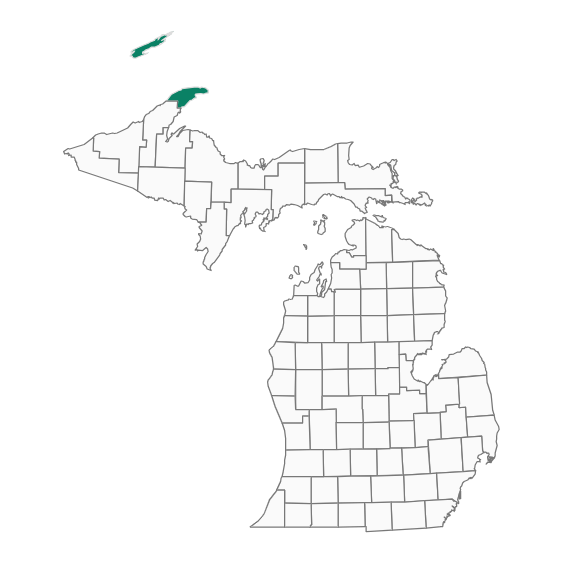
Canada yew (Taxus canadensis), a robust evergreen, shade-tolerant shrub, was once common across its native range in the Great Lakes and northeastern North America, but has precipitously declined during the last century due to high ungulate browse pressure. In Michigan, Canada yew was common to abundant in forested systems before high browse pressure, especially from white-tailed deer (Odocoileus virginianus) resulted in local extirpation and range constriction. Populations of this species are offered protection as a Regional Forester’s Sensitive Species in all three of Michigan’s National Forests. While Canada yew has been greatly reduced in the majority of forested ecosystems across the mainland, it persists locally on Great Lakes islands that lack ungulate populations, and in areas that receive heavy snow cover or have rocky, steep or less accessible terrain (Windels and Flaspohler 2014). Canada yew attains its highest frequency of occurrence and coverage on ungulate-free islands, including East Huron Island and Passage Island in Lake Superior, Manitou Island in Lake Superior, Sugar Island in Lake Huron and Hog, High and Gull Islands in Lake Michigan.
Goals
- Protect known populations from herbivory.
- Identify and evaluate recovery opportunities in high-quality natural areas on islands and the mainland.
Common Loon
Gavia immer
State threatened
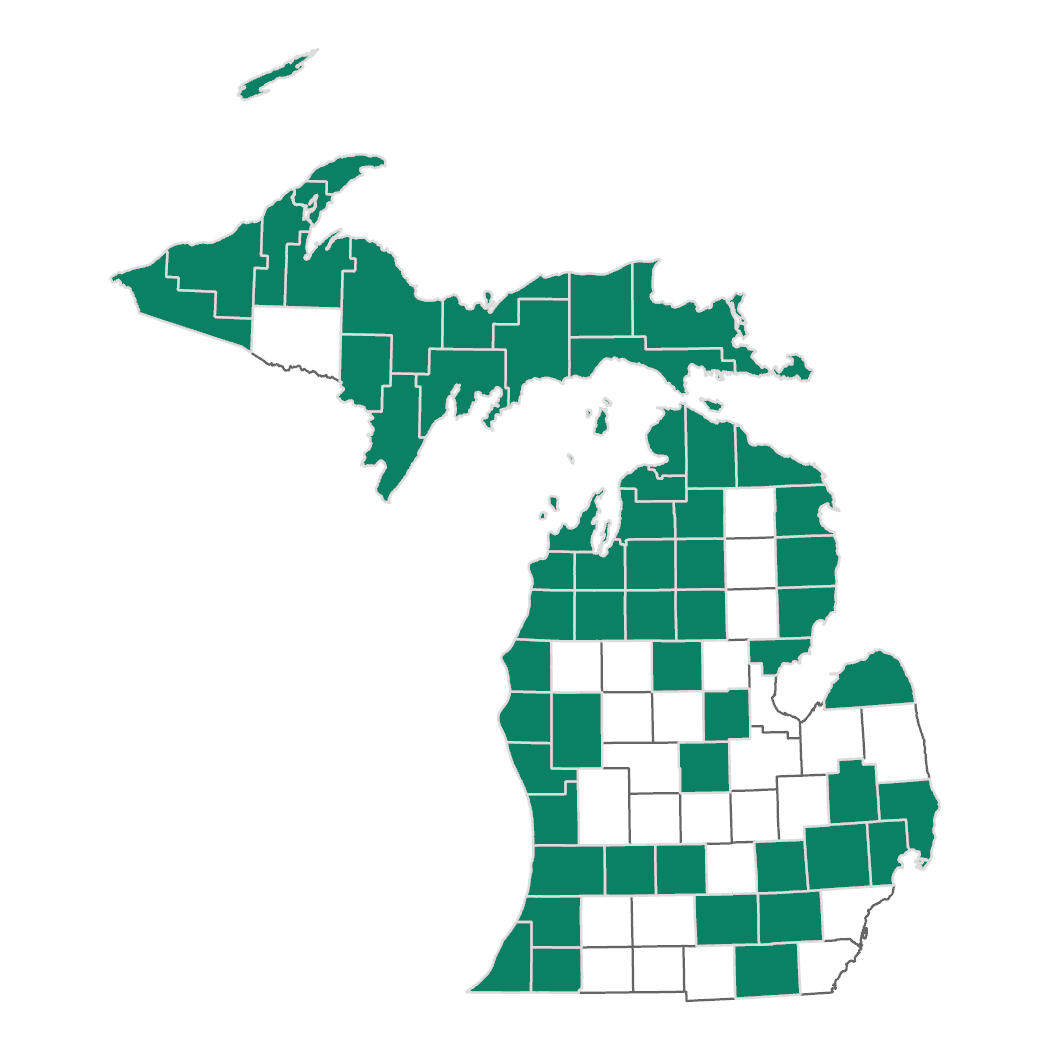
The common loon (Gavia immer) is a large diving bird with a white and black checkerboard pattern on the back and wings, red eyes and a thick, dagger-like bill (Gibson 2007). One of the most iconic sounds of northern Michigan is the “call of the loon”, a drawn-out and haunting wolf-like howl. This species occurs throughout the northern two-thirds of the state, with the highest densities found in the Upper Peninsula (Gibson 2007, Kaplan et al. 2011, MNFI 2025). High- quality breeding habitat for Michigan common loons has been characterized as an inland lake of adequate size (usually >40 acres) with a stable water level, undeveloped shoreline and small islands or bog mats for successful nesting (Jung 1987; Robinson et al.1993). Additionally, McIntyre (1988) cites the importance of clear, high-alkaline waters, affording loons sufficient water clarity and high prey densities for foraging. Great Lakes islands void of development and motorized boat traffic provide important habitat for nesting Common Loon. State-wide, Michigan’s breeding population has been estimated at 500 to 775 pairs (Kaplan et al. 2011). This species has been documented from 812 sites in 48 counties in Michigan as of 2025 in the state's Natural Heritage Database; however, less than half (369) of these occurrences were observed within the last 20 years (2005-2025; MNFI 2025).
Goals
- Assess and revise species recovery plan (Robinson et al. 1993).
- Promote water, shoreline, and land management practices that maintain or improve the water quality of lakes.
Common Tern
Sterna hirundo
State threatened
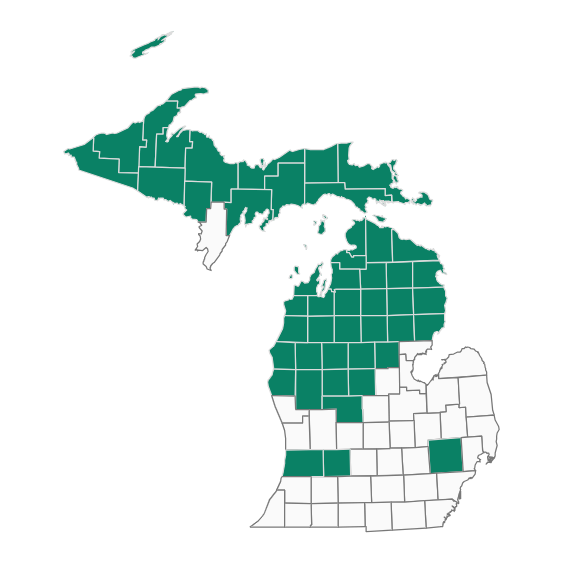
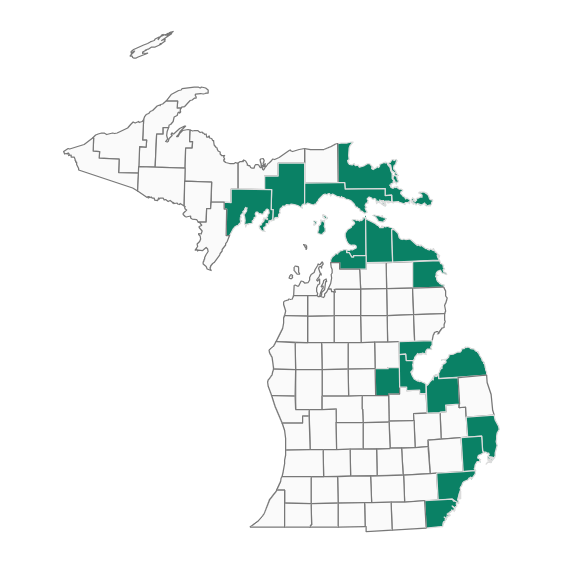
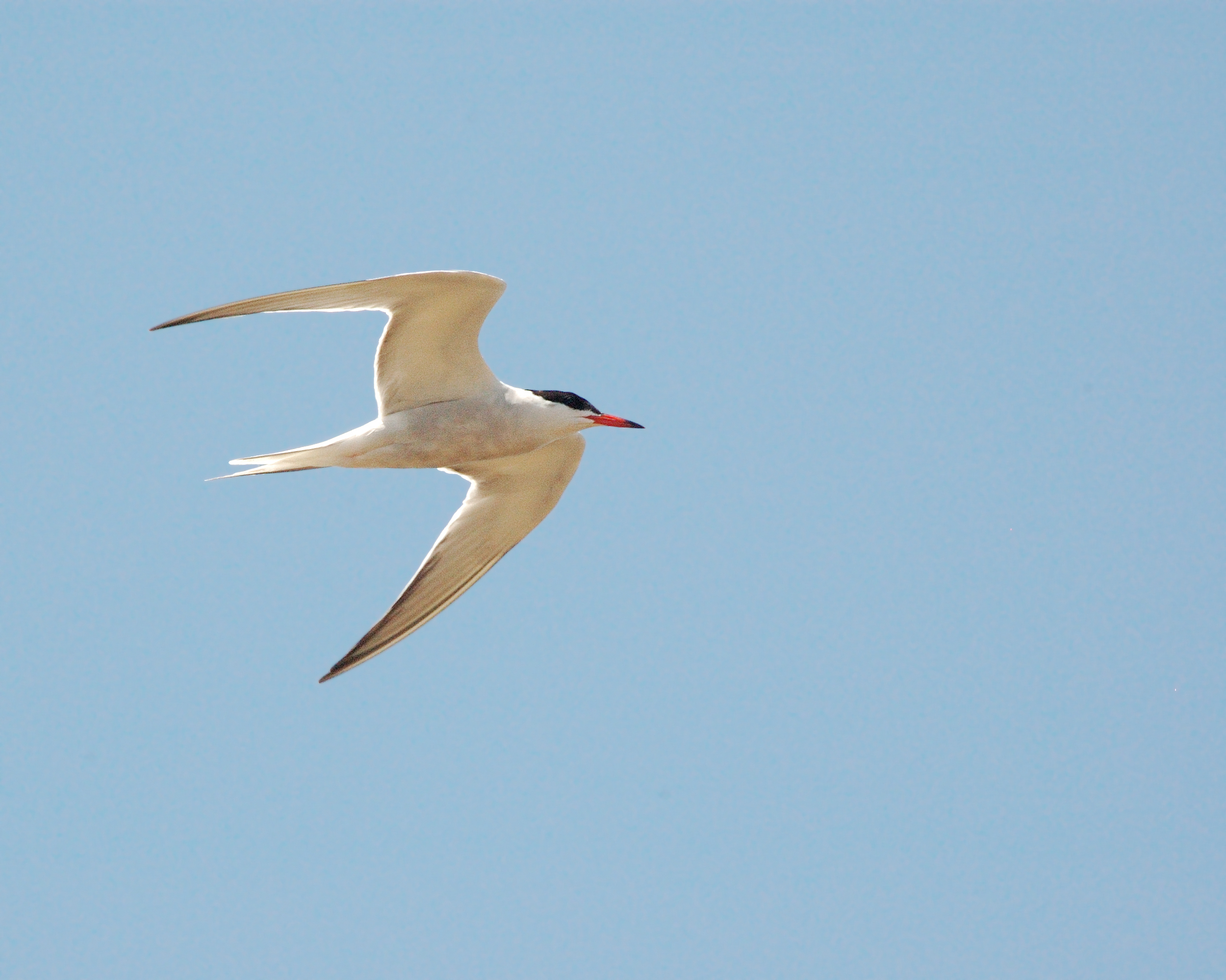
The common tern (Sterna hirundo) is a medium-sized tern with a slender body, long pointed wings, and a forked tail. Breeding adults have gray upperparts, pale gray underparts, a black cap, a red bill with a black tip, and orange-red legs (Arnold et al. 2020, Hyde 1997). Their harsh, screeching “keee-yurrrr” call helps distinguish them from similar tern species. Common terns nest colonially (in large groups) on sparsely vegetated sand and gravel beaches of islands and peninsulas, as well as on artificial islands made from dredged materials (Hyde 1997). In Michigan, colonies occur along both the eastern and northern shorelines, with many of the largest located in the Upper Peninsula (MNFI 2025, Norwood 2011).
Despite its name, the common tern is not widespread and is threatened with extinction. The Great Lakes population has declined steadily since 1980, with fewer nests, colony sites, and breeding pairs. Surveys from 1998-2000 documented 1,221 nesting pairs in Michigan (Norwood 2011). Broader efforts to monitor colonial waterbirds, including common terns, have occurred roughly every 10 years since the late 1970s through the U.S. Fish and Wildlife Service’s "Decadal Survey." However, with only four data points collected over several decades, this infrequent sampling limited understanding of population trends. This species has been documented from 99 sites in 18 counties in Michigan as of 2025 in the state's Natural Heritage Database and 19 of these occurrences were observed within the last 20 years (2005-2025; MNFI 2025).
Goals
- Stabilize the long-term declining population trend.
- Maintain habitats and reduce threats at known nesting colonies.
Manage islands as climate refugia
Islands present both unique challenges and important opportunities in the context of changing weather patterns. As warming temperatures enable southern species to outcompete those adapted to cooler conditions, islands can serve as critical refuges for northern species by offering relative isolation from competitive pressures. However, a key limitation is that island species are often less able to shift their geographic range northward in response to changing weather patterns, making them especially vulnerable to local extirpation. Strategic conservation and management of island ecosystems will be essential to preserving their biodiversity and supporting species persistence. Islands are considered to be particularly vulnerable to novel disturbance and native species extirpations, especially as driven by invasive species and habitat fragmentation (e.g. Schrader et al. 2021).
Call Out Box: Great Lakes Islands on Public Lands
Most great lake islands that are state and federally owned are generally identified and protected within management systems and provide continuity of habitat for associated focal species. For example, the largest concentration of islands in Michigan is the federally designated wilderness on Isle Royale.
Focal species adaptive capacity
Adaptive capacity is a species’ ability to tolerate or adapt to environmental change, whether that be through shifting in space or persisting in place (Thurman et al. 2020). Michigan Natural Features Inventory, with funding support from the Michigan Department of Natural Resources, assessed Adaptive Capacity for over 500 Midwest SGCN from 2023-2024 (Appendix 3). We chose to increase clarity at expense of precision in technical language used by Thurman et al. (2020) in their paper. The Michigan Department of Natural Resources created broad management strategies based off assessment results and are intended to be stepped down based on management scale, capacity and resources. Management strategies for assessed 2025-2035 focal species are:
Lowest Adaptive Capacity | Strategy | |
Boreal Chorus Frog | Range of Tolerances | Increase habitat connectivity |
Common Loon | Range of Tolerances | Increase habitat connectivity |
Common Tern | Range of Tolerances | Increase habitat connectivity |
Threats and conservation actions to habitat
Threats
Access, Capacity and Data Limitations
- Biodiversity data for islands is extremely lacking which hinders effective management and decision-making (MNFI 2022).
- Where data do exist, they are often outdated. Approximately two-thirds of Michigan’s documented rare species accounts on islands are more than 25 years old (Higman et al 2019).
- Many islands are remote, difficult to access and challenging to survey due to rugged terrain and/or lack of infrastructure (Cohen et al. 2022). This logistical complexity almost always results in higher project costs.
- Awareness about the sheer number, scope, and unique needs of Michigan’s Great Lakes islands is poor among mainland organizations and the general public, resulting in a lack of priority or urgency and potentially missed opportunities.
- Compared to the mainland, there are far fewer organizations working on islands.
Changing Weather Patterns
- Habitats and species on islands have long been adapted to dynamic conditions and their natural seasonal and decadal cycles, however predicted changes in the timing, duration and extremes of water level fluctuations, precipitation events and other impacts may alter the makeup of island habitats and species.
- Because of their low resilience and isolation, conservation introductions (i.e., assisted migration) to islands from the mainland should be highly scrutinized and conservation introductions should be considered higher risk than on the mainland.
Invasive & Other Problematic Species, Genes & Diseases
- Island biota are more vulnerable to novel disease and pest introductions (Ricklefs and Bermingham 2002). Invasive species reduce resiliency of natural systems on islands and pose significant threats to their biodiversity and ecosystem functions (Higman et al. 2019).
- Island populations often have lower levels of gene diversity and higher levels of differentiation compared to mainland populations, increasing the risk of extirpation or extinction (Frankham 1997).
- An overabundance of native species (e.g., cormorants, deer) may have an amplified impact on island habitats.
Natural Systems Modifications
- Fluctuating Great Lakes water levels can inundate small islands in high water years and impact coastal habitats, including colonial waterbird nesting sites (Soule 1993). Changes in the timing, intensity and duration of the water level fluctuations – outside of their historical averages – will affect the distribution and health of many coastally-dependent island species.
- Changes to fire regimes, including suppression of cultural and natural burns, leads to reduced biodiversity and altered ecosystem structure (Cohen et al. 2022).
Residential & Commercial Development
- Residential and commercial development removes, degrades and fragments island habitats. Pressure for island development is likely to increase as mainland shoreline development opportunities dwindle (Soule 1993). Inhabited islands have seen a surge of second home property sales since the Covid-19 pandemic.
- Hardening of shorelines (e.g., placement of engineered structures or materials such as walls or riprap) can reduce the extent of coastal ecosystems on islands and reduce their capacity to shift in space and time as the Great Lakes fluctuate.
Human Intrusions & Disturbance
- Incompatible recreation may lead to degradation, for example off-road vehicles used in unapproved island areas such as beaches, alvars and other sensitive habitats.
- Visitation to remote islands without public access, including those explicitly closed to the public, can lead to disturbance of wildlife and habitats, introduction of invasive species and accumulation of litter.
- There is little to no oversight or enforcement of laws on many islands due to their remoteness and typical mainland focus by law enforcement.
Conservation Actions
Land & Water Management
- Implement invasive species activities across the management spectrum – prevention, surveillance, detection and response and control of certain established populations (Higman et al 2019). [NLMIC] [AISSMP] [TISSMP] [GLBCS]
- Create, update and implement natural resource management plans for specific islands or archipelagos. For populated islands, this should be done in cooperation with island residents. [MSFAP] [CCP NWR] [NLMIC]
- Support development and implementation of protection and restoration projects on islands, particularly those targeting rare species and habitats unique to islands. [GLICWG] [CCP NWR] [RGLBP] [NLMIC] [SCDRS] [GLBCS] [LAMPS]
Research & Monitoring
- Work with regional governments, academia, and others to develop a robust research agenda for all Great Lakes islands, focusing on unique island attributes and processes such as endemism, migration, invasion biology, existence of refugia, successional forces, and impacts of predation and herbivory. [GLICWG] [CCP NWR]
- Inventory more public and conservancy lands on islands to collect baseline or updated biodiversity data. Seek opportunities to work with interested landowners to survey private islands. [CCP NWR] [NLMIC] [GLBCS]
- Deploy newer technologies like drones, lidar, remote cameras, acoustic telemetry for fish, and radio telemetry for flying animals (i.e., Motus towers) on islands to take advantage of their unique locations and help overcome logistical challenges associated with traditional field surveys. [NLMIC]
- Support tribal research, monitoring and related conservation efforts to strengthen ecological and cultural resource management on islands. [NLMIC]
Outreach and Education
- Work with local island governments, non-profits, schools, businesses and others to develop messaging for specific audiences, particularly island property owners about land/water conservation and tourists about responsible recreation, especially related to use of ORVs, bikes and boats, via the limited number of entry chokepoints (ferries, marinas, or airports). [RGLBP] [NLMIC] [GLIA]
Conservation Designation & Planning
- Utilize MNFI’s stewardship prioritization framework, or similar processes, to identify priority conservation activities on islands with adequate information on ecological integrity, rarity of the ecological and biological components and threats to native biodiversity. Develop a decision framework to allocate finite resources among those high priority islands. [NLMIC] [SCDRS] [GLBCS]
- Create and sustain collaborative partnerships and coordination among governments, academia, organizations, and other entities across sectors, geographies, and cultures (Network for Landscape Conservation, 2025). [GLICWG] [RGLBP] [NLMIC] [SCDRS] [GLIA] [GLBCS]
Conservation threats and actions for focal species
Boreal Chorus Frog
Threats
Natural System Modifications
- Timber harvesting in occupied forest habitats and around breeding pools can result in habitat loss and fragmentation, impact breeding success, reduce habitat and population connectivity and cause injury or mortality of frogs.
- Use of herbicides, insecticides, or other chemicals can threaten boreal chorus frogs, particularly in or near breeding sites.
Lack of Knowledge
- Management decisions related to this species are hindered by the lack of information on its status, distribution, abundance, threats and management needs of extant populations in Michigan.
Actions
Land & Water Management
- Maintain and protect breeding pools and adjacent forested or open occupied habitats and connectivity between these habitats. [BFSA]
- Maintain downed woody debris, rocks, leaf litter and other cover objects on the forest floor within and around occupied breeding sites to provide habitat for this species.
- Limit or avoid the use of herbicides, pesticides or other chemicals in occupied habitat, especially near breeding sites.
Research & Monitoring
- Conduct surveys and monitoring using a standard protocol to assess and determine current status, distribution, abundance, potential viability, threats and management needs of extant populations and identify any additional populations. [BFSA; ARMI] Focus on identifying additional islands that may have suitable conditions. Work with partners such as Isle Royale National Park staff for local project designs.
Canada Yew
Threats
Natural Systems Modifications
- As Canada yew is an understory associate, it is particularly threatened by habitat loss due to timber harvesting (overstory removal) and development (Sullivan 1993)
Invasive & Other Problematic Species, Genese & Diseases
- Over browsing from white-tailed deer, elk and moose damage existing Canada yew populations and prevent recruitment (Windels and Flaspohler 2014; Wilton 2021)
Changing Weather Patterns
- Snowpack offers a break from herbivory as some branches are buried; thus, changing climates resulting in lower snowpack could be harmful for the species (Johnson et al. 2021)
Conservation Actions
Land & Water Management
- Limit intensive timber harvests in existing habitat by limiting canopy gaps to < 300 m2 (Windels and Flaspholer 2014). [FEIS; CYPA]
Research & Monitoring
- Conduct surveys and monitoring using a standard protocol to assess and determine current status, distribution, abundance, potential viability, threats and management needs of extant populations and identify any additional populations [AINL]
- Evaluate impact of herbivory on Canada yew by comparing yew populations on islands with and without deer (e.g., Crooked Island and Sugar Island in Lake Huron) and on islands that have had ungulate populations introduced and then subsequently culled (e.g., Saint Martin Island)
Common Loon
Threats
Commercial, Residential & Agricultural Development
- Human development of shorelines can destroy and degrade nesting habitats and increase disturbance of inhabited lakes; wave action from recreational boating can cause nest failure (Soulliere et al. 2018).
Pollution
- Vulnerable to mercury, lead (i.e., lost lead tackling) and organic pollutants and Type C and E botulism (Gibson 2007, Soulliere et al. 2018).
- Non-point source pollution, such as sedimentation and nutrient loading could reduce the suitability of lakes as loon breeding and foraging habitat.
Conservation Actions
Policy & Law
CL1. Implement policies and land management practices that protect water quality of lakes (Soulliere et al. 2018). [WHCS; CLVT; NHLR]
Land & Water Management
CL2. Limit human disturbance and water level fluctuations in areas with nesting loons. [BBOS; NHLR]
Research and Monitoring
CL3. Work to build a shared repository for conservation groups, agencies, and landowners to share loon location data and work collaboratively on monitoring.
Common Tern
Threats
Commercial, Residential & Agricultural Development
- Human development of Great Lakes shorelines and islands can destroy and degrade nesting habitats and increase nest disturbance, potentially leading to colony abandonment.
Pollution
- Vulnerable to mercury and organic pollutants and botulism (Soulliere et al. 2018).
Invasive & Other Problematic Species, Genese & Diseases
- Displacement or nest predation by co-nesting species. (Arnold et al. 2022)
- Nests and young are susceptible to predation by a variety of birds, mammals and snakes. (Arnold et al. 2022)
- Changes to Great Lakes water levels can affect the availability of suitable nesting habitat, such as long-term high or low water levels or more extreme fluctuations. (McKellar et al. 2021)
- Vegetation encroachment can impede common tern nesting in otherwise adequate habitat (Cuthbert et al. 2003).
- Freshwater habitats used by common terns in the Great Lakes have been profoundly altered in recent decades by the successive introduction of alien species (e.g., alewife [Alosa pseudoharengus], round goby [Neogobius melanostomus], and zebra mussel [Dreissena polymorpha]), recent oligotrophication and algal blooms (Arnold et al. 2020).
Conservation Actions
Land & Water Management
CT1. Enhance existing nesting colonies through vegetation/substrate management, installation of nest exclosures, predator control, competitor deterrence or removal and restriction of human access (Soulliere et al. 2018). [WHCS; BOW; CTHR]
CT2. Consider creating new nesting habitat near suitable foraging areas with dredge spoils (Soulliere et al. 2018), floating rafts, and platforms (Arnold et al. 2020). [WHCS; BOW; CTHR]
Call out box: “The value of a whole collection of islands is much greater than the sum of the individual island’s resources. Management policy based on an island-by-island, case-by-case approach can potentially result in degradation of the entire array of islands… The islands must be considered as a single, irreplaceable resource and protected as a whole… ” (Soule, 1996)
Places for partnership
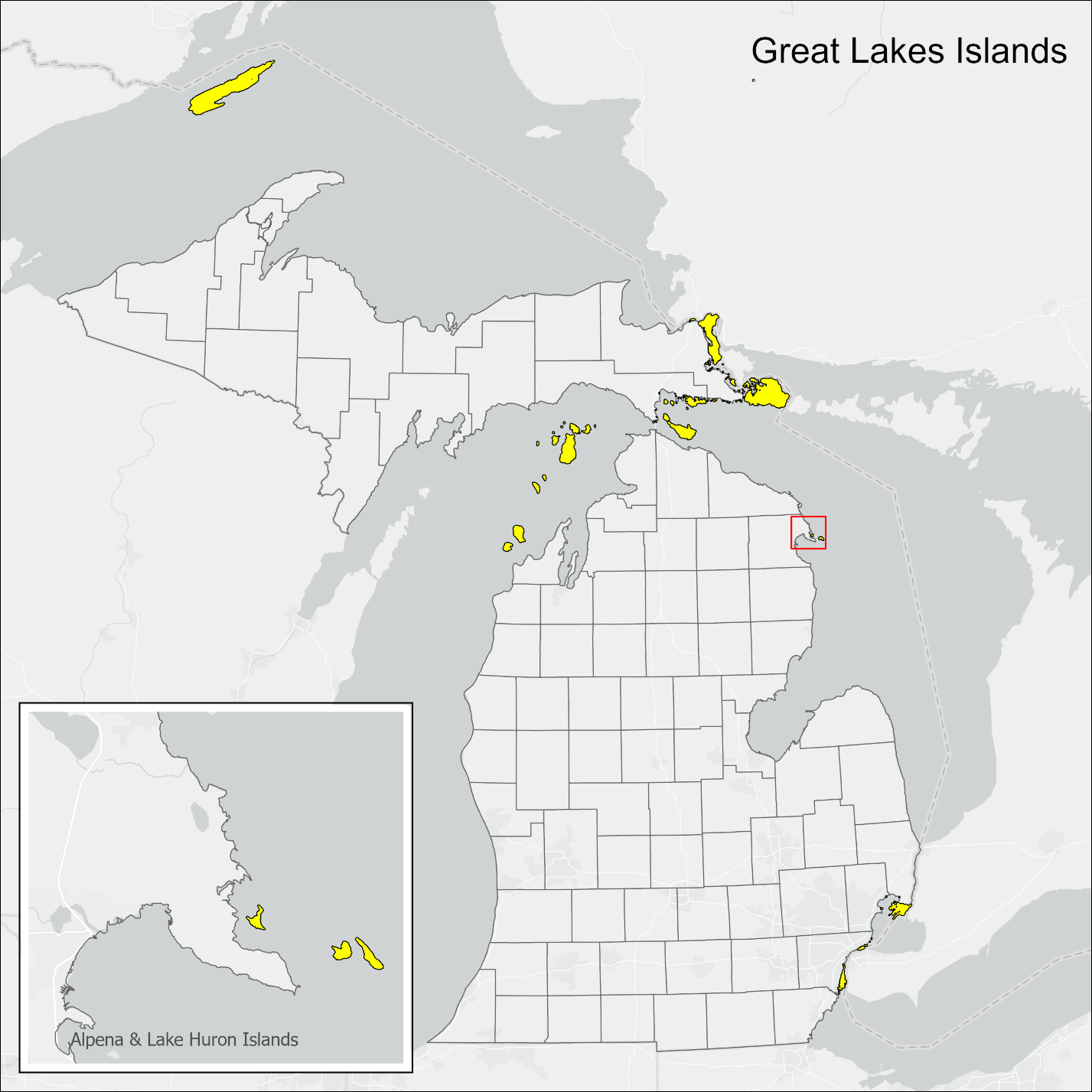
This map was created in collaboration with partners and highlights focal areas to work in over the next 10 years. Creating shared goals helps focus efforts and build collaboration. While this map has a select few areas highlighted, conservation on any Great Lakes Island is welcomed and encouraged.
How will we monitor?
Islands
- Continue to survey and update quality rankings for Great Lakes Islands natural communities in the state’s Natural Heritage Database
- Leverage partnerships to share logistical experience and equipment (e.g., boats) to access and maintain field crews on remote, uninhabited islands.
- Encourage community science contributions on populated islands, for example through place-based education at island schools and broader use of smartphone apps, such as iNaturalist and eBird, by both residents and visitors. Verify sightings submitted by the public.
Focal Species
Boreal chorus frog
- Monitor status and distribution using existing databases such as the state’s Natural Heritage Database, iNaturalist and HerpMapper.
- Coordinate data sharing with US Park Service staff at Isle Royale.
- Conduct breeding frog call surveys, visual surveys, habitat surveys and population data analysis.
- Update occurrences in the state’s Natural Heritage Database.
Canada Yew
- When possible, regularly collect standardized count-based and density population measurements.
- When possible, regularly document any observable changes with the area occupied by a population.
Common Loon
- Continue standardized surveys conducted by the Michigan Loon Preservation Society and expand in areas needing coverage.
Common Tern
- Work with neighboring states to continue decadal population surveys.
- Survey the most important nesting colonies in Michigan approximately every three years. More frequent surveys of high-priority nesting colonies are needed to better assess population trends and evaluate success of habitat management (Soulliere et al. 2018).
Links to other conservation plans
[AINL] The Challenging Past and Precarious Future of Canada Yew (Taxus Canadensis) in the Apostle Islands National Lakeshore (Johnson et al. 2021)
[AISSMP] Michigan’s Aquatic Invasive Species State Management Plan (Michigan Invasive Species Program, 2013)
[ARMI] U.S. Geological Survey National Amphibian Research and Monitoring Initiative (USGS 2025) https://armi.usgs.gov/
[BBOS] Draft Restoration Plan for Common Loon (Gavia Immer) and Other Birds Impacted by the Bouchard Barge 120 (B-120) Oil Spill (USFWS 2019)
[BFSA] Boreal Chorus Frog Species Status Assessment (Macklem and Pipino 2025)
[BOW] Common Tern (Sterna hirundo), version 1.0 (Arnold et al. 2020)
[CCP NWR] Comprehensive Conservation Plan for National Wildlife Refuges: Gravel Island, Green Bay, Harbor Island, Huron, and Michigan Islands (U.S. Fish & Wildlife Service, 2012)
[CLVT] The 2021 Breeding Status of Common Loons in Vermont (Hanson and Morin 2021)
[CTHR] Interstate Island Habitat Restoration: Phase III – Long-Term Monitoring and Maintenance Plan Common Tern Monitoring & Migratory Shorebird Assessment – 2023 Final Report (Bracey et al. 2022)
[CYPA] Considerations for Conservation and Restoration of Canada Yew in Protected Areas (Windels and Flaspohler 2014)
[DISP] Database for Invasive Species Action (Higman et al. 2019)
[FEIS] Taxus canadensis (Sullivan 1993)
[GLBCS] Great Lakes Biodiversity Conservation Strategies (Franks Taylor et al., 2010; Lake Superior Binational Program, 2015; Pearsall et al., 2012a; Pearsall et al., 2012b)
[GLIA] Great Lakes Islands Alliance strategic plan (GLIA, 2024)
[GLICWG] Great Lakes Islands Conservation Workgroup Prospectus (Great Lakes Coastal Assembly, 2022)
[IISP] Preserving the Legacy of Michigan’s Great Lakes Islands: A Planning Framework and Database for Invasive Species Action (Higman et al. 2019)
[LAMPS] Great Lakes Water Quality Agreement – Lakewide Action and Management Plans (Environment and Climate Change Canada and the U.S. Environmental Protection Agency. 2021; ECCC and USEPA, 2022a; ECCC and USEPA, 2022b]
[MSFAP] Michigan’s Statewide Forest Action Plan (Michigan Department of Natural Resources, 2020)
[MPSL] Management Plan for State-Owned Lands on Northern Lake Michigan Islands (MDNR, 2017)
[NHLR] The New Hampshire Loon Recovery Plan: Year Five Final Report for Blake-Nuttall Fund (Vogel 2016)
[NLMIC] Northern Lake Michigan Islands Collaborative - Beaver Island Implementation Plan (Michigan Department of Natural Resources, 2022)
[RGLBP] Audubon Great Lakes’ “Restoring the Great Lakes for Birds and People” (Audubon Great Lakes, 2021)
[SCDRS] St. Clair Detroit River System Viability Assessment (DeBruyn et al., 2019)
[SSH] Tools and Tactics Guidebook Phase 2 (Sustainable Small Harbors 2023)
[TISSMP] Michigan’s Terrestrial Invasive Species State Management Plan (Michigan Invasive Species Program, 2024)
[WHCS] Upper Mississippi River and Great Lakes Region Joint Venture Waterbird Habitat Conservation Strategy – 2018 Revision (Soulliere et al. 2018)
[WRCP] Gravel Island, Green Bay, Harbor Island, Huron, and Michigan Islands National Wildlife Refuges Comprehensive Conservation Plan (USFWS 2013)
Literature Cited
Show all references
Arnold, J.M., S.A. Oswald, I.C.T. Nisbet, P. Pyle, and M.A. Patten. 2020. Common Tern (Sterna hirundo), version 1.0. In Birds of the World (S. M. Billerman, Editor). Cornell Lab of Ornithology, Ithaca, NY, USA.
Arnold, J. M., S.A. Oswald, S. Wilson, and P. Szczys. 2022. Understanding widespread declines for Common Terns across inland North America: productivity estimates, causes of reproductive failure, and movement of Common Terns breeding in the large lakes of Manitoba. Avian Conservation and Ecology 17(1):14. https://doi.org/10.5751/ACE-02067-170114
Audubon Great Lakes. 2021. Audubon's vision: Restoring the Great Lakes for birds and people. 132 pp.
Bassett, T.J., S.M. Warner, J.G. Cohen, J.M. Lincoln, H. D. Enander, E. A. Haber, and R.A. Hackett. 2022. Rare and Invasive Plant Surveys of Great Lakes islands in the Green Bay and Gravel Islands National Wildlife Refuges. Michigan Natural Features Inventory, Report No. 2022-10. Lansing, MI. 95 pp.
Bassett, T.J., E. A. Haber, R.A. Hackett, S.M. Warner, J.G. Cohen, J.M. Lincoln, H. D. Enander, and P. R. Schilke. 2023. Rare and Invasive Plant Surveys of Great Lakes Islands in the Huron Islands National Wildlife Refuge. Michigan Natural Features Inventory, Report No. 2023-11, Lansing, MI. 114 pp.
Bernardo, H. L., P. Vitt, R. Goad, S. Masi, and T. M. Knight. 2018. Count population viability analysis finds that interacting local and regional threats affect the viability of a rare plant. Ecological Indicators, 93:822–829.
Bracey, A., S. Kolbe, S. Nelson, F. Strand, and A. Grinde. 2022. Interstate Island Habitat Restoration: Phase III – Long-Term Monitoring and Maintenance Plan Common Tern Monitoring & Migratory Shorebird Assessment – 2023 Final Report. Natural Resources Research Institute, University of Minnesota Duluth, Technical Report NRRI/TR-2023/32. 34 pp.
Cohen, J.G. 2017. Natural Community Surveys of Beaver Island Archipelago. Michigan Natural Features Inventory. Report Number 2017-11, Lansing, MI. 162 pp.
Cohen, J.G. and H.D. Enander. 2019. Rare coastal ecosystem monitoring. Michigan Natural Features Inventory Report Number 2019-08, Lansing, MI. 60 pp.
Cohen, J.G., B.S. Slaughter and M.A. Kost. 2009. Natural Community Surveys and Stewardship Prioritization of Potential Ecological Reference Areas on State Forest Lands. Version 1.0. Michigan Natural Features Inventory, Report Number 2009-21, Lansing, MI. 526 pp.
Cohen, J.G., J.M. Lincoln, T.J. Bassett, S.M. Warner, H.D. Enander, E.A. Haber and R.A. Hackett. 2022. Natural Community Surveys of Great Lakes Islands in the Green Bay National Wildlife Refuge. Michigan Natural Features Inventory, Report Number 2022-07, Lansing, MI. 160 pp
Cohen, J.G., J.M. Lincoln, T.J. Bassett, S.M. Warner, E.A. Haber, H.D. Enander and R.A. Hackett. 2023. Natural Community Surveys of Huron Islands, Seney National Wildlife Refuge, Lake Superior. Michigan Natural Features Inventory, Report Number 2023-05, Lansing, MI. 148 pp.
Cohen, J.G., H.D. Enander, T.J. Bassett, C.M. Wilton, and A.A. Cole-Wick. 2024. Using GIS-based multicriteria decision analysis to prioritize invasive plant treatment: A creative solution for a pernicious problem. Ecological Modelling. Volume 495: 110807
Cohen, J.G., J.M. Lincoln, and H.D. Enander. 2024. Natural Community Surveys of Grand Island, Grand Island National Recreation Area, Lake Superior. Michigan Natural Features Inventory, Report No. 2024-06, Lansing, MI. 224 pp.
Courtney, P.A. and H. Blokpoel. 1983. Distribution and Numbers of Common Terns on the Lower Great Lakes during 1900-1980: A Review. Colonial Waterbirds. 6:107–120. https://doi.org/10.2307/1520977
Cuthbert, F. J., L. R. Wires and K. Timmerman. 2003. Status assessment and conservation recommendations for the Common Tern (Sterna hirundo) in the Great Lakes Region. U.S. Department of the Interior, Fish and Wildlife Service, Ft. Snelling, Minnesota, USA. [online] URL: https://www.fws.gov/ midwest/es/soc/birds/pdf/cote-sa03.pdf
Cuthbert, F. J. and L. Wires. 2013. The fourth decadal U.S. Great Lakes colonial waterbird survey (2007- 2010): results and recommendations to improve the scientific basis for conservation and management. Report, U.S. Department of the Interior, Fish and Wildlife Service, Fort Snelling, Minnesota.
DeBruyne, R.L., E.F. Roseman, J.E. Ross, K.R. Newman, and R.M. Strach. 2019. Contemporary environmental assessment using a viability analysis in a large river system to inform restoration and adaptive management decisions: U.S. Geological Survey Scientific Investigations Report 2019–5002, 59 pp. https://doi.org/10.3133/sir20195002.
Earl, D.J., E.C. Branch, A.A. Cole-Wick, Y.M. Lee, L.M. Rowe, P.J. Badra, C.M. Wilton, and D.L. Cuthrell. 2024. Assessing Climate Vulnerability & Adaptive Capacity of Midwest Species of Greatest Conservation Need. Michigan Natural Features Inventory, Lansing, MI. 79 pp.
Egan, A.T., L.C. Ferrington Jr, T. Lafrancois, M.B. Edlund, and J. McCullough. 2015. Spatial arrangement and metrics of freshwater coastal rock pools applied to amphibian conservation. Limnologica 51:101 – 109.
Environment and Climate Change Canada and the U.S. Environmental Protection Agency (ECCC and USEPA). 2021. Lake Erie Lakewide Action and Management Plan, 2019-2023.
Environment and Climate Change Canada and U.S. Environmental Protection Agency (ECCC and USEPA). 2022a. Lake Huron Lakewide Action and Management Plan, 2022-2026.
Environment and Climate Change Canada and the U.S. Environmental Protection Agency (ECCC and USEPA). 2022b. Lake Superior Lakewide Action and Management Plan, 2020-2024.
Frankham, R. 1997. Do island populations have less genetic variation than mainland populations? Heredity. 78:311–317.
Franks T., R. Franks-Taylor, A. Derosier, K. Dinse, P. Doran, D. Ewert, K. Hall, M. Herbert, M. Khoury, D. Kraus, A. Lapenna, G. Mayne, D. Pearsall, J. Read, and B. Schroeder. 2010. The Sweetwater Sea: An International Biodiversity Conservation Strategy for Lake Huron - Technical Report. A joint publication of The Nature Conservancy, Environment Canada, Ontario Ministry of Natural Resources Michigan Department of Natural Resources and Environment, Michigan Natural Features Inventory Michigan Sea Grant, and The Nature Conservancy of Canada. 264 pp. with Appendices.
Gibson, J.M. 2007. Special animal abstract for Gavia immer (Common Loon). Michigan Natural Features Inventory, Lansing, Michigan. 6 pp.
Gehring, J.L. 2006. Special animal abstract for Haliaeetus leucocephalus (bald eagle). Michigan Natural Features Inventory, Lansing, MI. 3 pp.
Great Lakes Coastal Assembly. 2022. Great Lakes Islands Conservation Workgroup prospectus. 2 pp. Available: https://www.greatlakescoastalassembly.org/
Great Lakes Islands Alliance (GLIA). 2024. Strategic Plan 2024-2034. Presented by the GLIA Steering Committee. 13 pp. Available: https://glialliance.org/
Hammerson, G.A. 1999. Amphibians and reptiles in Colorado. Second edition. University Press of Colorado, Boulder.
Hanson, E.W. and D. Morin. 2021. The 2021 Breeding Status of Common Loons in Vermont. Vermont Center for EcoStudies. 26 pp.
Harding, J.H. and D.A. Mifsud. 2017. Amphibians and Reptiles of the Great Lakes Region, Revised edition. University of Michigan Press, Ann Arbor, Michigan.
Henson, B.L., D.T. Kraus, M.J. McMurtry and D.N. Ewert. 2010. Islands of Life: A Biodiversity and Conservation Atlas of the Great Lakes Islands. Nature Conservancy of Canada. 160 pp.
Higman, P.J., H.D. Enander, D.A. Hyde, P.J Badra, L.A. May, and K.M. Korroch. 2019.
Preserving the Legacy of Michigan’s Great Lakes Islands: A Planning Framework and Database for Invasive Species Action. Report to the USFWS Great Lakes Coastal Program. Michigan Natural Features Inventory, Report No. 2019-17, Lansing, MI. 142 pp.
Higman, P.J., S. Harris, P. Grassmick, B. Leuck, and E. Leuck. 2024. Natural Features of Beaver Island: A Landowner’s Guide. Michigan Natural Features Inventory Report No. 2024-5, Lansing, MI.
Hill Bermingham, L. 2010. Deer herbivory and habitat type influence long-term population dynamics of a rare wetland plant. Plant Ecology 210:359–378.
Hoskins, T.D., Boone M.D. 2018. Atrazine feminizes sex ratio in Blanchard’s cricket frogs (Acris blanchardi) at concentrations as low as 0.1 ug/L. Environmental Toxicology and Chemistry. 37(2): 427-435.
Johnson, S., J. Mead, M. Widen and E. Leonard. 2021. The Challenging Past and Precarious Future of Canada Yew (Taxus Canadensis) in the Apostle Islands National Lakeshore. National Park Service. Available: https://doi.org/10.36967/nrr-2285336.
Jung, R.E. 1987. An assessment of human impact on the behavior and breeding success of the Common Loon (Gavia immer) in the northern Lower and eastern Upper Peninsulas of Michigan. Master’s thesis, University of Michigan Biological Station. Pellston, Michigan.
Junges, C.M., M.I. Maglianese, R.C. Lajmanovich, P.M. Peltzer, and A.M. Attademo. 2017. Acute toxicity and etho-toxicity of three insecticides used for mosquito control on amphibian tadpoles. 228:143. https://doi.org/10.1007/s11270-017-3324-6
Kaplan, J.D., D.L. McCormick, and K.B. Tischler. 2011. Common Loon (Gavia immer) in A.T. Chartier, J.J. Baldy, J. Brenneman, editors. The Second Michigan Breeding Bird Atlas. Kalamazoo Nature Center, Kalamazoo, Michigan, USA. Available: www.mibirdatlas.org.
Lake Superior Binational Program. 2015. A Biodiversity Conservation Strategy for Lake Superior: A Guide to Conserving and Restoring the Health of the World’s Largest Freshwater Lake. Nature Conservancy of Canada. 20 pp.
MacArthur, R.H. and E.O. Wilson. 1967. The Theory of Island Biogeography. Princeton, N.J. Princeton University Press, 203 pp.
Macklem, C., and L. Pipino. 2025. Boreal Chorus Frog Species Status Assessment. Species Status Assessment. New York Department of Fish and Wildlife, Albany, NY. 17 pp.
McIntyre, J.W. 1988. The common loon: spirit of northern lakes. University of Minnesota Press. Minneapolis, MN.
McKellar, A.E., S.E. Simpson, and S. Wilson. 2021. Abundance, population trends, and negative associations with lake water levels for six colonial waterbird species over five decades in southern Manitoba. Avian Conservation and Ecology 16(1):7. https://doi.org/https://doi.org/10.5751/ACE-01789-160107
Michigan Department of Natural Resources (MDNR). 2017. Management Plan for State-Owned Lands on Northern Lake Michigan Islands. Michigan Department of Natural Resources, Lansing, MI. 38 pp.
Michigan Department of Natural Resources (MDNR). 2020. Statewide Forest Action Plan. Michigan Department of Natural Resources, Lansing, MI. 55 pp.
Michigan Department of Natural Resources (MDNR). 2022. Implementation Plan for the Management of State-owned Lands on Beaver Island. Addendum to the Management Plan for State-owned Lands on Northern Lake Michigan Islands. 17 pp.
Michigan Natural Features Inventory (MNFI). 2025. Michigan Natural Heritage Database, Lansing, MI.
NatureServe Explorer. 2025. Pseudacris maculata Boreal Chorus Frog. Accessed: https://explorer.natureserve.org/Taxon/ELEMENT_GLOBAL.2.806592/Pseudacris_maculata
Network for Landscape Conservation. 2025. https://landscapeconservation.org/catalyst-fund. Accessed May 28, 2025.
Nisbet, I. 2002. Common tern: Sterna hirundo. The Birds of America No. 618. Birds of North America Inc. Philadelphia, PA.
Norwood, G. 2011. Common Tern (Sterna Hirundo). In A.T. Chartier, J.J. Baldy and J.M. Brenneman, editors. The Second Michigan Breeding Bird Atlas. Kalamazoo Nature Center. Kalamazoo, Michigan, USA. Available: www.mibirdatlas.org.
Pearsall, D., P. Carton de Grammont, C. Cavalieri, C. Chu, P. Doran, L. Elbing, D. Ewert, K. Hall, M. Herbert, M. Khoury, D. Kraus, S. Mysorekar, J. Paskus and A. Sasson. 2012a. Returning to a Healthy Lake: Lake Erie Biodiversity Conservation Strategy. Technical Report. A joint publication of The Nature Conservancy, Nature Conservancy of Canada, and Michigan Natural Features Inventory. 340 pp. with Appendices.
Pearsall, D., P. Carton de Grammont, C. Cavalieri, P. Doran., L. Elbing, D. Ewert, K. Hall, M. Herbert, M. Khoury, S. Mysorekar, S. Neville, J. Paskus, and A. Sasson. 2012b. Michigami: Great Water. Strategies to Conserve the Biodiversity of Lake Michigan. Technical Report. A joint publication of The Nature Conservancy and Michigan Natural Features Inventory. 309 pp. with Appendices.
Ricklefs, R.E. and E. Bermingham. 2002. The concept of the taxon cycle in biogeography. Global Ecology and Biogeography 11:353-361.
Robinson, W.L., J. Edde, D. Elsing, J. Hammill, G.W. Irvine, R. Schorfhaar, P. Strong and T. Weise. 1993. Michigan Loon Recovery Plan Report. Michigan Department of Natural Resources, Lansing, Michigan.
Semlitsch, R.D., B.D. Todd, S.M. Blomquist, A.J.K. Calhoun, J.W. Gibbons, J.P. Gibbs, G.J. Graeter, E.B. Harper, D.J. Hocking, M.L. Huner, D.A. Patrick, T.A.G. Rittenhouse, B.B. Rothermel. 2009. Effects of Timber Harvest on Amphibian Populations: Understanding Mechanisms from Forest Experiments. BioScience 59 (10): 853–62. https://doi.org/10.1525/bio.2009.59.10.7.
Slaughter, B.S. and J.K. Marr. 2015. Arctic-Alpine Disjuncts on Isle Royale and the Keweenaw Peninsula of Michigan's Upper Peninsula. Michigan Natural Features Inventory, Report No. 2015-09, Lansing, MI. 16 pp.
Sauer, J.R., W.A. Link and J.E. Hines. 2020, The North American Breeding Bird Survey, Analysis Results 1966 - 2019: U.S. Geological Survey data release, https://doi.org/10.5066/P96A7675.
Smith, D.C. 1983. Factors controlling tadpole populations of the chorus frog (Pseudacris triseriata) on Isle Royale, Michigan. Ecology 64(3):501-510.
Smith, D.C. 1987. Adult recruitment in chorus frogs: effects of size and date at metamorphosis. Ecology 68(2):344-350.
Soule, J.D. 1993. Biodiversity of Michigan’s Great Lakes islands: Knowledge, threats and protection. Report to the Michigan Department of Natural Resources Land and Water Management Division, CZM Contract 14C-309-3.
Soulliere, G.J., M.A. Al-Saffar, R.L. Pierce, M.J. Monfils, L.R. Wires, B.W. Loges, B.T. Shirkey, N.S. Miller, R.D. Schultheis, F.A. Nelson, A.M. Sidie-Slettedahl and D.J. Holm. 2018. Upper Mississippi River and Great Lakes Region Joint Venture Waterbird Habitat Conservation Strategy – 2018 Revision. U.S. Fish and Wildlife Service, Bloomington, Minnesota, USA. 75 pp. with Appendices
State of Michigan. 2013. Michigan’s Aquatic Invasive Species State Management Plan 2013 Update. Water Resource Division, Michigan Department of Environmental Quality, Lansing, MI. 78 pp.
State of Michigan. 2024. Terrestrial Invasive Species Management Plan. Lansing, MI. 46 pp.
Sullivan, J. 1993. Taxus canadensis. In: Fire Effects Information System, [Online]. U.S. Department of Agriculture, Forest Service, Rocky Mountain Research Station, Fire Sciences Laboratory (Producer). Available: https://www.fs.usda.gov/database/feis/plants/shrub/taxcan/all.html.
Sustainable Small Harbors. 2023. Tools and Tactics Guidebook Phase 2. Drummond Carpenter; Michigan Department of Environment, Great Lakes, and Energy; Sea Grant Michigan; Michigan State University; University of Michigan. 105 pp.
Thurman, LL, B Stein, EA Beever, W Foden, SR Geange, N Green, JE Gross, DJ Lawrence, O LeDee, JD Olden, LM Thompson, and BE Young. 2020. Persist in place or shift in space? Evaluating the adaptive capacity of species to climate change. Frontiers in Ecology and Evolution 18(9): 520-528
U.S. Fish and Wildlife Service (USFWS). 2013. Gravel Island, Green Bay, Harbor Island, Huron, and Michigan Islands National Wildlife Refuges Comprehensive Conservation Plan. U.S. Fish and Wildlife Service, Fort Snelling, MN. 320 pp.
U.S. Fish and Wildlife Service (USFWS). 2019. Draft Restoration Plan for Common Loon (Gavia Immer) and Other Birds Impacted by the Bouchard Barge 120 (B-120) Oil Spill. Massachusetts Executive Office of Energy and Environmental Affairs, Rhode Island Department of Environmental Management, and National Oceanic and Atmospheric Administration, Buzzards Bay MA and RI. 71 pp.
Vogel, H. 2016. The New Hampshire Loon Recovery Plan: Year Five Final Report for Blake-Nuttall Fund. Loon Preservation Committee, Moutonborough, NH. 7 pp.
Wilton, C.M. 2021. White-tailed Deer (Odocoileus virginianus) Density and Habitat Use on the Beaver Island Archipelago Using a Camera Trap Array. Michigan Natural Features Inventory Report Number 2021-05, Lansing, MI
Windels, S.K. and D.J. Flaspohler. 2014. Considerations for conservation and restoration of Canada yew in protected areas. Natural Areas Journal, 34(2): 249-253.