
Peatlands
Contributors
Michigan Natural Features Inventory
Michigan Nature Association
Michigan Department of Natural Resources
Ducks Unlimited
John Ball Zoo
U.S. Geological Survey, Michigan Fish and Wildlife Cooperative Research Unit
Recommended Citation: Rachel A. Hackett, Yu Man Lee, David L. Cuthrell, Andrew T. Myers, and Anthony K. Henehan. 2026. Michigan’s Wildlife Action Plan: 2025-2035, Peatlands. Michigan Department of Natural Resources, Lansing, MI.
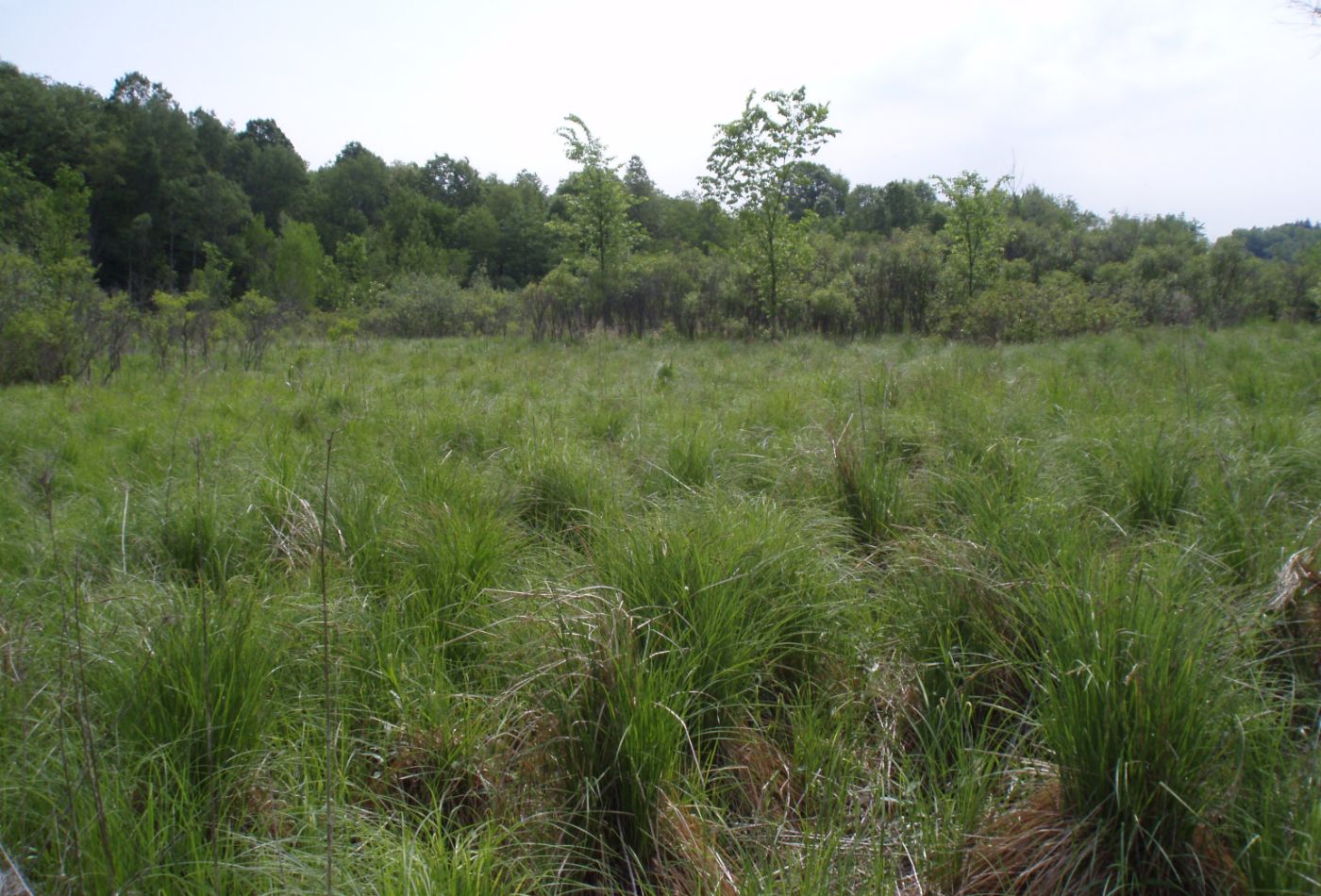
What are peatlands?
Peatlands are a special type of wetland found across Michigan. They are characterized by organic soils called peat, which builds up over time and is composed of partially decayed plant material. Peat develops because the water in these areas slows down the natural breakdown of dead plants, allowing organic matter to accumulate, sometimes more than a foot deep.
There are two main types of peatlands in Michigan: ombrotrophic peatlands (bogs and muskegs) and minerotrophic peatlands (fens). Ombrotrophic peatlands receive their water and nutrients from precipitation. Minerotrophic peatlands receive minerals and nutrients from either surface water or groundwater sources that have been in contact with mineral soils or bedrock. Bogs and muskegs are usually acidic, while fens range from slightly acidic to alkaline (Cohen et al. 2015, Cohen et al. 2025).
Each peatland type forms in different parts of the landscape. Bogs often form in deep holes left by glaciers (called kettle depressions), while muskegs grow in larger, flatter areas of former lakeplain. Fens also form in glacial landscapes and rely on groundwater that can travel for miles before reaching them, making it hard to track and manage threats (Sampath et al. 2015, 2016).
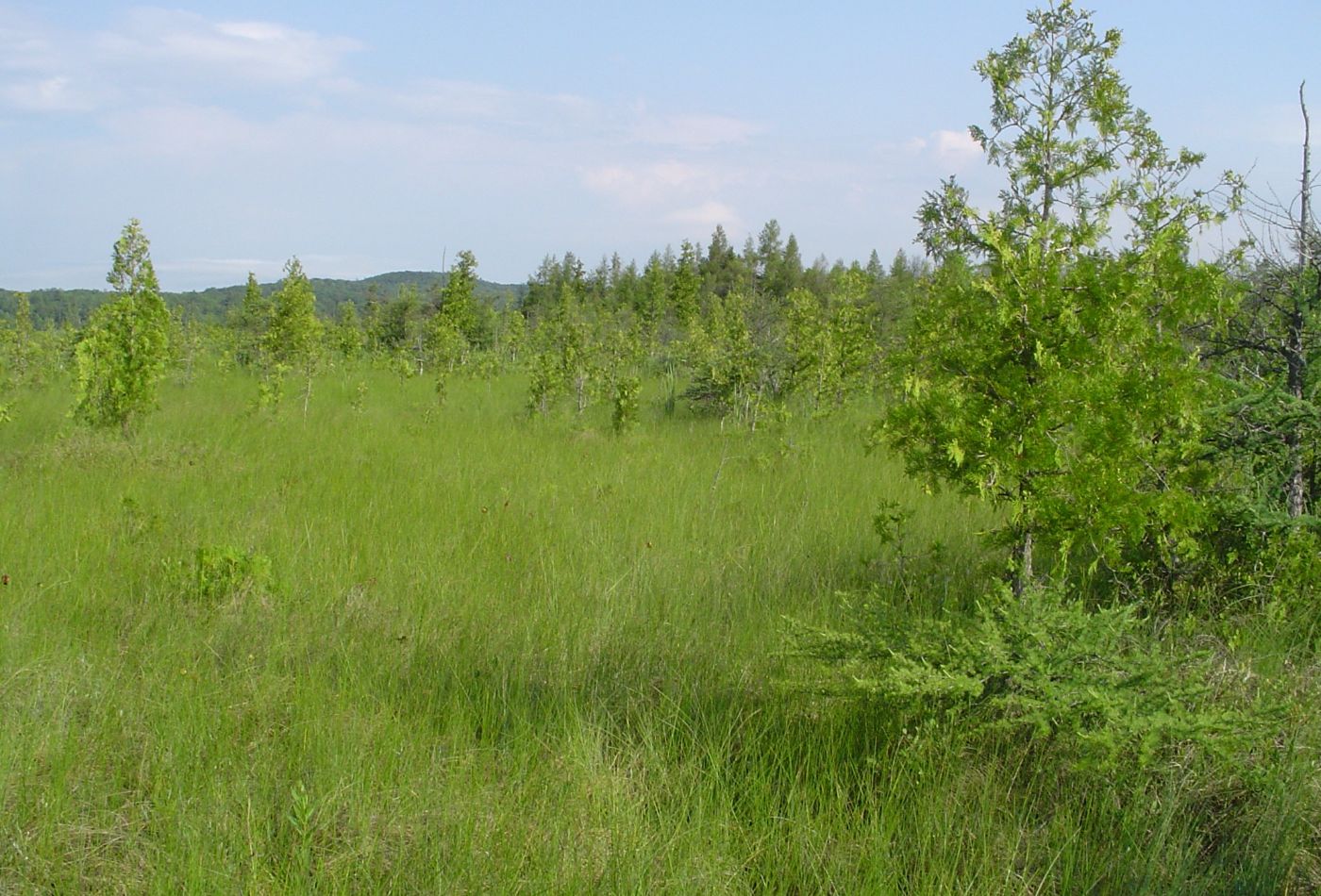
Non-forested peatlands are the focus of this chapter. They are covered in mosses, grasses, sedges, wildflowers, low shrubs, and sometimes small and scattered conifer trees. The chemistry of their water and soil creates just the right conditions for unique plants and animals, many of which can’t live anywhere else. These natural communities are also shaped by natural events like flooding, fire, beaver activity, wind, and insect outbreaks (Cohen et al. 2015, Cohen et al. 2025).
Why are peatlands important?
Peatlands are the result of thousands of years of interaction among geology, climate, and plant life and they play an important role in both our environment and economy.
One of the most important functions of peatlands is carbon storage. Although they cover only about 3% of the Earth’s surface, they store an estimated 30% of the world’s soil carbon (Scharlemann et al. 2014, Dargie et al. 2017, Leifeld and Menichetti 2018). That makes them powerful carbon sinks by locking away carbon dioxide in slowly decomposing plant matter.
Peatlands also support a wide range of wildlife like American woodcock, ruffed grouse, Eastern cottontail, muskrats, American mink, and North American beaver. Open pools attract frogs, turtles, and waterfowl, while endangered Hine’s emerald dragonflies and Mitchell’s satyrs bask near springs and seeps. Whether you're a hunter, birder, or botanist, peatlands offer a wealth of life to observe and explore.
Fens are particularly vital for Michigan’s water supply. As the final natural filter for groundwater before it enters streams and rivers, fens help keep our water clean. This is critical for public health: 56% of Michigan residents get their drinking water from surface sources like rivers and lakes, while the remaining 44% rely on groundwater (MDHHS). Both are connected to fens. Clean water is essential not just for drinking, but also for farming, fishing, industry, tourism and recreation. Protecting these wetlands protects everything downstream.
What is the health of peatlands?
Michigan’s Natural Heritage Database tracks natural communities and provides information about their locations, their quality and associated plants and wildlife. This data provides an index of the overall health of natural communities across the state. In 2025, there were 324 documented fens and 166 documented bogs and muskegs covering over 125,000 acres (MNFI 2025). Forty-six percent of Michigan fens, bogs and muskegs are ranked excellent or good viability for future persistence. Although prairie fens are the most numerous, compared to other peatland types, they are not as likely to remain viable in the future due to development pressure, invasive species, fire suppression and hydrological alterations. The threats to prairie fens also affect numerous rare species including the focal species Mitchell’s Satyr, Eastern Massasauga, Spotted Turtle and Greenstar Sedge; as well as the Federally Endangered Poweshiek Skipperling and over 50 other State Endangered, Threatened and Special Concern species.
Natural communities found in Peatlands | |
Bog | Northern Fen |
Coastal Fen | Patterned Fen |
Hanging Bog | Poor Fen |
Muskeg | Prairie Fen |
Helpful resources for identifying and understanding Michigan’s natural communities include Michigan Natural Features Inventory’s natural community classification (Cohen et al. 2015, Cohen et al. 2025) and natural community abstracts, both of which are available online along with photos, comprehensive descriptions, distribution maps, and thorough references from the scientific literature. MNFI’s most detailed bibliography on Michigan’s natural communities can be found in the publication “Distribution Maps of Michigan’s Natural Communities” (Albert et al. 2008), which is also available for viewing and downloading at the MNFI website.
Accomplishments
Michigan Natural Features Inventory (MNFI) developed a habitat suitability model for Mitchell’s Satyr for Michigan’s Lower Peninsula.
The Mitchell’s Satyr Working Group established a captive propagation facility for Mitchell’s Satyr in partnership with the U.S. Fish and Wildlife Service (USFWS), MNFI, John Ball Zoo and Kalamazoo Nature Center, which has already established a new satyr population in Washtenaw County.
Initial success of Poweshiek Skipperling captive rearing program in partnership with MNFI, Minnesota Zoo, and John Ball Zoo. Over 1000 adult butterflies were released in 2025 with plans for more releases in 2026 and beyond.
Michigan Poweshiek Habitat Team founded to better understand management effects on prairie fens and potential impacts related to the Poweshiek Skipperling habitat by Central Michigan University, Blue Heron Land Conservancy, Michigan Department of Natural Resources (DNR), MNFI, Michigan Nature Association (MNA), The Nature Conservancy Michigan, Springfield Township of Oakland County, Michigan, and USFWS.
MNFI, in collaboration with and funding from, USFWS, Huron-Manistee National Forests, DNR, Michigan Department of Military and Veteran Affairs, and MNA, surveyed several long-term Eastern Massasauga monitoring studies across the state. Surveys and long-term monitoring in the Huron-Manistee National Forests documented new and expanding massasauga populations, identified the state’s largest known population, detected snake fungal disease for the first time, and are informing conservation and recovery efforts.
With funding from USFWS and MDNR, MNFI and regional partners conducted Spotted Turtle surveys and research from 2022–2025 to assess population status, distribution, and threats in Michigan. Surveys documented Spotted Turtles at 20 of 47 sites statewide, including at least four new occurrences, six large populations, and two of the largest known populations in Michigan. Additional research on population ecology, reproduction, and the effectiveness of headstarting as a management tool began in 2025.
MNFI conducted surveys from 2015 through 2025 and documented 53 new occurrences of open peatlands thanks to funding from USFWS, U.S. Forest Service, U.S. Environmental Protection Agency, Little Traverse Bay Bands of Odawa Indians, DNR, and Michigan Department of Environment, Great Lakes, and Energy (MNFI 2025).
Michigan Natural Features Inventory developed draft monitoring protocols for evaluating the ecological integrity of prairie fen and coastal fen (Cohen and Enander 2019).
Focal species
Eastern Massasauga
Sistrurus catenatus catenatus
Federally and State Threatened
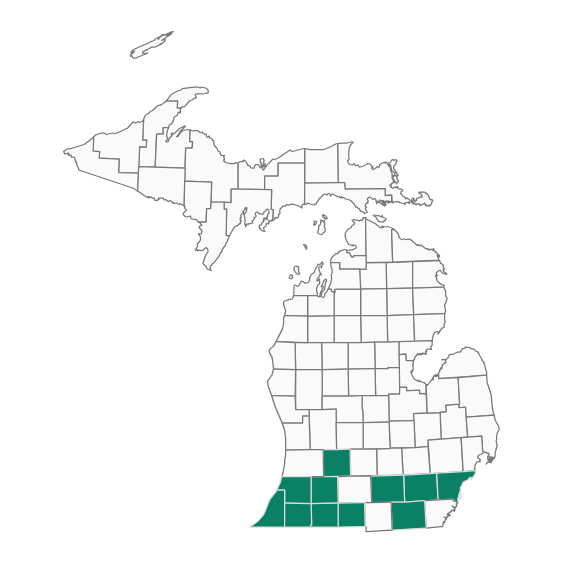
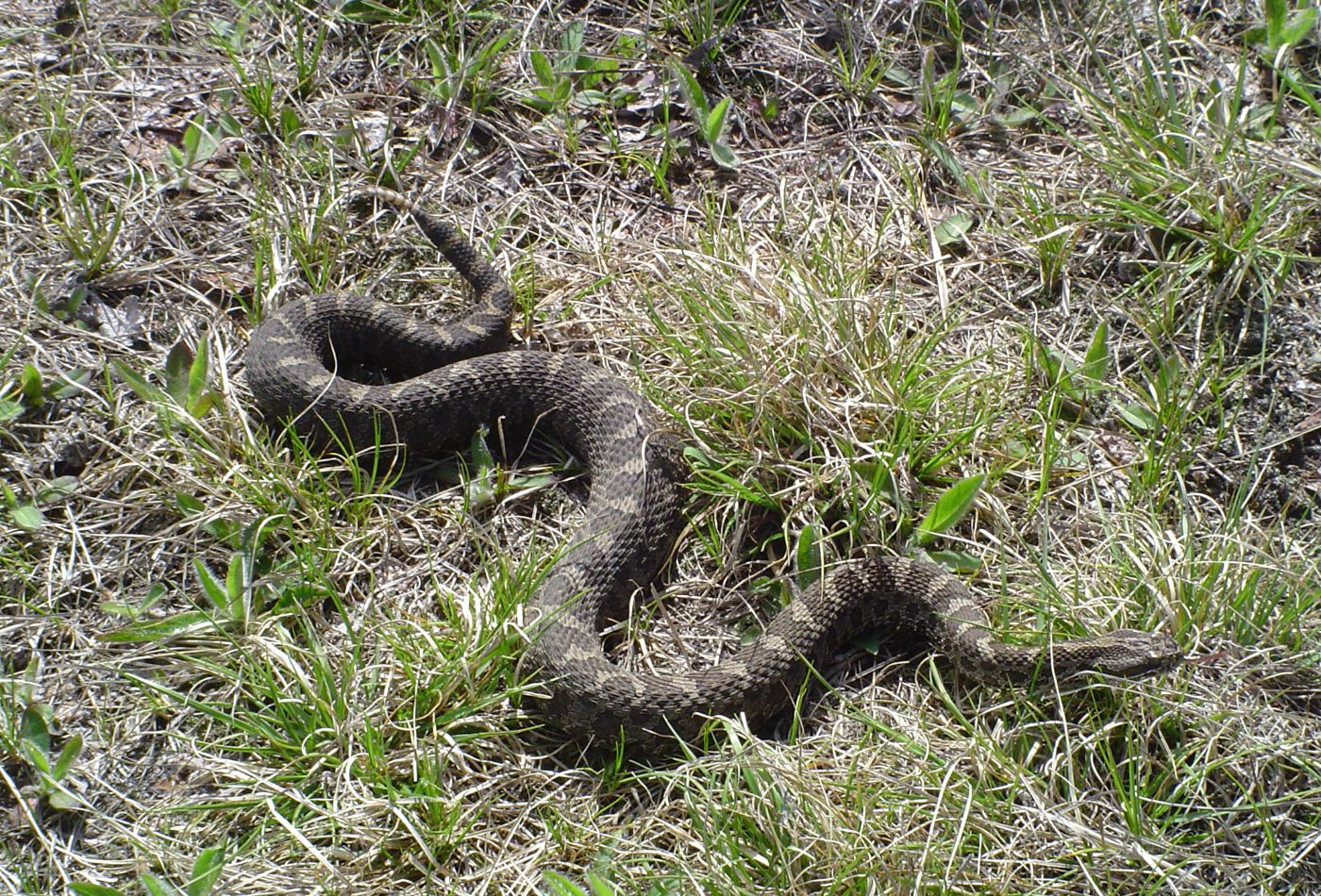
The Eastern massasauga is Michigan’s only rattlesnake. This medium-sized (18 to 30 in long), thick-bodied snake is brown or gray with dark brown rectangular or saddle-shaped blotches down the middle of its body, a black underside and a tan or yellow rattle at the end of its tail. When threatened, they typically try to escape and/or sound their rattle. Eastern massasaugas inhabit a variety of open wetland habitats such as fens, bogs, marshes and wet meadows and prairies as well as shrub and forested wetlands (Lee and Legge 2000, Szymanski et al. 2016). They also use adjacent open and forested upland habitats for foraging, migrating and giving birth to their young. Michigan is the last stronghold for this snake in the United States. This species has been documented from 313 sites in 52 counties in Michigan as of 2025 in the state's Natural Heritage Database and 197 of these occurrences were observed within the last 30 years (1995– 2025; MNFI 2025).
Goals
- Maintain known populations including at least 40 viable populations distributed across the species’ range in Michigan. [EMR-RIS]
- Establish or continue long-term monitoring of 8 to 10 populations distributed across the species’ range in Michigan to assess and monitor abundance, demographics, status, trends and viability.
- Monitor and document population contributions towards recovery criteria as outlined in the rangewide recovery plan. [EMR-RRP]
Frigga Fritillary
Boloria frigga
Special Concern
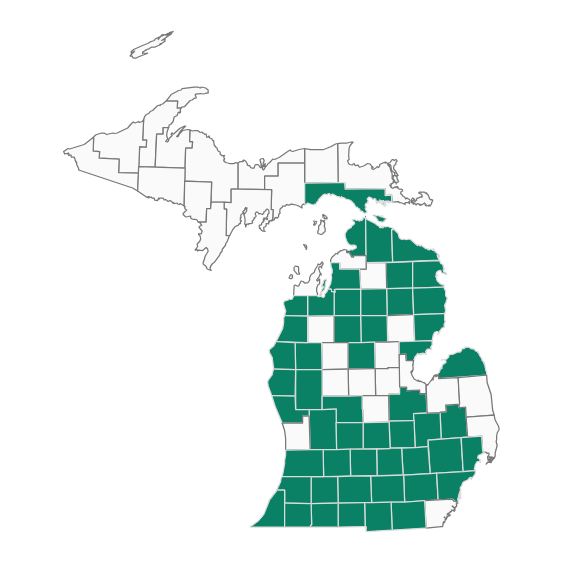
The Frigga fritillary is a circumboreal species of butterfly that is limited in Michigan to the Upper Peninsula. It is a medium-sized fritillary that is similar to a few other common species when viewed from above, with an orange background containing a variety of black spots. It is darker nearer the body, especially on the hind wing. Below, it has a purplish hoariness over the outer half of the hindwing, with distinct white spots in the middle of the hindwing and on the front edge near the body. The Frigga fritillary is restricted to bogs and patterned fens and may fly in the same area as the Freija fritillary, but rarely at the same time. Recent Michigan surveys have detected few observations and the species is currently listed as Special Concern. This species has been documented from 16 sites in 8 counties in Michigan as of 2025 in the state's Natural Heritage Database and 5 of these occurrences were observed within the last 20 years (2005-2025; MNFI 2025).
Goals
- Establish baseline status and distribution in Michigan.
- Identify and ensure protection for 3 to 4 of the largest populations in the state.
Greenstar Sedge
Carex viridistellata
State Threatened
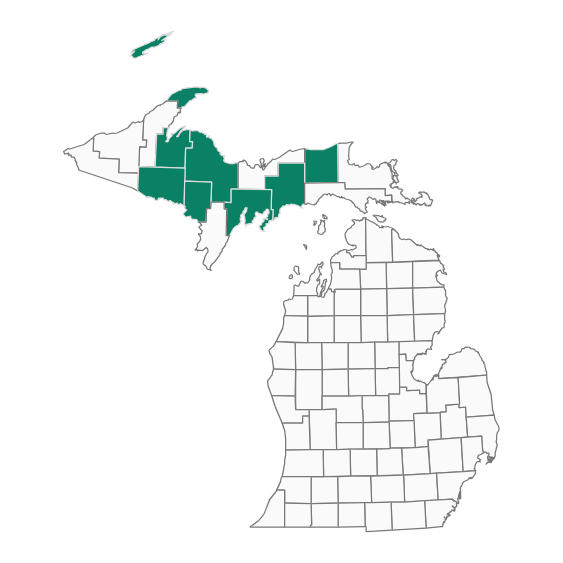
Greenstar Sedge is a green, clumped sedge with spherical to short, cylindrical spikes of fruits with long beaks resembling a spikey ball or “star” that is 0.4 to 0.6 inches wide. It differs from similar species with its larger fruit and inconspicuous fruit scales. It is found in wetlands with high calcium levels, typically near sunny, wet, sandy soils over limestone or marly areas, including prairie fens. It is a newly recognized species, endemic to the southern Great Lakes region (southern Michigan, Indiana and Ohio). It can be overlooked or mistaken for the smaller Northeastern sedge, so targeted survey efforts may reveal previously undocumented populations. This species has been documented from one site as of 2025 in Michigan in the state's Natural Heritage Database (MNFI 2025).
Goals
- Evaluate the distribution of populations on the landscape.
- Ensure long-term preservation of representative specimens from healthy populations in herbaria.
Mitchell’s Satyr
Neonympha mitchellii mitchellii
Federally and State Endangered
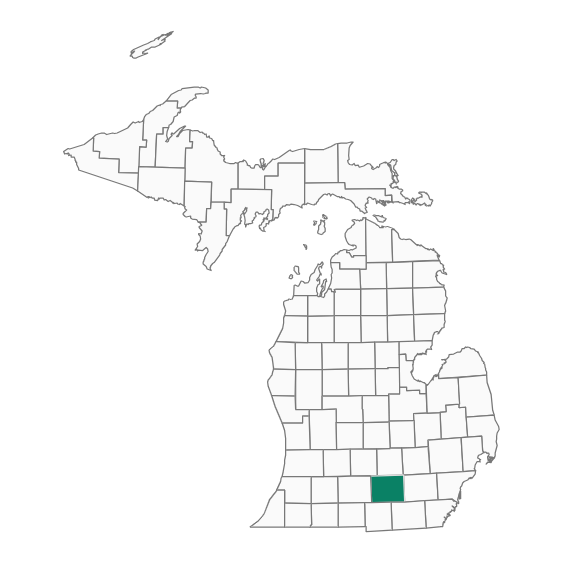
Mitchell’s satyr is a medium-sized, chocolate-colored butterfly with yellow-ringed black eyespots that are dotted with silver or yellow scales (Hyde 2012). It stays close to the ground and doesn’t fly far, moving about in a slow, bobbing flight pattern (Hyde 2012). Mitchell’s satyr habitat is usually dominated by narrow-leaved sedges, including Carex stricta, and contain scattered tamarack and poison sumac (Kost and Hyde 2009). Because of habitat fragmentation, dispersal among populations and colonization of new sites is highly unlikely if unassisted. Mitchell’s satyr is of the most endangered butterflies in North America with Michigan serving as the stronghold for this species. Unfortunately, satyr populations continue to decline in the state. This species has been documented from 26 sites in 11 counties in Michigan as of 2025 in the state's Natural Heritage Database and 9 of these occurrences were observed within the last 20 years; of these populations only 1 is considered to be likely viable and 5 are considered to be potentially viable (2005-2025; MNFI 2025).
Goals
- Maintain at least six viable populations in Michigan. [MSB-RP]
- Find sustaining funding for the ex-situ breeding program.
- Establish a second and third experimental population of Mitchell’s Satyr.
Secretive Locust
Appalachia arcana
Special Concern
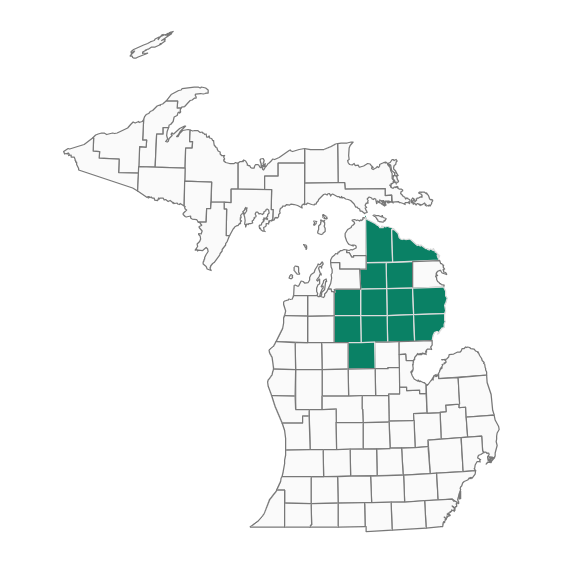
Secretive locusts are small, short-winged grasshoppers that do not sing or fly. They are endemic to Michigan and listed as globally vulnerable/imperiled. As adults they spend most of their day sunning themselves and move with the sun (Rabe et al. 1996). Little else is known about their life history. Adults are found most frequently in leatherleaf dominated sphagnum bogs surrounded by jack pine and some tamarack. This species has been documented from 70 sites in 13 counties in Michigan as of 2025 in the state's Natural Heritage Database and 38 of these occurrences were observed within the last 20 years (2005-2025; MNFI 2025). Recent surveys documented a 40% decline in the number of occupied secretive locust occurrences in the Michigan Natural Heritage Database and low population numbers at extant sites (Rowe et al. 2023).
Goal
- Establish baseline status and distribution.
Spotted Turtle
Clemmys guttata
State Threatened
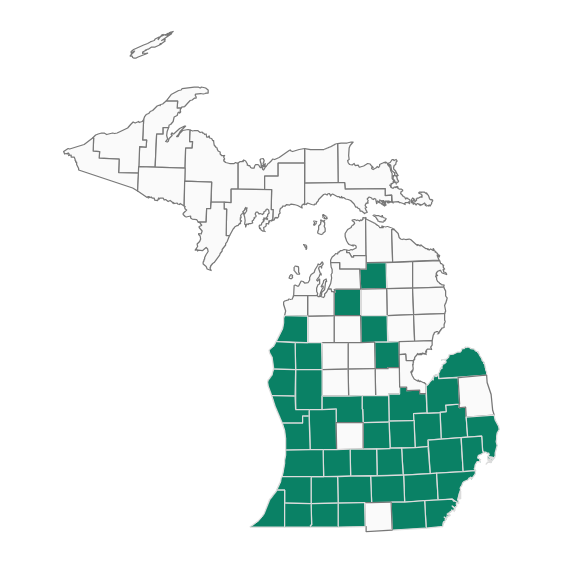
Spotted turtles are one of Michigan’s smallest turtle species, rarely exceeding 5 inches in length. Named for their bright yellow spots, which pattern their dark brown to black shells and bodies, this turtle inhabits a variety of wetland types across its range. In Michigan spotted turtles are almost exclusively found within non-forested wetlands such as fens, bogs, wet meadows and wet prairies. They also use nearby vernal pools seasonally (e.g., in spring) when they are filled with water. Spotted turtle numbers have been declining since the mid-20th century due to poaching for the pet trade, wetland destruction and degradation, road mortality and an overabundance of racoons and other predators of eggs and juveniles (Lee 2000, Harding and Mifsud 2017). Many of the wetlands required by this species are rapidly becoming unsuitable due to invasion by glossy buckthorn and other invasive species. This species primarily occurs in small, isolated populations in the southern and northwestern Lower Peninsula. This species has been documented from 195 sites in 41 counties in Michigan as of 2025 in the state's Natural Heritage Database and 81 of these occurrences were observed within the last 30 years (1995-2025; MNFI 2025).
Goals
- Establish baseline status, distribution, threats and conservation opportunities. [ST]
- Maintain at least 50% of known populations across the species’ range in Michigan.
Safeguard peatlands and carbon storage
Peatlands store more carbon than any other ecosystem in Michigan. However, they are highly sensitive to changing weather patterns. Drought and rising temperatures can dry peat soils, accelerating microbial activity that releases stored carbon into the atmosphere. These changes also increase the vulnerability of peatlands to invasive species and ecosystem degradation. Protecting the hydrology of these systems, through the maintenance of surface water for bogs and groundwater for fens, is essential to preserving their ecological function and resilience. Ensuring a stable and clean water supply will help safeguard peatlands as vital carbon sinks.
Call Out Box: Peatlands on Public Lands
Many known peatland natural communities (bogs, muskeg, patterned fed, and northern fen) located upon state and federal public lands are generally identified and protected within management systems and provide continuity of habitat for associated focal species. For example, almost all known peatland communities on state forest land are protected as high conservation value Ecological Reference Areas and the largest federal peatland in Michigan is located in the Seney National Wildlife Refuge.
Focal species adaptive capacity
Adaptive capacity is a species’ ability to tolerate or adapt to environmental change, whether that be through shifting in space or persisting in place (Thurman et al. 2020). Michigan Natural Features Inventory, with funding support from the Michigan Department of Natural Resources, assessed Adaptive Capacity for over 500 Midwest SGCN from 2023-2024 (Appendix 3). We chose to increase clarity at expense of precision in technical language used by Thurman et al. (2020) in their paper. The Michigan Department of Natural Resources created broad management strategies based off assessment results and are intended to be stepped down based on management scale, capacity and resources. Management strategies for assessed 2025-2035 focal species are:
Lowest adaptive capacity | Strategy | |
Eastern Massasauga Rattlesnake | Population Size | Increase habitat connectivity |
Mitchell's Satyr Butterfly | Movement | Manage genetic diversity |
Spotted Turtle | Life Span and Age Structures | Increase habitat connectivity |
Threats and conservation actions for habitat
Threats
Invasive & Other Problematic Species, Genes & Diseases
- Invasive plants and animals can degrade habitats including reductions of important native food sources (Fiedler and Landis 2012, Kost and Hyde 2009, USFWS 2001).
- Invasive species such as glossy buckthorn, narrow-leaved cattails and Phragmites can outcompete native plants and create unsuitable habitat for rare animals.
- Insect outbreaks, such as spruce budworms, can change plant community composition in northern peatlands, impacting nutrient cycling and habitat structure in ways that can benefit invasive species.
- Overpopulation of herbivorous mammals (e.g., white-tailed deer, rabbits) can result in over-browsing. Effects can include local extinction of rare species, decreased biodiversity, disruption of long-term natural processes and spread of non-native species (Bernardo et al. 2018, Hill Bermingham 2010, Courchesne et al. 2018).
Natural Systems Modifications
- Ecosystem degradation through loss of disturbance regimes that historically maintained open peatland ecosystems, such as fire and hydrology. Prescribed fire can be difficult to implement due to the location of individual peatlands and concerns over rare species impacts (USFWS 1997).
- Changes in surface and sub-surface hydrology within or near a peatland or groundwater recharge area of a fen can significantly alter peatlands (e.g., dams, water table lowering, filling wetlands). These changes can come from development, roads, gravel mines, high-capacity wells, or ponds created for personal and agricultural use (Bart et al. 2020, USFWS 2001, Sampath et al. 2015, Sampath et al. 2016).
Agriculture & Aquaculture
- Groundwater extraction including high-capacity well usage can alter fen hydrology (Sampath et al. 2016, USFWS 2001).
- Drains and tiling alter peatland hydrology (USFWS 1997).
- Intensive grazing of livestock can reduce biodiversity (Middleton et al. 2006, Bart 2021).
Residential and Commercial Development
- Development that increases impervious surfaces in the watershed can alter the chemical properties, amount, frequency and timing of water entering peatlands (e.g., groundwater, precipitation; Sampath et al. 2016).
- Leaking septic fields from housing developments surrounding peatlands can increase eutrophication (USFWS 2001).
Human Intrusions & Disturbance
- Peat mining drastically reduces the structure, hydrology and function of peatlands (Konyha et al. 1988, Nilsson et al. 2000).
- Mining of gravel and other resources within groundwater recharge area of peatlands can significantly alter hydrology (Sampath et al. 2016).
- Unregulated off-road vehicle use (e.g., mud bogging) scars peatland structure, alters local hydrology and spreads invasive species (Canada: Recreation Site 2019).
- Broad use of non-selective herbicide near sensitive areas can reduce biodiversity and damage rare species populations.
- Runoff of salt from roads can reduce biodiversity, aid invasive species colonization and degrade habitats (Wayne et al. 2024).
Pollution
- Increased chance of environmental disaster (e.g., oil spill, train derailment) caused by deteriorating and failing infrastructure along peatlands that can contaminate surface and groundwater.
- Injection wells for wastewater from fracking can contaminate the long-term groundwater recharge of fens (Vengosh et al. 2013).
Changing Weather Patterns
- Increased decomposition in peatlands as a result of drying may release sinks of carbon and alter nutrient cycles (Pearson et al. 2015, Offermanns et al. 2023).
- Long-term effects of environmental change and changing weather patterns on peatlands have demonstrated an overall decrease in biodiversity (Sperle and Bruelheide 2021).
Conservation Actions
Land & Water Management
- Conduct habitat management to mimic natural disturbance regimes and control invasive species.
- Work with road commissions and utilities to develop and/or implement best management practices around important peatlands.
- Implement invasive species decontamination and prevention protocols and continue early detection and rapid response.
- Explore co-stewardship opportunities with Tribal organizations, particularly to protect and maintain landscapes with extensive histories of Indigenous land tending through cultural burning.
Raising Awareness
- Educate Michiganders about ecosystem services of peatlands, especially in relation to clean water and air.
- Promote management and restoration of peatlands to local land managers and governments. Provide resources to aid them in considering these values during green infrastructure and other local planning efforts.
Conservation Designation & Planning
- Utilize relevant tools, like the MNFI Climate Resilience Modeling Tool and the Nature Conservancy Resilient Land Mapping Tool, to Identify peatlands in resilient landscapes and incorporate into conservation planning.
- Complete planning and then implement peatland ecological reference areas in the State Forest management system.
- Protect hydrological conditions unique to bogs and fens. For example, consider protecting adjacent buffers that influence rainwater sources for bogs and known infiltration sites that serve as groundwater sources for fens.
- Create and leverage partnerships to help fund, incentivize, and otherwise enable peatland protection through land acquisition.
Law & Policy
- Take appropriate enforcement actions for violations of the Michigan Threatened and Endangered Species Act (NREPA Part 365), the Invasive Species Order (NREPA Part 413) and maintain the Prohibited and Restricted Species list pursuant to the Natural Resources and Environmental Protection Act, P.A. 451 of 1994, as amended.
- Continue to support an effective Michigan Department of Environment, Great Lakes and Energy protection program for wetlands and provide incentives for conservation practices.
- Encourage and leverage the preservation of peatlands as carbon sinks (Blann et al. 2025).
Research & Monitoring
- Develop or use an existing system to track peatland management across the state.
- Research how to increase success of restoration and management of peatlands.
- Use and promote the Midwest Invasive Species Information Network (MISIN) to monitor invasive species.
- Conduct systematic surveys to identify high-quality peatlands across state lands. Despite the importance of peatlands in terms of biodiversity conservation and carbon sequestration, there has never been a systematic survey across northern Michigan lands in to identify the highest-quality remaining peatlands.
- Develop monitoring protocols to evaluate the ecological integrity of peatlands and implement monitoring in reference sites.
Threats and conservation actions for focal species
Eastern Massasauga
Threats
Lack of Knowledge
- Lack of information on the prevalence and effects of snake fungal disease on Massasauga populations, hibernacula habitat requirements and locations, gestation or parturition locations and factors that affect persistence and viability including population abundance, demographics, threats and trends (Szymanski et al. 2016).
Residential & Commercial Development
- Fragmentation and lack of connectivity between key habitats can be a significant limiting factor, resulting in reduced genetic diversity, inbreeding depression, decreased fitness and population decline and potential extirpation (Lee and Legge 2000, Szymanski et al. 2016).
Human Intrusions & Disturbance
- Persecution and poaching from humans have contributed to population declines (Lee and Legge 2000, Szymanski et al. 2016).
Natural System Modifications
- Poorly timed habitat management without sufficient refugia provisions (Szymanski et al. 2016).
- Beaver flooding can cause mortality as well as displace individuals when occurring in or near active season habitats and overwintering sites (Szymanski et al. 2016).
Changing Weather Patterns
- Increases in temperature fluctuations, extreme weather events, flooding and growing season droughts, longer active seasons and reduced winter snow cover may cause increased predation, decreases in prey, smaller body sizes, decreases in reproductive success, direct mortality and lower survival (Hoving et al. 2013, Pomara et al. 2014, Helferich et al. 2025).
Conservation Actions
Land & Water Management
- Implement and promote the Eastern Massasauga (EMR) Candidate Conservation Agreement with Assurances practices, which provides guidance for habitat management to limit negative impacts on the species. Update guidance on practices as needed and as additional information on EMR life history, ecology and habitat use becomes available. [EMR-CCAA]
- Maintain, restore and/or expand suitable habitat at existing populations, particularly critical habitats for successful reproduction and overwintering and at stable/viable populations.
Raising Awareness
- Continue outreach and education on snakes, their ecological value and management and conservation needs.
Law & Policy
- Take actions to prevent illegal collection for the pet trade, such as work with DNR law enforcement and local authorities.
Conservation Designation & Planning
- Continue to implement and revise Eastern Massasauga Recovery Implementation Strategy (RIS) for the state. [EMR-RIS]
- Implement monitoring strategy outlined in the Michigan recovery implementation strategy. [EMR-RIS]
Research & Monitoring
- Evaluate cost-effective monitoring protocol/frameworks, such as ADRiFT, for determining the status and viability of Eastern Massasauga populations and identifying stable/viable populations to contribute to species recovery in Michigan and rangewide.
- Survey and assess viability at new sites to implement appropriate management.
- Identify critical habitats (active season habitat, gestation/birthing sites, overwintering areas) to implement appropriate management
- Determine impacts of different management activities to better inform management and policies.
- Determine prevalence and potential impacts of snake fungal disease on existing populations, particularly priority populations that may be viable or stable.
Frigga Fritillary
Threats
Lack of Knowledge
- Lack of information about causes of species decline and critical life history needs.
- Missing distribution information for the species in Michigan.
Pollution
- Pesticides and herbicides may significantly impact butterfly populations by harming individuals or leading to mortalities and population decline (Pecenka and Lundgren 2015).
Changing Weather Patterns
- Concerns over mismatching phenology with plant hosts severe weather and environmental changes take place (Hoving et al. 2013).
Conservation Actions
Conservation Designation & Planning
- Develop, implement, and promote a Peatland Insects Habitat Conservation Plan, which provides guidance for habitat management to limit negative impacts on several species.
- Develop and implement a Rare Peatland Insects recovery plan or conservation strategy.
Research & Monitoring
- Determine impacts of herbicides and pesticides to Frigga fritillary populations.
- Determine causes of Frigga Fritillary population declines.
Greenstar Sedge
Threats
Lack of Knowledge
- Due to lack of systematic surveys, there are likely unrecorded populations in Michigan.
Invasive & Problematic Species, Pathogens & Genes
- Wetland invasive species like glossy buckthorn and invasive cat-tail impact habitat and populations.
Natural System Modifications
- Local and regional hydrological alterations alterations including high-capacity wells, development and gravel mining may affect conditions suitable given greenstar sedge’s preference for groundwater seeps and wetlands with high calcium levels.
Changing Weather Patterns
- Growing season droughts due to changing weather patterns may cause changes in hydrological conditions.
Conservation Actions
Raising Awareness
- Utilize and develop participatory science tools or campaigns to advance knowledge of habitat and range.
Conservation Designation & Planning
- Develop, implement and adapt conservation and management plans for fen habitat that support greenstar sedge.
Research & Monitoring
- Survey for Greenstar Sedge to more accurately delimit its range in Michigan.
Mitchell’s Satyr
Threats
Lack of Knowledge
- Lack of information on the effects of Wolbachia, a bacteria, on Mitchell’s Satyr populations (USFWS 2014).
- Lack of understanding of the species/subspecies complex between populations in Michigan (north) and Mississippi and Alabama (south)
- Lack of surveys on private/non-protected properties in southern Michigan
Invasive & Other Problematic Species, Genes & Diseases
- Invasive plant and animal species may be impacting populations (USFWS 2014).
- Beaver flooding can be problematic when occurring in or near habitats depending on water-level fluctuation, longevity and available refugia (Roddoch and Roddoch 2005, Hyde 2012, Little et al. 2012).
Natural Systems Modifications
- Inbreeding depression is a concern due to low population numbers.
Pollution
- Pesticides and herbicides may significantly impact butterfly populations near agricultural fields (USFWS 2014, Pecenka and Lundgren 2015).
Changing Weather Patterns
- Changing weather patterns and severe weather could have a variety of impacts: less consistent precipitation can affect winter survival, consistent snow cover is needed or eggs can desiccate; more growing season droughts and increased temperatures can affect reproduction; and more intense storms and precipitation can kill larvae and adults during flight (Hoving et al. 2013, USFWS 2014).
Conservation Actions
Land & Water Management
- Implement and promote the Mitchell’s Satyr and Poweshiek Skipperling Habitat Conservation Plan, which provides guidance for habitat management to limit negative impacts on both species. [MSB-HCP]
Research & Monitoring
- Determine if herbicides and pesticides are affecting Mitchell’s Satyr populations.
- Determine other limiting factors to populations.
Secretive Locust
Threats
Lack of Knowledge
- Lack of information on distribution, specific habitat characteristics and impacts of prescribed fire (Rabe et al. 1996).
Changing Weather Patterns
- As the historical climate niche for the locust shifts northward, its poor dispersal capability and landscape barriers to movements may be an issue (Hoving et al. 2013).
Conservation Actions
Research & Monitoring
- Develop survey protocols for Secretive Locust.
- Work with existing community science efforts to survey bogs for Secretive Locust.
- Conduct studies to better understand habitat needs during different life stages and effects of timber and fire management. [SFMP]
Spotted Turtle
Threats
Lack of Knowledge
- Lack of information on population status, trends and distribution. Potential exists for additional, new populations to be documented and the demographic status and habitat use of most known populations is poorly understood.
Residential & Commercial Development
- Wetland degradation and destruction from development reduces the amount, quality and connectivity of suitable habitat for spotted turtles.
- Mortalities from mesopredators and roads threaten recruitment and adult survival needed to maintain stable or viable populations.
Human Intrusions & Disturbance
- Turtles are especially vulnerable to the loss of adults from populations and illegal collection for the pet trade could threaten the long-term viability of spotted turtle populations.
Invasive & Problematic Species, Pathogens & Genes
- Invasive species, particularly shrubs like glossy buckthorn, alter the open-canopy structure of wetlands occupied by spotted turtles in Michigan.
Natural System Modifications
- Hydrological alterations threaten wetlands used by spotted turtles.
Conservation Actions
Species Management
- Finalize and implement the spotted turtle population viability analysis to guide site specific headstarting needs and goals.
- Augment existing and potentially reintroduce populations through head-starting where appropriate/feasible.
Law & Policy
- Take actions to prevent illegal collection for the pet trade, such as work with DNR law enforcement and local authorities, and reduce incidental collection by the general public.
Land and Water Management
- Maintain, restore and/or expand suitable habitat at known sites by reducing woody encroachment and controlling invasive species (e.g., glossy buckthorn, Phragmites).
Conservation Designation & Planning
- Develop a conservation plan or strategy for spotted turtles in Michigan that prioritizes the long-term protection of viable spotted turtle populations and occupied wetlands, including land acquisition, habitat management and a framework for head-starting turtles. [ST]
Research & Monitoring
- Conduct focused demographic monitoring on select, representative populations to understand population trends and habitat needs and identify viable populations.
- Research the impact on spotted turtle populations of predation on nests and juveniles by mesopredators and develop effective strategies to reduce predation.
Places for partnership
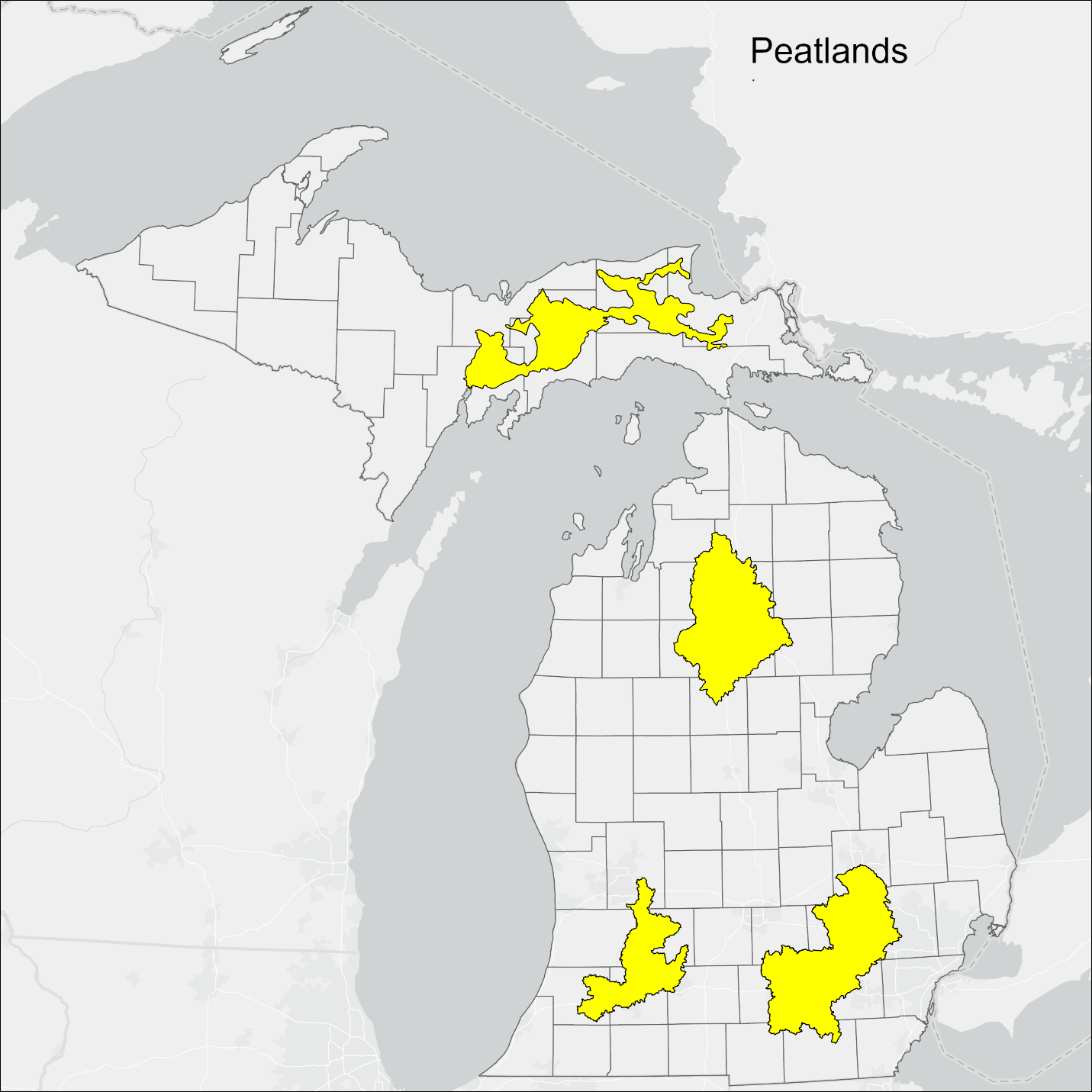
This map was created in collaboration with partners and highlights focal areas to work in over the next 10 years. Creating shared goals helps focus efforts and build collaboration. While this map has a select few areas highlighted, conservation work benefitting any Peatland is welcome and encouraged.
How will we monitor?
Habitat
- Continue to survey and update quality rankings for Peatland natural communities in the state’s Natural Heritage Database.
Focal Species
Eastern Massasauga Rattlesnake
- Continue monitoring status, distribution and population demographics with existing database such as the state’s Natural Heritage Database, iNaturalist and HerpMapper.
- Continue annual surveys, population blitz surveys and occupancy, abundance and population demographic modelling.
- Implement reliable, cost-effective survey techniques such AHDRiFT camera arrays.
- Update occurrences in the state’s Natural Heritage Database.
Frigga Fritillary
- Conduct time-meander survey transects.
- Update occurrences in the state’s Natural Heritage Database.
Greenstar Sedge
- Every five years or less, collect standardized count-based and density population measurements.
- Every five years or less, document any observable changes with the area occupied for a population.
- Update occurrences in the state’s Natural Heritage Database.
Mitchell’s Satyr
- Conduct time-meander survey transects.
- Update occurrences in the state’s Natural Heritage Database.
Secretive Locust
- Conduct standardized surveys to determine and update distribution and abundance.
- Update occurrences in the state’s Natural Heritage Database.
Spotted Turtle
- Continue monitoring status, distribution and population demographics with existing databases such as the state’s Natural Heritage Database, iNaturalist and HerpMapper.
- Continue trapping, mark and recapture studies and population modelling efforts throughout the species’ range.
- Update occurrences in the state’s Natural Heritage Database.
Links to other conservation plans
[EMR-CCAA] Candidate Conservation Agreement with Assurances for the Eastern Massasauga Rattlesnake in Michigan
[EMR-RIS] Michigan Eastern Massasauga Rattlesnake Recovery Implementation Strategy (MI EMR Recovery Working Group 2020)
[EMR-RRP] EMR Range-wide Recovery Plan (USFWS 2021)
[MSB-RP] Recovery Plan for Mitchell’s Satyr Butterfly (USFWS 1997)
[MSB-HCP] Mitchell’s Satyr and Poweshiek Habitat Conservation Plan
[ST] Status Assessment and Conservation Plan for the Spotted Turtle in the North Eastern United States (Willey et al. 2022)
[SFMP] State Forest Management Plan 2024 (MDNR 2024)
Literature Cited
Show all references
Albert, D.A., J.G. Cohen, M.A. Kost, B.S. Slaughter, and H.D. Enander. 2008. Distribution Maps of Michigan’s Natural Communities. Michigan Natural Features Inventory, Report Number 2008-01, Lansing, MI. 166 pp. Available at https://mnfi.anr.msu.edu/reports/MNFI-Report-2008-01.pdf.
Bart, D., E. Booth, S.P. Loheide and T. Bernthal. 2020. Impacts of groundwater extraction on calcareous fen floristic quality. Journal of Environmental Quality 49(3):723-734.
Bart, D. 2021. Vegetation changes associated with release from cattle grazing in a WI calcareous fen. Wetlands Ecology and Management 29(1): 67-79.
Bernardo, H.L., P. Vitt, R. Goad, S. Masi and T. M. Knight. 2018. Count population viability analysis finds that interacting local and regional threats affect the viability of a rare plant. Ecological Indicators 93:822–829.
Blann, K., C. Lenhart, M. Felice, M. Swope, A. Ettinger and P. Benham. 2025. Minnesota Peatlands: Protecting & Restoring Minnesota’s Peatlands as a Natural Climate Solution. The Nature Conservancy. Available PeatlandPlaybook-Jan25.pdf.
British Columbia Government News. 2019. Recreation site to be protected from mud bogging damage. Available https://news.gov.bc.ca/releases/2019FLNR0071-000664.
Clark, M.I., E.T. Hileman, J.A. Moore, L.J. Faust, R.E. Junge, B.N. Reid, D.R. Bradke, G.S. Bradburd, and S.W. Fitzpatrick. 2025. Inbreeding reduces fitness in spatially structured populations of a threatened rattlesnake. Proceedings of the National Academy of Sciences 122(34):1-9. https://doi.org/10.1073/pnas.2501745122
Cohen, J.G., M.A. Kost, B.S. Slaughter and D.A. Albert. 2015. A field guide to the natural communities of Michigan. Michigan State University Press, East Lansing, MI. 362 pp.
Cohen J.G., and H.D. Enander. 2019. Rare coastal ecosystem monitoring. Michigan Natural
Features Inventory Report Number 2019-08, Lansing, MI. 60 pp.
Cohen, J.G., M.A. Kost, B.S. Slaughter, D.A. Albert, J.M. Lincoln, A.P. Kortenhoven, C.M. Wilton, H.D. Enander, M.E. Anderson, M.R. Parr, T.J. Bassett, and K.M. Korroch. 2025. Michigan Natural Community Classification [web application]. Michigan Natural Features Inventory, Michigan State University Extension, Lansing, MI. Available at https://mnfi.anr.msu.edu/communities/classification.
Courchesne, M., S. Pellerin, M. Bachand, S.D. Côté and M. Poulin. 2018. Chronic deer browsing leads to biotic homogenization of minerotrophic peatlands. Botany 96:499–509.
Dargie, G.C., S.L. Lewis, I.T. Lawson, E.T.A. Mitchard, S.E. Page, Y.E. Bocko and S.A. Ifo. 2017. Age, extent and carbon storage of the central Congo Basin peatland complex. Nature 542:86-90. Available https://doi.org/10.1038/nature21048.
Fiedler, A.K. and D.A. Landis. 2012. Biotic and abiotic conditions in Michigan prairie fen invaded by glossy buckthorn (Frangula alnus). Natural Areas Journal 32(1): 41-53.
Harding, J.H. and D.A. Mifsud. 2017. Amphibians and Reptiles of the Great Lakes Region, Revised edition. University of Michigan Press, Ann Arbor, MI. 392 pp.
Helferich, J.N., R.B. King, L.J. Faust, S.B. Baker, M.J. Dreslik, K. Otterbein, J.A. Moore, D. Wynn, T.A. Bell, R.L. Bailey, K. Wildman, G. Johnson, M. Kleitch, K. Cedar, R.A. Paloski, J.D. Choquette, J.M. Adamski and E, T. Hileman. 2025. Projected climate change effects on individual growth rates and size in a threatened pit viper. Climate Change Ecology 9 (2025) 100091. Available https://doi.org/10.1016/j.ecochg.2024.100091.
Hill Bermingham, L. 2010. Deer herbivory and habitat type influence long-term population dynamics of a rare wetland plant. Plant Ecology, 210:359–378.
Hoving, C.L., Y. Lee, P.J. Badra and B.J. Klatt. 2013. Changing climate, changing wildlife: a vulnerability assessment of 400 species of greatest conservation need and game species in Michigan. Wildlife Division Report No. 3564. Lansing, MI. 82 pp.
Hyde, D. 2012. Update of Lee, Y. 2000. Special animal abstract for Mitchell’s satyr butterfly (Neonympha mitchellii mitchellii). Michigan Natural Features Inventory, Lansing, MI. 7 pp.
Konyha, K.D., K.D. Robbins and R.W. Skaggs. 1988. Evaluating Peat Mining Hydrology using Drainmod. Journal of Irrigation and Drainage Engineering 114(3):490-504.
Kost, M.A. and D.A. Hyde. 2009. Exploring the prairie fen wetlands of Michigan. Extension Bulletin E-3045. Michigan Natural Features Inventory, Michigan State University Extension, East Lansing, MI. 106 pp.
Lee, Y. 2000. Special animal abstract for Clemmys guttata (spotted turtle). Michigan Natural Features Inventory. Lansing, MI. 4 pp.
Lee, Y. and J.T. Legge. 2000. Special animal abstract for Sistrurus catenatus catenatus (Eastern massasauga). Michigan Natural Features Inventory, Lansing, MI. 8 pp.
Leifeld, J. and L. Menichetti. 2018. The underappreciated potential of peatlands in global climate change mitigation strategies. Nature 9:1071. Available https://doi.org/10.1038/s41467-018-03406-6.
Little, A.M., G.R. Guntenspergen and T.F. Allen. 2012. Wetland vegetation dynamics in response to beaver (Castor canadensis) activity at multiple scales. Ecoscience 19(3):246-257.
Michigan Department of Health and Human Services (MDHHS). n.d. MI Drinking Water Sources. SOM – State of Michigan. Available https://www.michigan.gov/mdhhs/safety-injury-prev/environmental-health/topics/care-for-mi-drinking-water/sources. Accessed 24 April 2025.
Michigan Department of Natural Resources (DNR). 2024. State Forest Management Plan. Michigan Department of Natural Resources, Lansing, MI. 1749 pp.
Michigan Eastern Massasauga Rattlesnake Recovery Working Group. 2020. Michigan Eastern Massasauga Rattlesnake Recovery Implementation Strategy.
Michigan Natural Features Inventory (MNFI). 2025. Michigan Natural Heritage Database, Lansing, MI.
Middleton, B.A., B. Holsten and R. van Diggelen. 2006. Biodiversity Management of Fens and Fen Meadows by Grazing, Cutting and Burning. Applied Vegetation Science 9(2): 307-316.
Nilsson, M, C. Mikkela, G. Granberg, B.H. Svensson and I. Sundh. 2000. Fluxes of methane and carbon dioxide on peatmining areas in Sweden. AMBIO – A Journal of the Human Environment 29(8):499.
Offermanns L., B. Tiemeyer, U. Dettmann, J. Rüffer, D. Düvel, I. Vogel and C. Brümmer. 2023. High greenhouse gas emissions after grassland renewal on bog peat soil. Agricultural and Forest Meteorology 331:109309.
Page, S.E., J.O. Rieley and C.J. Banks. 2011. Global and regional importance of the tropical peatland carbon pool. Global Change Biology 17: 798–818.
Pearson M., T. Penttilä, L. Harjunpää, R. Laiho, J. Laine, T. Sarjala, K. Silvan and N. Silvan. 2015. Effects of temperature rise and water-table-level drawdown on greenhouse gas fluxes of boreal sedge fens. Boreal Environmental Research 20:489–505.
Pecenka, J.R. and J.G. Lundgren. Non-target effects of clothianidin on monarch butterflies. Sci Nat 102, 19 (2015). Available https://doi.org/10.1007/s00114-015-1270-y.
Pomara, L.Y., O.E. LeDee, K.J. Martin and B. Zuckerberg. 2014. Demographic consequences of climate change and land cover help explain a history of extirpations and range contraction in a declining snake species. Global Change Biology 20:2087-2099.
Rabe, M.L., J.T. Legge and D.A. Hyde. 1996. Special animal abstract for Appalachia arcana (secretive locust). Michigan Natural Features Inventory, Lansing, MI. 2 pp.
Roddoch J.M. and A.H. Roddoch. 2005. Consequences of Beaver, Caster canadensis, Flooding on a Small Fen in Southwestern Quebec. The Canadian Field-Naturalist 119(3):385-394.
Rowe, L.M., D.L. Cuthrell and D.J. Earl. 2023. Surveys for Blazing Star Borer Moth and Secretive Locust in Michigan. Michigan Natural Features Inventory Report No. 2023-34, Lansing, MI. 33 pp.
Sampath, P. V., H. Liao, Z. K. Curtis, P. J. Doran, M. E. Herbert, C. A. May and S. Li. 2015. Understanding the Groundwater Hydrology of a Geographically-Isolated Prairie Fen: Implications for Conservation. PLOSone 10:e0140430.
Sampath, P. V., H. Liao, Z. K. Curtis, M. E. Herbert, P. J. Doran, C. A. May, D. A. Landis and S. Li. 2016. Understanding fen hydrology across multiple scales. Hydrological Processes 30:3390–3407.
Scharlemann, J.P.W., E.V.J. Tanner, R. Hiederer and V. Kapos. 2014. Global soil carbon: understanding and managing the largest terrestrial carbon pool. Carbon Management 5: 81–91.
Sperle, T. and H. Bruelheide. 2021. Climate change aggravates bog species extinctions in the Black Forest (Germany). Diversity and Distributions 27:282-295.
Szymanski, J., C. Pollack, L. Ragan, M. Redmer, L. Clemency, K. Voorheis and J. JaKa. 2016. Species Status Assessment for the Eastern Massasauga Rattlesnake (Sistrurus catenatus). SSA Report Version 2, July 2016. U.S. Fish and Wildlife Service. 117 pp.
Thurman, LL, B Stein, EA Beever, W Foden, SR Geange, N Green, JE Gross, DJ Lawrence, O LeDee, JD Olden, LM Thompson, and BE Young. 2020. Persist in place or shift in space? Evaluating the adaptive capacity of species to climate change. Frontiers in Ecology and Evolution 18(9): 520-528.
U.S. Fish and Wildlife Service (USFWS). 1997. Recovery plan for Mitchell’s Satyr butterfly Neonympha mitchellii mitchellii French (Lepidoptera: Nymphalidae: Satyrinae). Fort Snelling, MN. Viii + 71 pp.
U.S. Fish and Wildlife Service (USFWS). 2001. Hine’s Emerald Dragonfly (Somatochlora hineana) recovery plan. Fort Snelling, MN, USA. 120 pp.
U.S. Fish and Wildlife Service (USFWS). 2014. Mitchell’s satyr butterfly (Neonympha mitchellii mitchellii) 5-Year Review: summary and Evaluation. U.S. Fish and Wildlife Service, Midwest Region, East Lansing Field Office. East Lansing, MI, USA.
U.S. Fish and Wildlife Service (USFWS). 2021. Recovery plan for the Eastern Massasauga Rattlesnake (Sistrurus catenatus). USFWS Great Lakes Region (Region 3), Bloomington, Minnesota. 15pp.
Vengosh, A., N. Warner, R. Jackson and T. Darrah. 2013. The effects of shale gas exploration in hydraulic fracturing on the quality of water resources in the United States. Procedia Earth and Planetary Science 7:863-866.
Wayne, N., A.J. Guswa and A.L. Rhodes. 2024. Accumulation of road salt in a calcareous fen: Kampoosa Bog, western Massachusetts. PLoS ONE 19(10):1-24.
Willey, L.L., M.K. Parren, and M.T. Jones (eds.). 2022. Status Assessment and Conservation Plan for Spotted Turtles in the Eastern United States. Technical Report to the Virginia Dept. of Wildlife Resources and the U.S. Fish and Wildlife Service.
Yu, Z.C., J. Loisel, D.P. Brosseau, D.W. Beilman, and S.J. Hunt. 2010. Global peatland dynamics since the Last Glacial Maximum. Geophysical Research Letters 37: L13402.